Summary
The Ashes urn is a 10cm terracotta cup, privately gifted to England's touring captain Ivo Bligh in 1882-83 after a satirical newspaper obituary said English cricket had died. Inside is almost certainly a burnt cricket bail, though nobody has opened it.
The urn stays in a glass case at Lord's because it's too fragile to travel. The cup the winning captain holds up at the end of each series is a separate Waterford Crystal trophy.
The Ashes is the test cricket series between England and Australia, contested approximately every two years on alternating tours of each country. It is the oldest international cricket rivalry, dating from 1882, and the most-watched cricketing fixture in the calendar across both nations. It is also the only major international sport contested for a trophy that is around four inches tall, made of terracotta, and contains ashes.
This is the story of the urn: how it was made, what's inside it, why it sits at Lord's rather than touring between countries, and how a satirical obituary in a sporting paper in 1882 turned into the most-photographed object in cricket.
The 1882 origin
On 29 August 1882, Australia beat England in a one-off Test match at The Oval in London. It was the first Australian Test victory on English soil, achieved by seven runs in a low-scoring match dominated by the Australian bowler Frederick Spofforth (who took fourteen wickets across the two innings).
The Sporting Times, a London satirical-and-sporting newspaper, ran a mock obituary in its 2 September issue. The text read, in the satirical style of a Victorian death notice: "In Affectionate Remembrance of ENGLISH CRICKET, which died at the Oval on 29th AUGUST, 1882. Deeply lamented by a large circle of sorrowing friends and acquaintances. R.I.P. N.B. — The body will be cremated and the ashes taken to Australia."
The obituary was satire. The phrase "the ashes" caught on within weeks as the name for whatever future series of matches between England and Australia would be played for restoration of English cricketing pride. The next England tour of Australia, in 1882-83, was billed by the English press as a quest to "recover the ashes".

Ivo Bligh and the Rupertswood urn
England's 1882-83 tour of Australia was captained by Ivo Bligh, later the 8th Earl of Darnley. Bligh's party stopped at Rupertswood, a country estate near Melbourne, on Christmas Eve. The estate belonged to Sir William Clarke, a wealthy Anglo-Australian who hosted the visit and laid on the cricket.
A private match was played at Rupertswood that day. The Australian National Heritage Listing for the estate identifies it as the match at which the urn was presented to Bligh. Other accounts place the presentation at the end of the formal Test series in early 1883, but the Rupertswood version is the better documented.
The urn is small: around 10.5 cm tall, or roughly four inches, made of red terracotta with a small base. The inscription names Bligh, the 1882-83 tour and the satirical Sporting Times obituary. It was a personal gift, not a sporting trophy.
What's actually inside the urn
The urn's contents have been argued over for more than a century, mostly because no one has opened it. Four candidates show up in the contemporary 1880s accounts and later family testimony.
The four candidates
The first and likeliest is a burnt bail, the small wooden piece that sits on top of the stumps. Bligh referred to it as a bail in his own correspondence, and the MCC puts the odds at around 95% on a bail from the Rupertswood match.
The second candidate is a burnt cricket ball, specifically the leather casing of one of the balls from the match. The story shows up in some early accounts but the MCC ranks it well below the bail.
The third, surfaced by Bligh's daughter-in-law in 1998, is the ashes of a veil from Bligh's future wife. He met Florence Morphy on the 1882-83 tour and married her in 1884, which would tie the urn to a personal romantic gesture rather than a cricketing one.
The fourth, popular in Australia, is a burnt stump. The MCC considers it less likely than a bail.
Why nobody opens the urn
Forensic verification would mean opening the urn. The MCC has consistently refused. The contents have not been disturbed since 1882 and are unlikely to be identified in our lifetimes.
Why the urn stays at Lord's
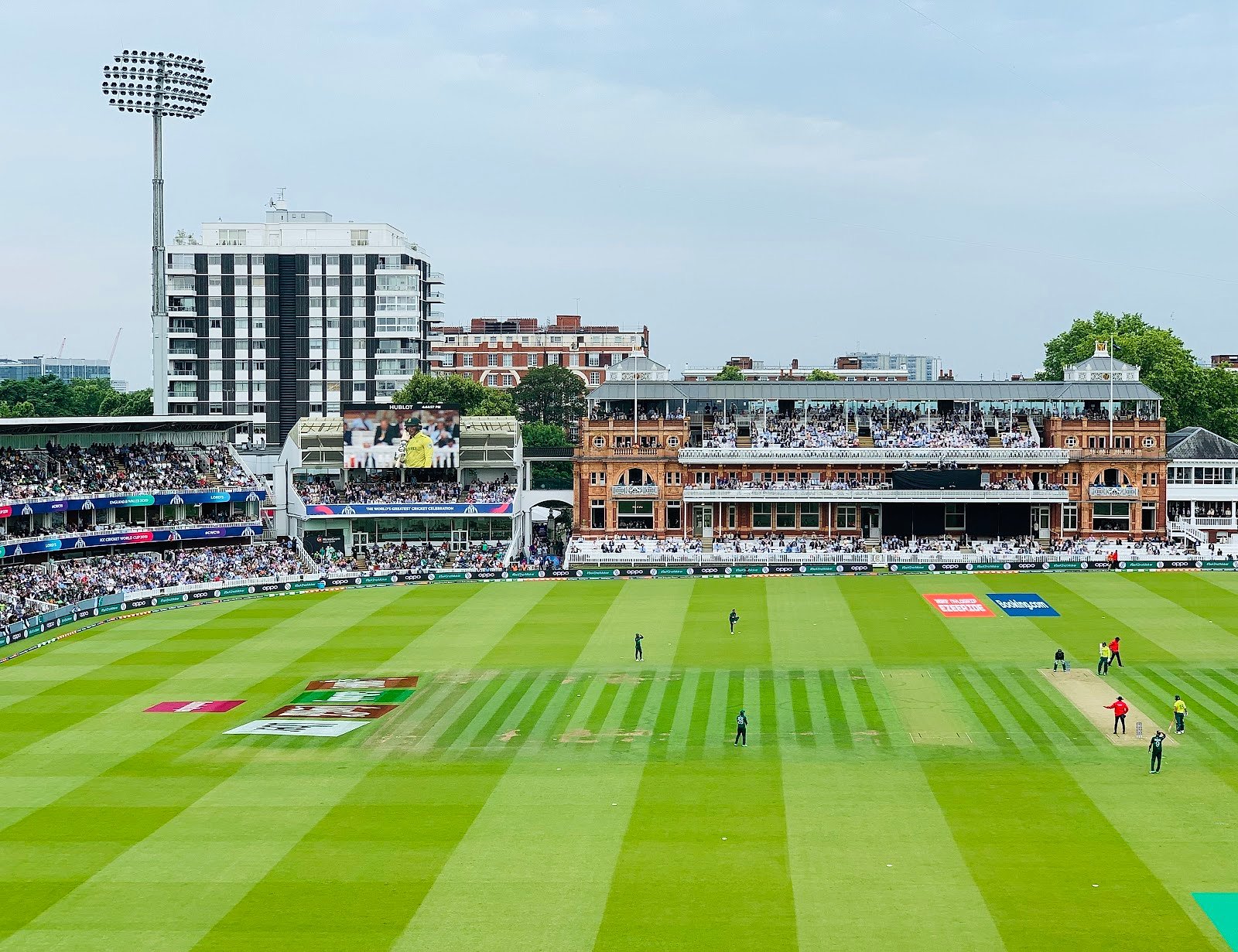
The urn was given to the MCC in 1928. Ivo Bligh died in 1927; his widow Florence, Countess of Darnley, handed the urn over to the club a year later. The MCC accepted on the basis that it would stay in the Cricket Museum at Lord's, where it has been on display since 1953 with three rare loans (1988, 2006-07 and 2019-20).
There is a strong Australian view that the urn should travel between countries with the Ashes series, since the team that wins the Ashes "holds" the title. The MCC's counter-position is that the urn is fragile, irreplaceable, that it pre-dates international cricket's governance structures, and that it is the personal property of the MCC museum (donated by the Bligh family) rather than a working sporting trophy.
Since 1998, a Waterford Crystal trophy has been awarded as the working physical prize at the end of each Ashes series. This crystal is bigger, more obviously trophy-shaped, and travels between the two cricket boards depending on who wins. It is what the captain holds up at the post-series ceremony. The original 1882 urn stays at Lord's.
The original has left the MCC museum only three times since 1953: in 1988 for the Australian Bicentenary celebrations; in 2006-07 to coincide with the Ashes tour of Australia (where the urn was the centrepiece of a touring exhibition); and in December 2019 to February 2020, when it was loaned to the State Library of Victoria for a temporary exhibition. On each occasion the urn travelled under high security and with major insurance.
The series itself
The modern Ashes is a five-Test series, played over five separate venues in either England or Australia. Series alternate between hemispheres approximately every two years: an England series in 2023, an Australian series in 2025-26, an England series in 2027 (provisional), and so on.
Each Test is played over five days. The series is decided on the overall result of all five Tests: a series win, draw or loss. If the series is drawn, the holder retains the urn (a rule that has historically benefited whichever team finished the previous series in possession).
England's Test grounds for the Ashes are Lord's, the Oval, Old Trafford (Manchester), Edgbaston (Birmingham), and one rotating venue (Headingley in Leeds, Trent Bridge in Nottingham or one of the smaller grounds). Australia's are the Sydney Cricket Ground, Melbourne Cricket Ground, Adelaide Oval, the Gabba in Brisbane, and Perth Stadium.

Famous Ashes moments
The 1981 series is the most-watched English Ashes series of the twentieth century. England were 1-0 down going into the third Test at Headingley, were forced to follow on after their first innings, and were 135 for seven in their second innings when Ian Botham took over: he hit 149 not out, including an unbroken eighth-wicket stand with Graham Dilley of 117, and a last-wicket stand with Bob Willis at the close. England won the series 3-1.
The 2005 series was the watershed of the modern era. England won 2-1, breaking sixteen years of Australian dominance after eight straight series wins for Australia from 1989. The Edgbaston Test, which England won by two runs after Australia's last-wicket pair came within sight of victory, drew terrestrial-TV audiences over eight million in the UK.
Australia's modern dominance ran from 1989 to 2003 (eight consecutive series wins); England's modern run includes Andrew Strauss's 2009 home series win, Andrew Flintoff's contribution to the 2005 series and the 2010-11 Australia series win in which England regained the urn down under for the first time in 24 years.
How to watch
Tests run five days each, three sessions a day, around two hours per session. English Tests start at 11am with lunch around 1pm. Australian start times vary by ground; Sydney goes at 10:30am, others slightly earlier or later depending on local light.
UK broadcast rights move around. Sky Sports has held the rights to home Ashes Tests in recent series; the 2023 home Ashes ran on Sky. Away series in Australia have recently been on TNT Sports (formerly BT Sport). The BBC carries free-to-air highlights of England home internationals.
For attending in person, the venue, city, season and specific match all change the day. The Oval Test in September has the best late-summer evening light. Lord's in late July is the social-calendar fixture. In Australia, the Boxing Day Test at the MCG and the New Year Test at the SCG are the equivalents. Tickets for Ashes Tests in either country sell out months in advance.
And the urn itself, finally
The Ashes urn is one of the great oddities of British sport. It is too small, too fragile and too privately gifted to make sense as a trophy, and yet it has stood as the symbolic prize of the longest international rivalry in cricket for nearly 150 years. It lives in a glass case in north London rather than travelling between captains. In a way, it is exactly what cricket deserves: a four-inch terracotta object that sits quietly while the rest of the sport revolves around it.

Emma Harrod
Sales Floor Manager
Sales Floor Manager at Imperial Corporate Events. The person to ask if you need a seat at the impossible sold-out fixture.