Summary
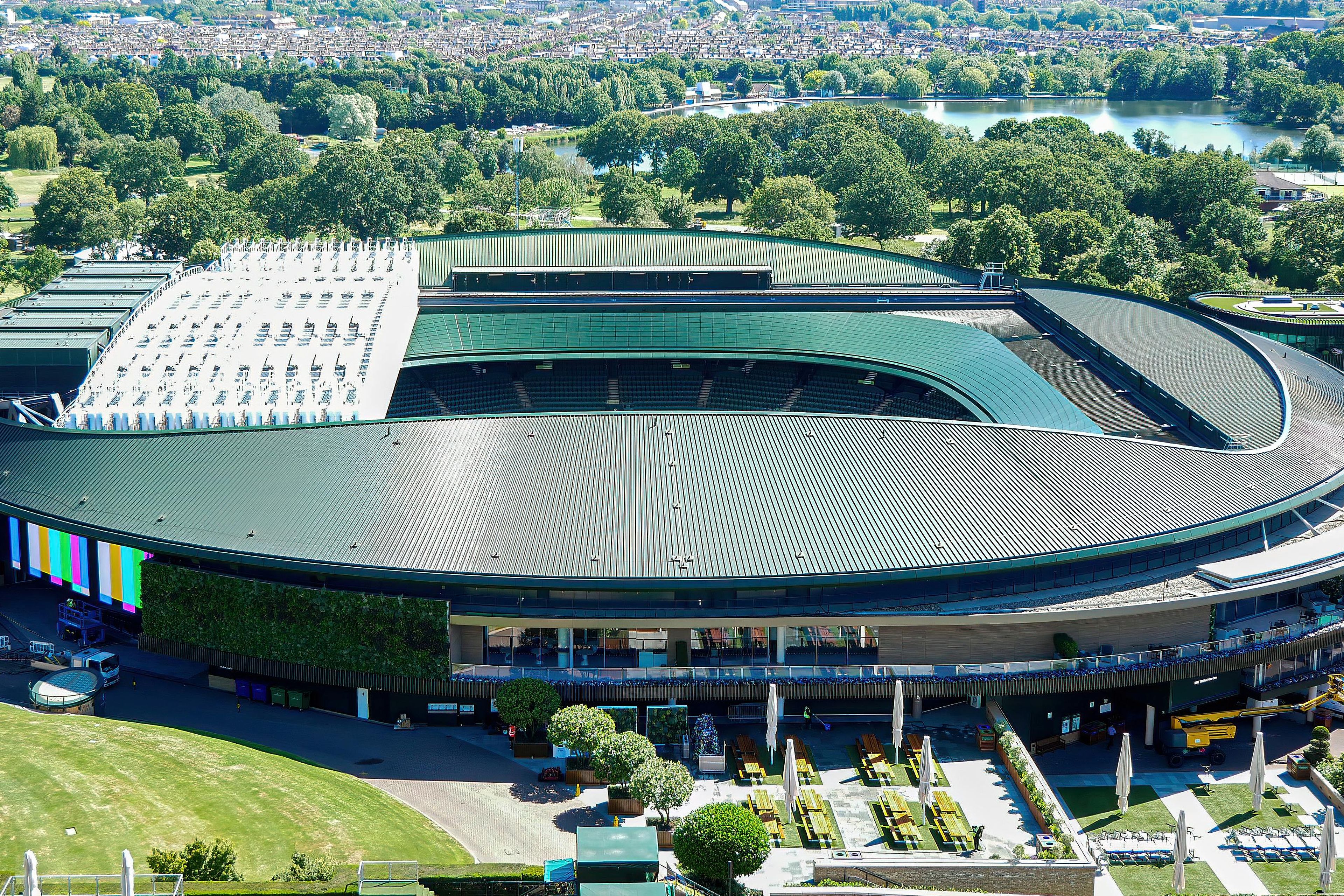
The Royal Box at Wimbledon sits at the south end of Centre Court with 74 seats. Invitations are issued by the All England Club's Chairman; the public cannot apply. The dress code is jacket and tie for men, dress or trouser suit for women, hats off once seated. The Duke of Kent abolished the mandatory bow to the Box in 2003.
The Royal Box at Wimbledon sits at the south end of Centre Court, just behind the umpire's chair. It is the most exclusive seating area at The Championships and the most photographed; the cameras between games tend to find it. The Royal Box is for members of the royal family and other notable guests of the All England Club. Invitations come from the Chairman of the Club and the Royal Box committee.
What follows is the rule book on how the Royal Box actually works: who gets in, who runs the seat plan, the bowing tradition (now mostly gone), the dress code, and why it's the most-discussed dozen rows of seats in British sport.

How the invitations work
The All England Club's Chairman, currently Debbie Jevans, manages Royal Box invitations through the Royal Box committee. The committee decides each year, in advance and across the fortnight, who sits in the box for which sessions.
Who gets invited to the Box
Royal Box invitations go to: members of the British royal family, foreign royals and heads of state, senior politicians (the Prime Minister occasionally attends), past Wimbledon champions, current and former senior figures in tennis, leading sporting figures from outside tennis, cultural figures from the arts, music and screen, and senior figures from the All England Club's official partners.
Invitations are sent out in spring. The Club asks invitees to dress for the day and to RSVP for specific sessions; some guests come for one match, others for a whole afternoon, a few for multiple days across the fortnight. Each session of Centre Court has a different mix of Royal Box guests.
The seat plan
How the seating is arranged
The Royal Box is a single tier of seats at the south end of Centre Court. The front row is the most senior; seating positions move backwards in roughly descending order of seniority, although the Club avoids making the hierarchy public.
The traditional centre-of-front-row seats are reserved for the most senior royal in attendance and their immediate guests. If the King or the Prince and Princess of Wales attend, they sit in the front-row centre. If no senior royal is at a particular session, the centre seats may go to the Patron's representative, a former champion, or a head of state.
Catherine, Princess of Wales has been Patron of the All England Club since December 2016, when she succeeded Queen Elizabeth II. The Queen had held the role for decades. Prince Edward, Duke of Kent was AELTC President (a separate role) from 1969 until he stepped down in 2021. The Patron presents the trophies on the men's and women's singles finals on the last Saturday and Sunday respectively, and attends multiple sessions across the fortnight.
The bowing tradition (and why most of it is gone)
For most of Wimbledon's modern history, players walking onto Centre Court bowed or curtsied to the Royal Box on the way in and the way out, whether or not a royal was present. The convention was that the Box, as a Royal Box, deserved the obeisance regardless of which seats were occupied.
When players bow at Wimbledon
In 2003 the Duke of Kent, then President of the All England Club, abolished the mandatory bow. From 2003 onwards, players bow or curtsy only if the Prince of Wales or the King is present. If the Princess of Wales attends alone, or another senior royal not in the direct line, the players walk on without the gesture. If the most senior figure in the Box on a given day is a foreign head of state or a former champion, no bow is required either.
The change was controversial in 2003 (the Times wrote that it ended one of the great rituals of British sport) and is now largely forgotten by anyone under thirty. The current convention is consistent: if the Prince of Wales or the King is in the Royal Box, players bow on arrival and departure; otherwise they don't.
The dress code
What to wear in the Royal Box
Royal Box invitations include a dress-code note. The convention for men is a jacket and a tie. Most male guests wear a navy blazer with a regimental, club or smart-summer tie; a few wear a lighter suit on hot days. Trainers, polo shirts and open-collar shirts are off-list.
For women the convention is a dress or trouser suit. Hats and fascinators are common but not required. The Wimbledon Royal Box hat culture is much looser than Royal Ascot's: bases are not measured, fascinators are welcome, and many guests bring a hat for the photographs and remove it once play starts.
How the hat convention works
The standing rule about hats in the Royal Box is sightlines: a brimmed hat in the Royal Box blocks the view of the spectators in the rows behind. Hats on for the photographs and the players' walk-on; hats off (held in lap or under the seat) when the play begins. Royal Box guests typically follow this without being prompted.
What's not permitted in the Royal Box: jeans, shorts, trainers, t-shirts, sportswear, branded leisurewear. The standard is the unwritten one most British formal occasions used to enforce; the Royal Box is one of the last places in British public sport where it is still enforced in practice.
What you eat and drink
Royal Box guests are served lunch in the Clubhouse before the day's play. The lunch is a multi-course affair, planned by Albert Roux's family-run kitchen in past years and now overseen by the AELTC's own hospitality team. Champagne flows; the wine list is the Club's. Royal Box guests do not eat or drink in their seats during play; refreshments are served only in the Clubhouse interval rooms.
Strawberries and cream are available in the Clubhouse for Royal Box guests as for everyone else at Wimbledon; the Royal Box version is plated rather than served in the famous polystyrene punnets. The strawberries are the same Kent strawberries (we have a separate piece on the strawberries-and-cream tradition).

Famous Royal Box moments
Queen Elizabeth II visited Wimbledon as Patron several times across her reign. Her best-known appearance was at the 2010 Championships, on 24 June, when she watched a Centre Court match for the first time in 33 years. Andy Murray's win over Jarkko Nieminen was the match.
The Duke of Kent presented the trophies for decades as Club President. His own Royal Box appearances, especially during finals, became a fixed image of the meeting. He stepped down as Patron in 2017 to make way for the then Duchess of Cambridge.
Other Royal Box regulars in the modern era include the Princess Royal (Princess Anne), Prince Michael of Kent, the Earl and Countess of Wessex, and a rotating cast of foreign royals: Queen Sofia of Spain, the Crown Princess of Sweden, and others. The Box also gets dignitaries from world tennis (current ITF, ATP and WTA executives, former champions like Roger Federer and Martina Navratilova), and a steady mix of British actors, musicians and senior public figures.
How to get an invitation
The straightforward version: you can't apply. Royal Box invitations are issued by the Chairman of the All England Club and the Royal Box committee. Members of the public cannot request a seat or buy one. The Box is not part of the AELTC's debenture-seat scheme, the hospitality packages, or the public ticket ballot.
The longer version: invitations go to people who have done something notable in their field, who are senior in tennis, who hold office, or who are family of those who do. The Club is conservative about its invitations and tends to invite the same returnees each year.
If you are travelling to Wimbledon as a corporate guest, the closest thing to the Royal Box experience that is purchasable is a debenture seat or a Centre Court hospitality package. Both put you on Centre Court itself; neither puts you in the Royal Box. The dress codes overlap but the access doesn't.
A short closing note
The Royal Box at Wimbledon survives in 2026 essentially because no one has needed to change it. The format is the same as it was in 1922 when Centre Court opened: a single tier of seats at the south end, an invitation list managed in private, a dress code that holds its line, and a guest list that mixes royal family, foreign dignitaries, former champions and a few national figures. The Princess of Wales as Patron, the Duke of Kent's 2003 abolition of the bow, the AELTC chairmanship: these all change. The Box itself doesn't.

Emma Harrod
Sales Floor Manager
Sales Floor Manager at Imperial Corporate Events. The person to ask if you need a seat at the impossible sold-out fixture.