Summary
Wimbledon moves tens of tonnes of strawberries through south-west London in a fortnight, every one of them from a single Kent farm, jump to Where the strawberries come from and picked the day before. A portion is ten berries and a generous pour, jump to The maths behind each portion of double cream, and the Club keeps it deliberately cheap.
The defining shot is the Hill at the lunch interval, jump to What guests do with them: a punnet in one hand, a Pimm's in the other, the big screen up the slope. Almost 150 years on, the dish has not changed. Only the volume has.
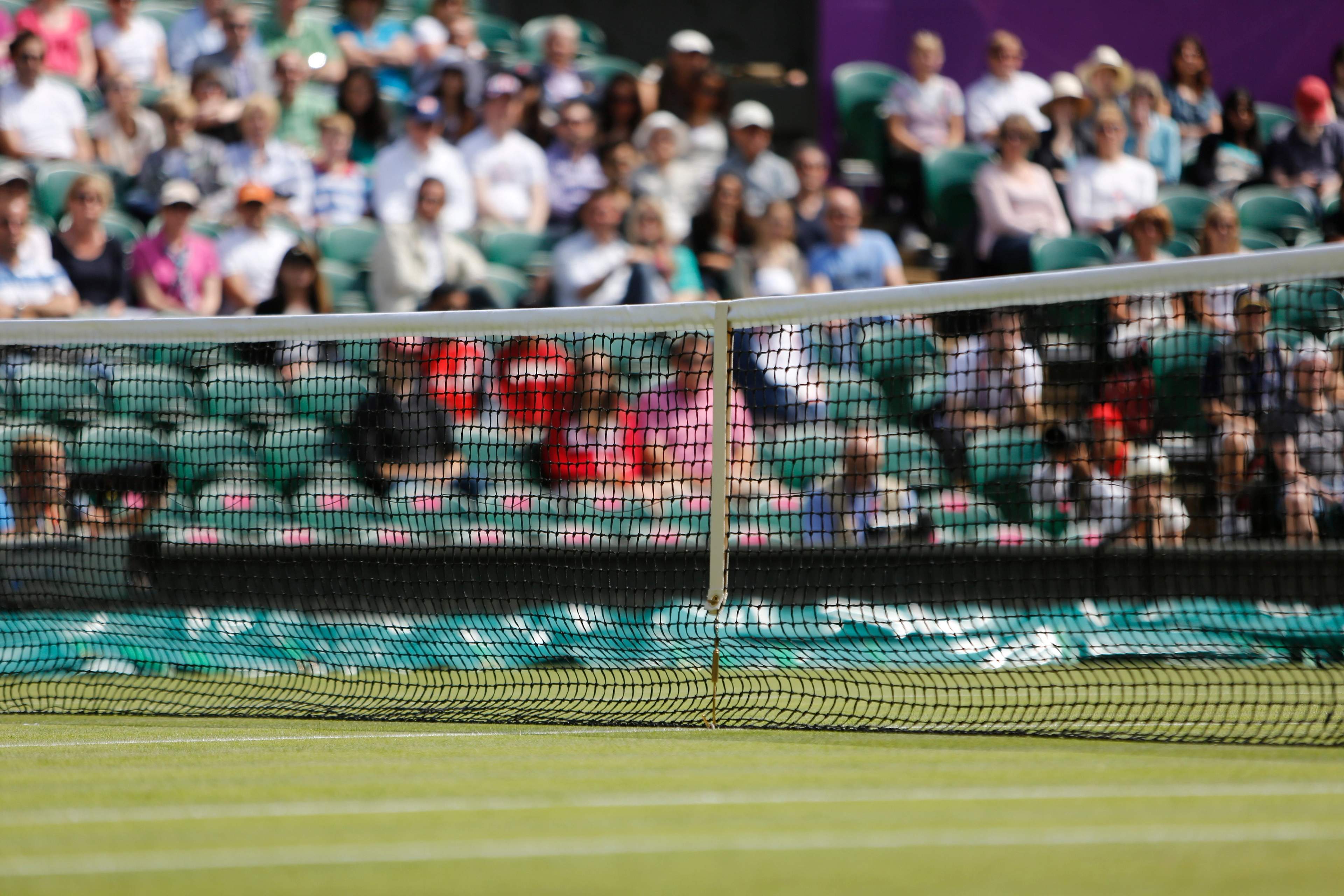
Strawberries and cream is the closest thing Wimbledon has to a national dish. Walk the grounds during the Championships and you are never more than a short queue away from a punnet, and most people end up with one at some point whether they planned to or not. The pairing became an early Wimbledon tradition, long associated with the Championships, and the modern version is a logistics operation wearing the costume of a summer treat.
If you are going for the first time, there is nothing clever to learn here: join the queue, hand over your money, find a patch of grass. If you like knowing how things work behind the scenes, the supply chain behind those strawberries is genuinely good fun. Either way, the numbers are the place to start.
The numbers, quickly
The figures do the bragging so nobody has to. They move around from one Championships to the next, but recent years give a fair sense of the scale.
- Tens of tonnesTens of thousands of kilograms of strawberries over the fortnight, the exact total shifting year to year and running to around 30 tonnes in recent Championships.
- 191,930 portionsThe 2019 count. Across opening hours, that lands at about a thousand portions an hour.
- 10,000 litres of creamWhole double cream, kept chilled and poured at the till, never in advance.
- Ten berries eachThe standard portion, hulled and laid in the punnet before the cream goes on.
Most of that haul goes straight into punnets. The rest turns up plated in the restaurants and scattered across the Hill in picnics.
A short history
The combination is older than the Championships, older than the All England Club, older than lawn tennis itself. The story most often told puts strawberries and cream on Cardinal Wolsey's table at Hampton Court in the early 1500s, served to Henry VIII. Whether the king loved it or the cook simply kept his job is not recorded. The anecdote, conveniently, is.
Wimbledon's own connection begins in the late Victorian era. By 1877 the strawberry season fell neatly across late June and early July, English summer fruit was the polite thing to put in front of a tennis crowd, and red berries under yellow cream were already a fixture of the garden-party set. The Club adopted the pairing early and has never found a reason to drop it. Try to pin down the exact founding year, though, and you will struggle: the early 1880s gets cited most, but the Club has never published one.
Where the strawberries come from
The strawberries are grown in Kent, the old heart of British soft fruit. Hugh Lowe Farms at Mereworth has been named as the Club's main supplier for decades, and it has the three things the job demands: the scale of one of the larger UK growers, a location about 31 miles up the road, and tight enough control over its crop to deliver the same look and size every single day.
The run is the part worth picturing. Berries are picked the day before they are served and driven into Wimbledon overnight, arriving between four and seven in the morning. They are inspected, hulled, graded again for size and ripeness, then sent out to the stalls in time for the gates. By the time you are holding one, it is usually less than a day off the plant.
The variety matters more than you would expect. Malling Centenary is the cultivar named most often in recent years, bred for exactly this window: sweet, firm enough to survive the journey, and ripening to the particular red that photographs well on a sunny afternoon. When the weather misbehaves, other varieties step in to fill the gap.
The maths behind each portion
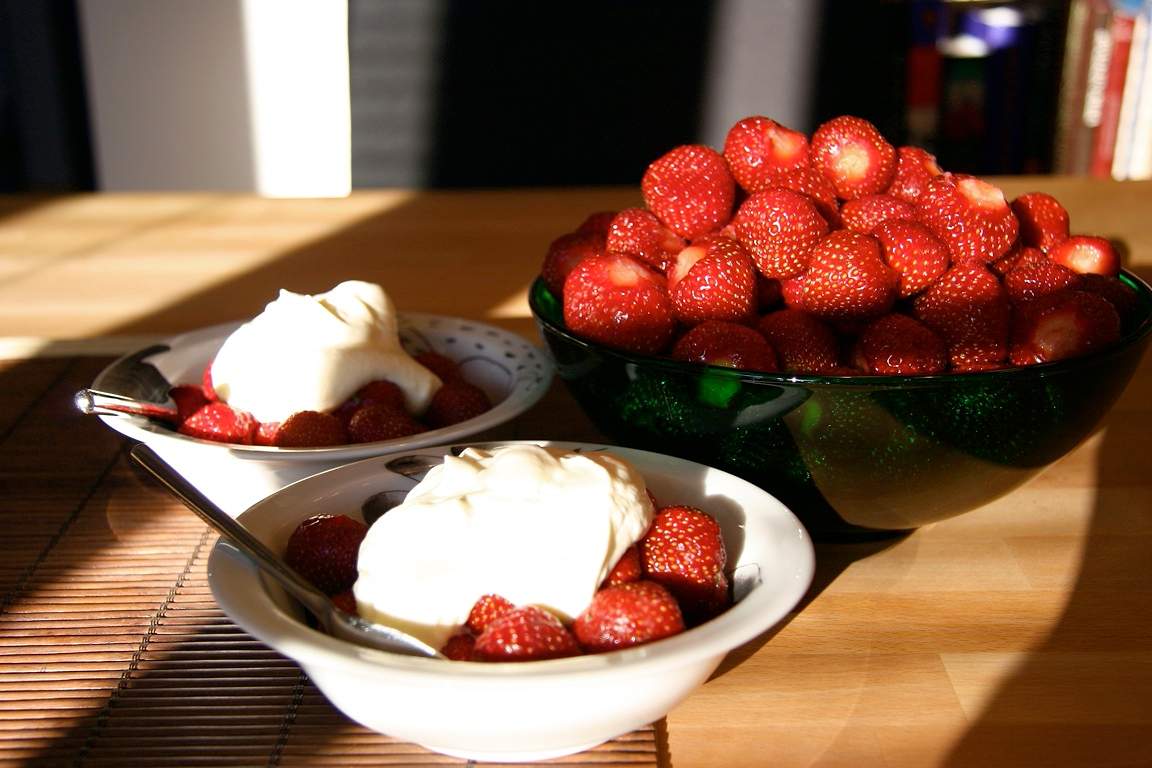
A portion is built to order at the till: about ten hulled strawberries in a small punnet, a wooden fork, and a pour of double cream over the top. Plain enough, but every part of it earns its place.
- Ten berriesEight looks mean and twelve gets pricey at wholesale. Ten fills the punnet and still reads as generous.
- Double creamSingle pours too thin and whipped would smother the fruit. Double, around 48 per cent fat, sits where it lands.
- The punnetWimbledon is a walking meeting, so the serving has to travel between courts and onto the grass. The handheld punnet has outlasted every push to retire it.
None of this is written down as an official standard. It is simply the working convention the Club has settled on over the years, and it has proved stubbornly hard to improve.
Where to find them
Strawberries are sold all over the grounds. The biggest and best-known counter sits near the main concourse, with smaller punnet bars beside most of the show courts and kiosks dotted in between. The queues run longest around the lunch and tea breaks, for obvious reasons.
Guests in the restaurants get a plated version brought to the table, included in their booking, and debenture holders get the same in their own areas. Royal Box guests are served theirs in the Clubhouse alongside lunch. If you would rather have the whole day organised around you, that seated and plated version sits inside the Wimbledon experiences we put together, and we are happy to talk through what that looks like.
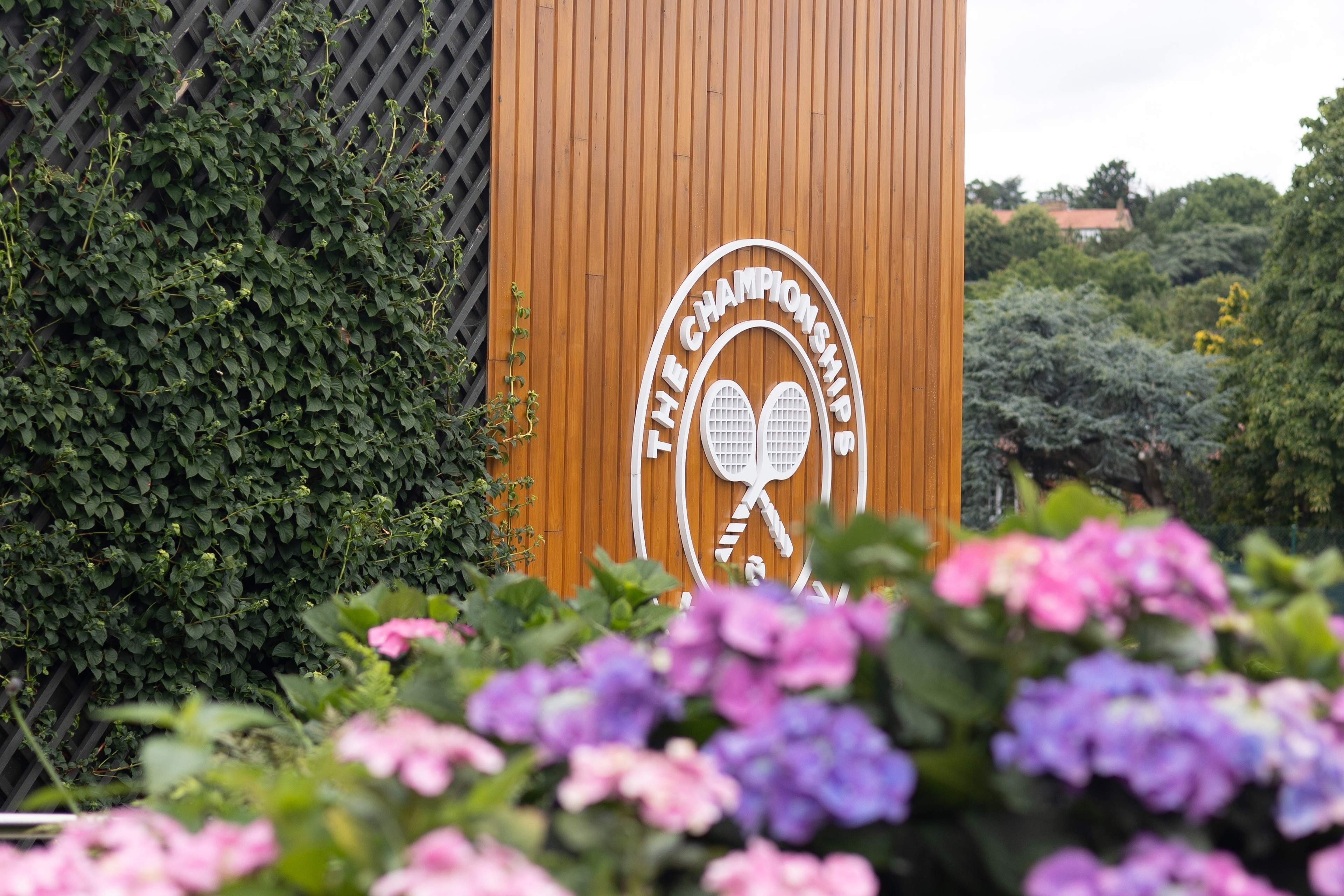
Then there is the version that sells Wimbledon to the rest of the world: a punnet on a rug on the Hill, also known as Aorangi Terrace, the big screen above and a Pimm's within reach. No seat, no table, and nobody minds. For plenty of regulars it is the best way to spend an afternoon at the Championships.
A note on the cream
The cream is whole double cream, about 10,000 litres of it across the fortnight, served cold and poured with a heavy hand. That is the whole specification. Wimbledon does not do single, does not do whipped, and does not do clotted.
Nor will it entertain anything else on the side. No sugar, no ice cream, no yoghurt, no balsamic, no clever modern twist. The Club's line has always been that this is a two-ingredient dish and a third has no business turning up. It is a stubborn position, and the right one.
To do it properly at home, follow the Club's lead: hull the strawberries, halve the big ones, pile them in a bowl, pour double cream over the top, and have them straight away. The one optional flourish worth a try is a small grind of black pepper, a Victorian habit that has fallen out of fashion but quietly lifts the whole thing.
What guests do with them
There is a small ritual around the first punnet of the day. On Centre Court the Box photographs it; on the Hill the picnic blanket does the same job; in the Royal Box it arrives plated, usually with a glass of champagne beside it. The strawberries are as much a photo prop as a snack, and everyone quietly knows it.
The one mistake we see again and again is people buying a punnet early, then carrying it round in a bag until the evening. Wimbledon strawberries are at their peak for about half an hour after they are served, and they do not travel home. Buy one, finish it on the spot, and simply come back later. The photograph keeps far better than the fruit does.
Why it all keeps working
Strip it back and the whole thing rests on a single supplier big enough to feed two weeks of unpredictable demand without missing a morning. Add a Club that has chosen, year after year, to keep the price low enough that the strawberries stay everyone's treat rather than a perk of the dearest seats. The last piece is pure luck: the British strawberry season happens to peak in the one fortnight every year that the world's cameras are pointed at SW19.
So the operation moves tens of tonnes of fruit through south-west London in fourteen days, nearly a century and a half after the first Championships, and the punnet in your hand is the same as it always was. Only the scale has changed.

Emma Harrod
Managing Director of Leicester Sales
Managing Director of Leicester Sales at Imperial Corporate Events. She gets to know what suits you, then makes the day happen without the fuss.