Had a great time attending the BRITS
Had a great time attending the BRITS. Super fun and well organised event. Marcus was great to work with through the process. Highly recommended.
We use cookies to understand which experiences land. You can opt in or out — your choice.
5.0
1 review
Attendees appreciated the well-organised event and professional service.


Attendees appreciated the well-organised event and professional service.


5.0
(1)

Manchester
17°
Rain showers
Our best tips
London in July is typically mild, with averages of 14–21°C. You will be indoors for the event, but a jacket will serve you well for getting there and back.
Smart casual to black tie. No strict dress code is enforced, but guests typically wear elegant attire; think sharp suits or chic dresses. Dress to impress, the atmosphere is glamorous.
Getting you on track

Completely hands-off from start to finish
Tell us what you're after and we'll plan the rest. All you have to do is show up.
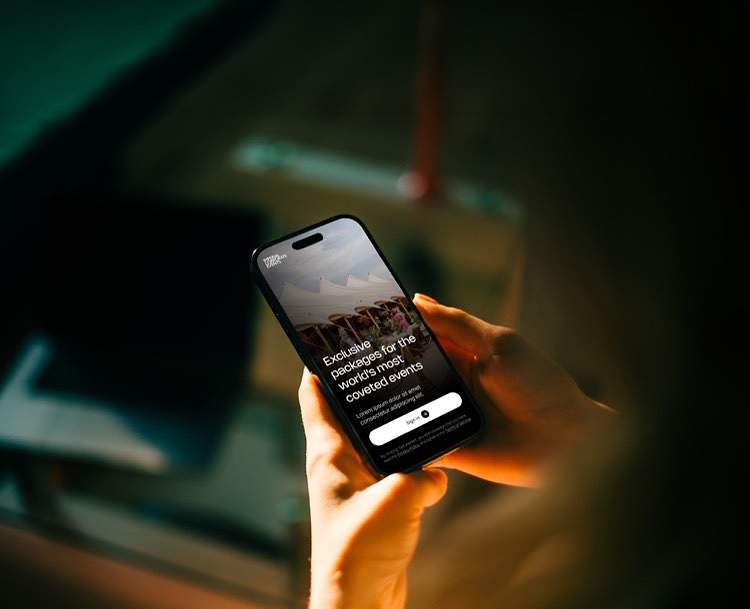
Everything you need at your fingertips
Store all your event information, tickets, and contact details in one convenient place

Add personal touches to your trip
Make a request and our team will do everything they can to make it happen
An Imperial host walks the paddock with you. One person, one number, the whole weekend.
Pick the experience, pick the tier, pick the day. Your account manager handles the rest.
Getting around
Central London venues are well served by the Tube network. Your ICE booking confirmation will include the nearest station and walking directions.
Black cabs and ride-hailing apps are available throughout central London. On event nights, consider being dropped a short walk from the venue to avoid traffic.
London's bus network covers all major entertainment districts. Night buses run after events finish, or the Tube runs late on Friday and Saturday nights.
What our guests say
Had a great time attending the BRITS
Had a great time attending the BRITS. Super fun and well organised event. Marcus was great to work with through the process. Highly recommended.
The BRIT Awards have been the barometer of British popular music since 1977, when the industry first gathered to pat itself on the back at a ceremony organised by the British Phonographic Industry. What began as a relatively staid trade dinner has evolved into one of the most watched, most unpredictable, and most culturally significant music events on the planet. From Freddie Mercury's final public appearance to Jarvis Cocker's stage invasion, the BRITs have a habit of producing moments that outlast the awards themselves.

Rock and roll, eh? I tell you what, don't believe the hype. Rock and roll will never die.

Could I just say, I'm really proud to be nominated and to be in a category with such incredible female artists. I understand why the name of this award has changed, but I really love being a woman and being a female artist.

A Silver Jubilee toast, with the Beatles and Stones collecting the very first honours.
On 18 October 1977, the British Phonographic Industry held its first awards ceremony at the Wembley Conference Centre. Known as the BPI Awards, the occasion was timed to coincide with the Queen's Silver Jubilee and celebrated the best of British music over the previous 25 years. The Beatles and the Rolling Stones were among the inaugural winners.

A clever acronym and a Park Lane postcode: the BRITs arrived in 1982 dressed for the occasion.
After a five-year gap, the BPI relaunched the ceremony as an annual celebration in 1982, rebranding it as the BRIT Awards. The name was a neat double meaning: short for British Record Industry Trust, and a nod to the nationality it celebrated. The show moved to the Grosvenor House Hotel on Park Lane, lending it a black-tie formality that would persist for much of the decade.

Autocue failures and acts announced in the wrong order; the most gloriously shambolic broadcast in BRIT Awards history.
The 1989 ceremony, broadcast live on BBC One, became legendary for all the wrong reasons. Hosts Samantha Fox and Mick Fleetwood struggled with autocue failures, introduced acts in the wrong order, and presided over a show so shambolic it entered broadcasting folklore. The BPI responded by taking the production far more seriously, which, paradoxically, made the BRITs a much bigger television occasion.

A room full of people saying goodbye without knowing it; that is the weight 1990 carries.
At the 1990 ceremony, Freddie Mercury appeared on stage to collect the Outstanding Contribution to Music award alongside his Queen bandmates. It was his last public appearance before his death in November 1991. The moment remains one of the most poignant in BRITs history, a room full of people who did not yet know they were saying goodbye.

Jarvis Cocker wiggled his backside at Michael Jackson and walked away the defining act of the night.
The 1996 BRITs delivered two defining moments. Oasis and Blur went head to head at the peak of Britpop, with Oasis sweeping three awards. But the night belonged to Jarvis Cocker, who invaded the stage during Michael Jackson's performance of "Earth Song", wiggling his backside in protest at what he called Jackson's "Christ-like" staging. Cocker was briefly arrested, then released without charge. The incident cemented the BRITs' reputation as live television's most unpredictable night.

Earls Court handed the producers a stage grand enough to match Robbie Williams' ambitions.
After years at the London Arena in Docklands, the ceremony relocated to Earls Court Exhibition Centre in 2000, giving the production team a much larger canvas. The move coincided with ITV taking over broadcast duties, and the show began to lean harder into spectacle. Robbie Williams dominated the era, winning a record-breaking number of awards across multiple ceremonies.

A single stripped-back vocal silenced 20,000 people and put a single back at number one.
The BRITs settled into The O2 Arena in Greenwich in 2011, and the venue has hosted the ceremony ever since. That same year, Adele performed "Someone Like You" in a stripped-back arrangement that silenced the 20,000-capacity arena. The performance sent the single back to number one and is widely regarded as one of the greatest live television moments in British music history.

Adele claimed the very first Artist of the Year trophy as the BRITs quietly retired gendered categories for good.
The 2022 ceremony marked a significant shift when the BRITs replaced the Best Male and Best Female categories with a single Artist of the Year award. The move, designed to be more inclusive of non-binary artists, made the BRITs one of the first major music awards to adopt gender-neutral categories. Adele won the inaugural Artist of the Year, adding to her already formidable BRITs haul.

Six awards from seven nominations; Raye's independent rebuild ended in a clean sweep no artist had ever managed before.
Raye arrived at the 2024 BRITs with seven nominations and left with six awards, the most ever won by a single artist in one ceremony. Having been dropped by her previous label and rebuilt her career independently, her sweep felt like a vindication. The south London singer's dominance underlined how the BRITs continue to reflect the shifting landscape of British music, nearly five decades after that first ceremony in 1977.