Summary
Most British sporting dress codes are suggestions. Henley's is not. For six days in early July the Stewards' Enclosure, jump to The Stewards' runs as a private members' club, and the gate turns away anyone dressed wrong: jacket and tie for men, jump to Men, a hemline below the knee or a trouser suit for women, jump to Women, and no jeans or trainers on anyone. The rest of the regatta is far more relaxed, but if your invitation is to the Stewards', dress for it, because they mean it.
Henley is one of the very few places in British sport where the dress code is a condition of entry, not a polite suggestion. Turn up at the Stewards' Enclosure in the wrong clothes and a steward will, very politely, turn you around at the gate. It has been this way for over a century: the regatta was first rowed in 1839 and became Royal in 1851, when Prince Albert agreed to be its first patron.
If you have been invited as a guest and are quietly panicking, relax: the rules are clear and easy to meet. The short version is a blazer and tie for men, a below-the-knee dress or a trouser suit for women, and nothing that looks like the gym on anyone. Everything else is detail, and how to stay cool while you wear it.
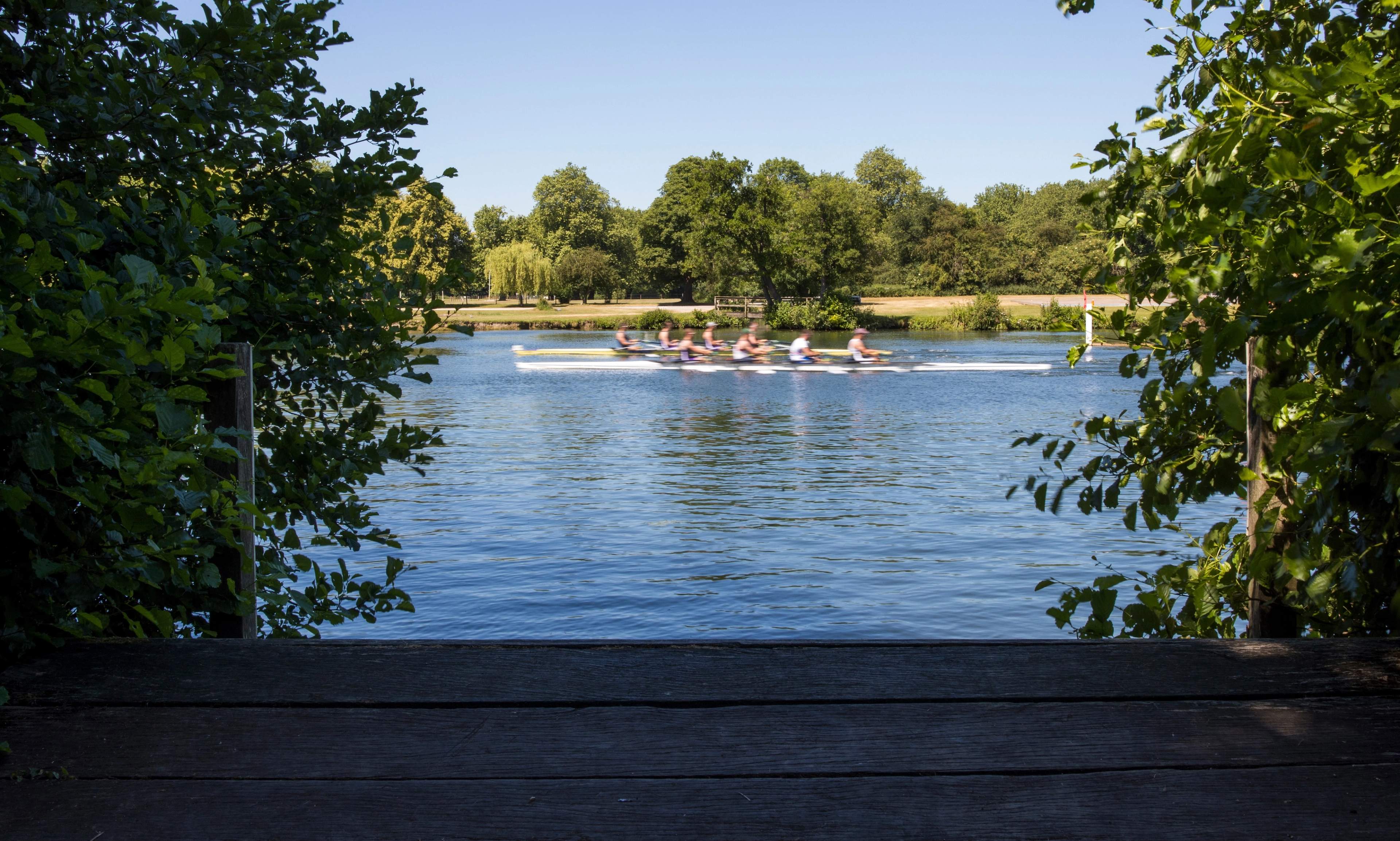
The Stewards' Enclosure
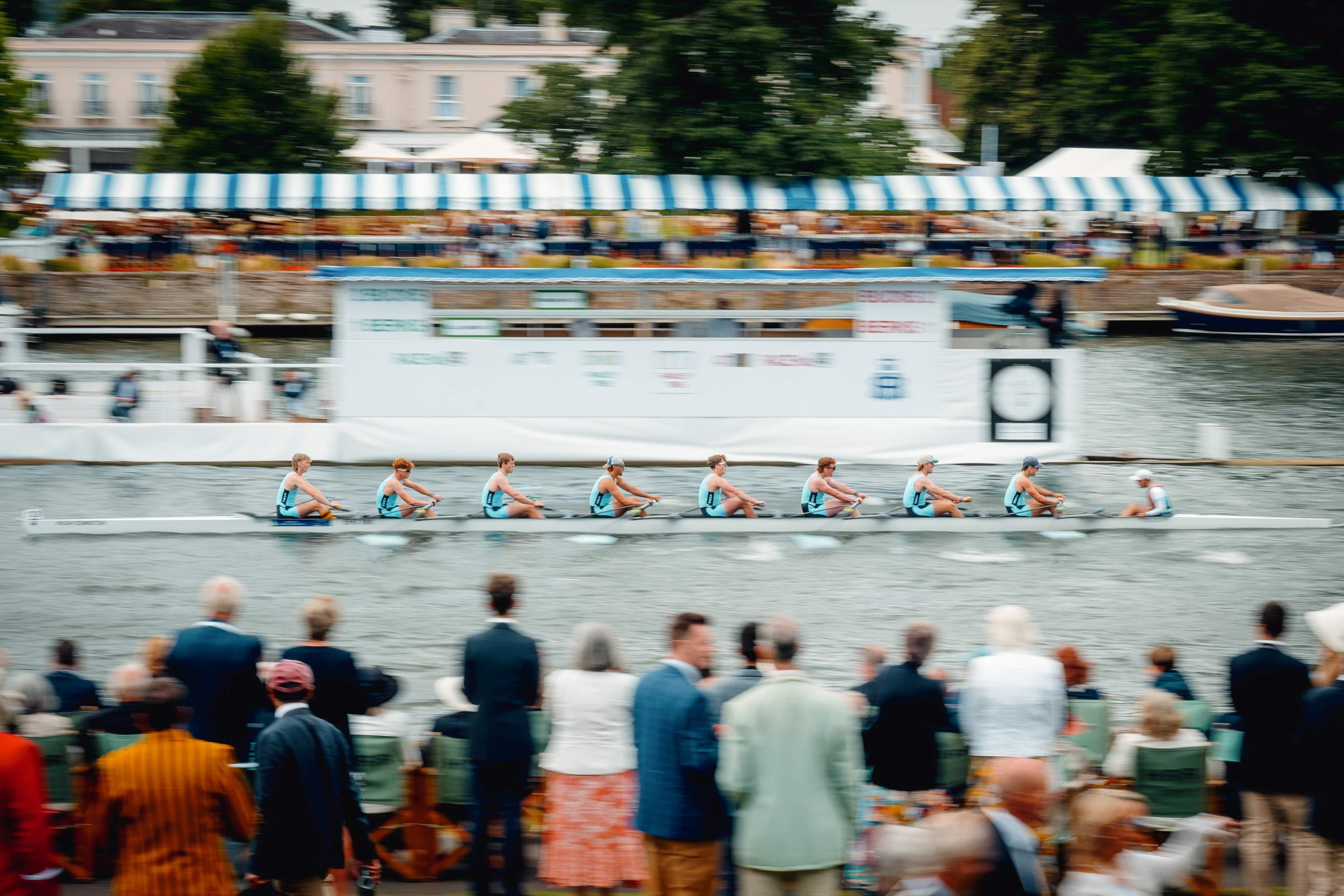
The Stewards' Enclosure is the famous one: the lawn on the home straight, opposite the finish, that appears in every photograph of Henley. For the six days of the regatta it runs as a private members' club, and you are inside it as a Member, a Member's guest, or on one of the handful of badges the Stewards release each year. Membership has been capped at 5,000 since 1980, new Members are proposed by existing ones, and the waiting list runs to years. Most are former competitive rowers, or their children and grandchildren.
That matters because the dress code is a condition of membership, not a guideline. Members agree to it and have to brief their guests, and the gate stewards apply it. This is where the rules below actually bite. Everywhere else at Henley is more forgiving.
Men
The official rule is short: a lounge suit, or a jacket or blazer with trousers, plus a tie or a cravat. In practice almost everyone wears a version of the same thing.
- BlazerA navy blazer or, better, a rowing-club blazer with striped or piped lapels, a club badge and brass buttons. The signature Henley look.
- TrousersFull-length, in cream or a pale shade. No shorts, ever.
- Shirt and tieA collared shirt with a tie or a cravat. Both are required, not optional.
- ShoesSmart: loafers, brogues or oxfords.
- HatOptional. A Panama or straw hat suits the Victorian-regatta look and keeps the sun off.
Two outfits that always work:
- The classicRowing-club or navy blazer, cream trousers, pale shirt, club or regimental tie, brown loafers, Panama hat.
- The heatwaveLightweight linen or summer-wool jacket, cotton shirt, breathable silk tie, cream trousers, Panama. Smart in the heat without melting.
Women
The official rule: a dress or skirt with a hemline below the knee, or a trouser suit, or a jacket and trousers. The hemline is the part everyone talks about, and it is checked at the gate.
- Dress or skirtHemline below the knee. The stewards are practical rather than armed with a ruler, but an inch or two above the knee is a gamble.
- Trouser suitA trouser suit, or a jacket with trousers, is fully allowed, and the popular alternative since it was added in the 2010s.
- ShoesSmart and able to handle a lawn. Block heels and flats beat stilettos on grass.
- HatConventional but not required. Wide-brim straws, Panamas and slim fascinators all work, and there is no four-inch-base rule like Ascot.
- In the heatA below-knee dress in July sun needs breathable fabric. Linen, cotton and silk; not heavy wool.
Two outfits that always work:
- The classicBelow-knee linen or silk midi, smart flats or block heels, a wide-brim straw hat.
- The heatwaveLightweight trouser suit or a loose cotton midi, low heels, a Panama or a slim fascinator.
What gets you turned away
The hard no-list is the same for everyone, on paper and at the gate: no jeans, no shorts, no leggings, no tracksuits, no trainers. There is no "smart trainer" exception, however nice the trainers. The Stewards' own line is blunt: "admission will not be permitted to anyone not dressed appropriately." Henley is one of the last formal sporting dress codes in Britain where the written rule and the real rule are the same, which is exactly why the lawn still looks much as it did a century ago.
The other enclosures
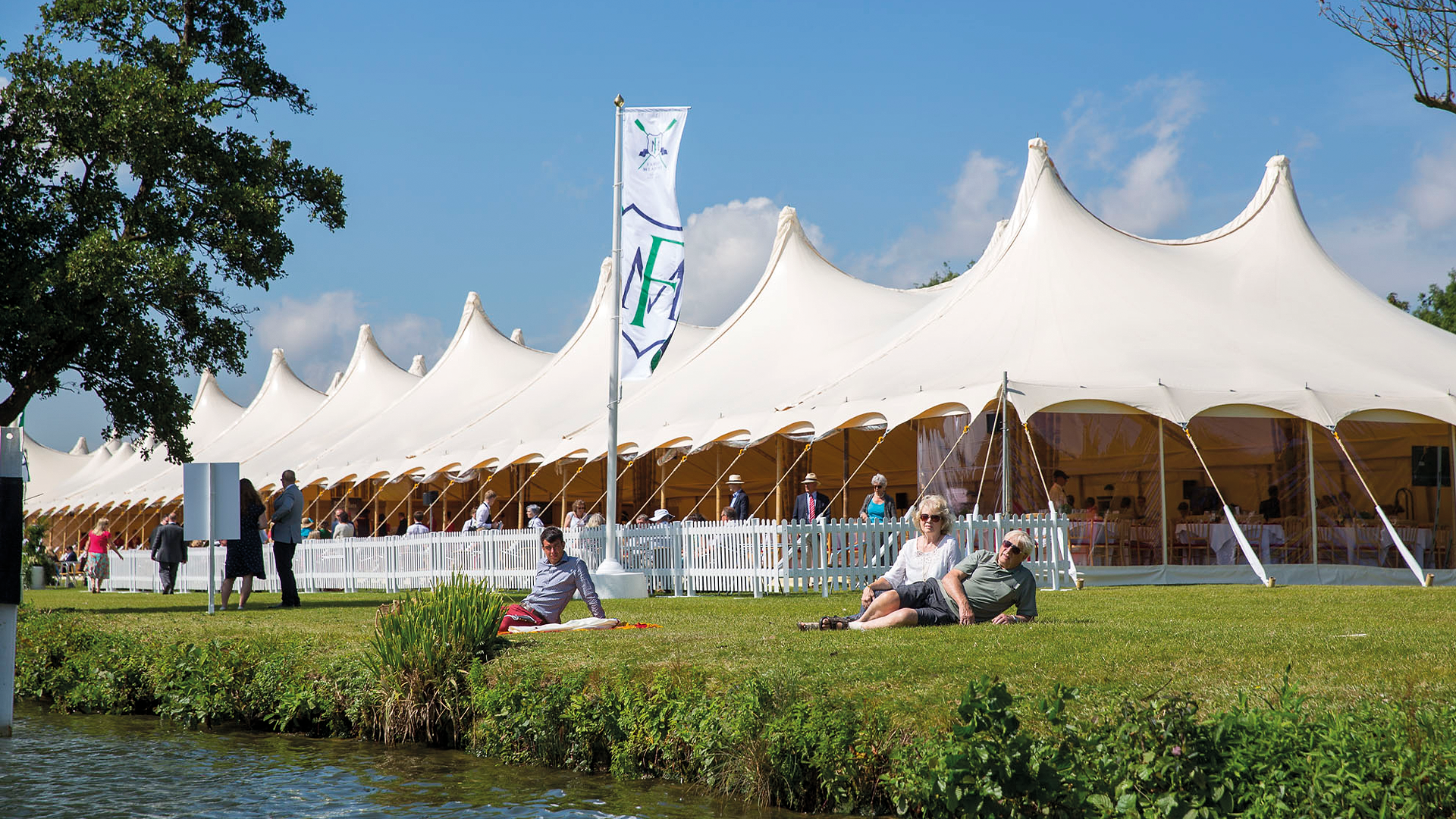
Step outside the Stewards' Enclosure and the pressure drops. The Regatta Enclosure, the main public area, asks only for smart-casual: a jacket for men is welcome but not required, and a collared shirt with smart trousers, or a sundress and separates, is fine. Most people still dress up, because Henley invites it.
Several corporate enclosures hold themselves to the Stewards' standard, the Phyllis Court Club across the water runs its own smarter enclosure, and the hospitality boxes along the course set their own codes, usually jackets and dresses. If you are being hosted, ask which one you are in, because it changes what you pack. That is the part we tend to arrange, so the question of where you will be is one we can answer for you.
Dressing for the heat
Henley falls in early July, when the Thames Valley can sit at 27 degrees, and a jacket and tie on an open lawn at that temperature is a test. The trick is fabric: a lightweight linen or summer-wool jacket, a cotton shirt, a tie in breathable silk, and a Panama doing the real work against the sun. For women, the same logic: a below-knee dress only works in July if it breathes.
One last piece of local knowledge: the queue for Pimm's at the interval can outlast every other bar queue in British sport. Order before you are thirsty, not after.

Daniella McBride
Sales Manager
Sales Manager at Imperial Corporate Events. Whatever you’re booking, sport or music, she’s easy to plan with and stays on it until it’s right.