Summary
Cheltenham Festival is four days, jump to The four days of Grade 1 jump racing in mid-March, with one championship anchoring each day. The opening Tuesday delivers the Cheltenham Roar, jump to The Cheltenham Roar, the loudest moment of the British racing year. The Guinness Village is the centre of the festival's social life, and Friday closes the meeting with the Gold Cup, jump to Friday: Gold Cup Day, the day every regular builds the week around.
Cheltenham Festival is four days of jump racing in mid-March in the Cotswolds. Each day carries a championship race, the Tuesday opens with the Cheltenham Roar, the Irish crowd is large, the weather is rarely flattering. The Gold Cup closes the meeting on the Friday.
Dress for the weather rather than the cameras: tweed, a waxed jacket and boots that can take Cotswold mud, which we cover in full separately.

The four days
Tuesday: Champion Hurdle Day
Grade 1, two miles 87 yards, for four-year-olds and up. Run on the Old Course, and a Tuesday fixture since 1980. The first of the meeting's four championship races.
Wednesday: Queen Mother Champion Chase
Grade 1, approximately two miles, for five-year-olds and up. The sprint championship of jumps racing.
Thursday: Stayers' Hurdle
Grade 1, approximately three miles, for four-year-olds and up. The staying-hurdler's championship and the form student's day.
Friday: Cheltenham Gold Cup
Grade 1, three miles two furlongs and seventy yards, for five-year-olds and up. Run in its modern form since 1924. The Foxhunters' Chase and the Martin Pipe Conditional Jockeys' Handicap Hurdle both run after the Gold Cup; the Mrs Paddy Power Mares' Chase runs earlier in the card.
When the racing actually starts
Gates open and the first race
Gates open from late morning, with earlier access for some hospitality tiers. The first race goes off in the early afternoon and the card runs seven races a day across roughly four hours.
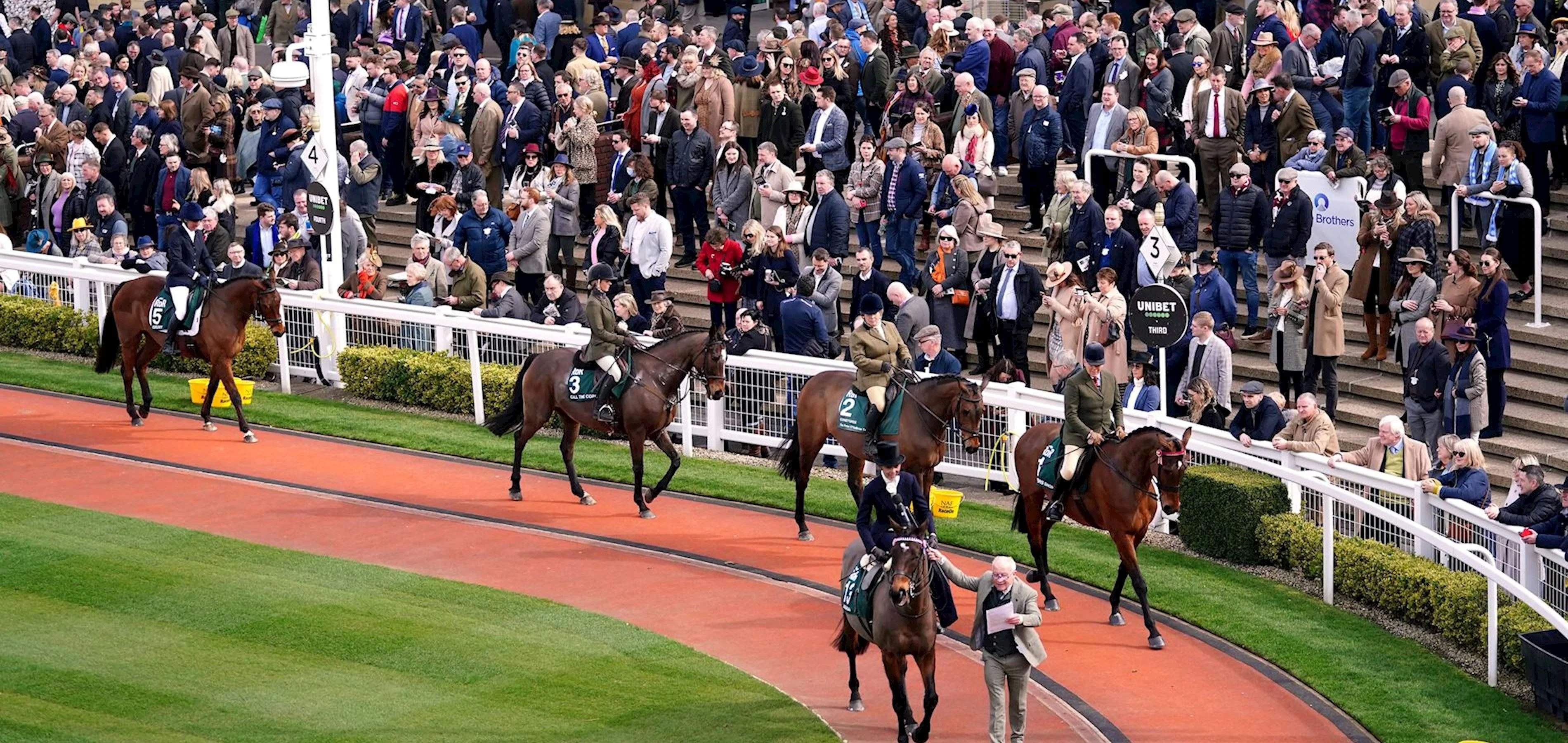
The first race is where the Cheltenham Roar happens. As the starter raises the tape for the opening race of the festival, the crowd lets out a cheer loud enough to carry across the racecourse. The roar lasts a few seconds and is the defining opening moment of the British jumps season.
The roar fires on Tuesday only. The other days open without the roar (a smaller cheer at most). Tuesday afternoon's first race is the one to be on the lawn for.
The Cheltenham Roar
The roar exists because Cheltenham is the championship meeting of jumps racing. The Tuesday opener is the Supreme Novices' Hurdle: Grade 1, the festival's first race, with Irish-trained runners traditionally going off as favourites. The Irish contingent has travelled from Tuesday morning, the British crowd has been talking up the form for weeks, and the moment the tape rises is the moment all that anticipation has to land somewhere.
The roar is not staged. It is the sound of seventy thousand people who have spent six months waiting for the racing to start.
The Guinness Village
Guinness is the festival's signature drink. The "Guinness Village" is a covered marquee complex inside the public enclosures, with multiple bars serving Guinness from purpose-built lines, live music between races, and an outdoor area for standing-and-watching. Guinness sales across the week are famously high.
The Village is the heart of the festival's social side in the public enclosures. The Irish crowd, the standing-room crowd and most of the under-thirties drink, eat and watch from here. By Friday afternoon plenty of them settle in to follow the racing on the Village big screens rather than walk to the rail at all.
The Club Enclosure has its own bars and restaurants and a covered route to the lawn; most Club guests do not go into the Guinness Village during the day. The Village runs separately from Club hospitality.
Between races
The Cheltenham card runs at roughly thirty-five-to-forty-minute intervals. That leaves around half an hour between races to do something other than watch racing.
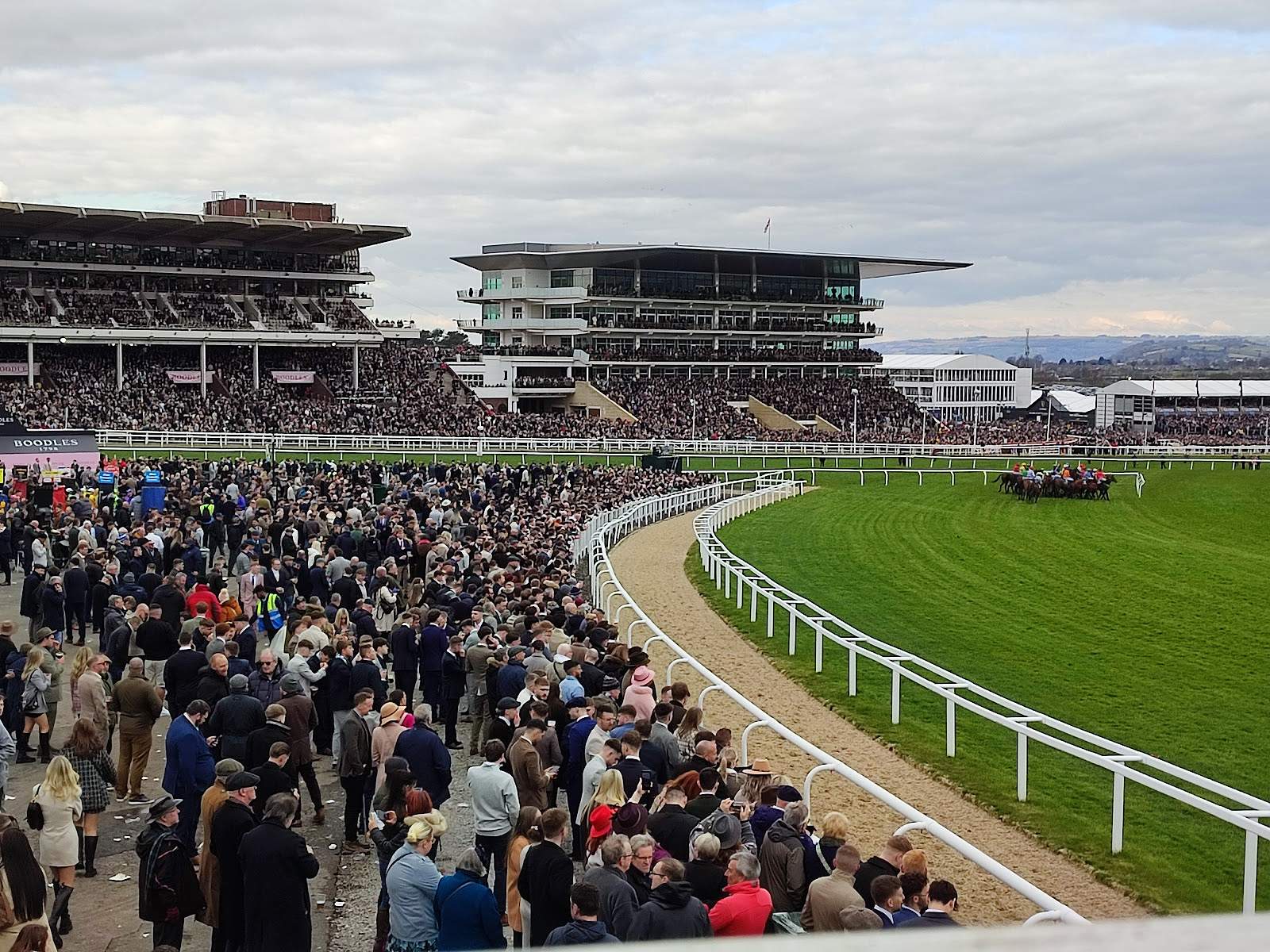
The Parade Ring is the main draw. Horses appear about ten minutes before each race, walking around the ring while owners, trainers and jockeys gather. The Cheltenham Parade Ring is wide, deep, and gets photographed from every angle. Stand on the lawn side of the ring for the trainer-and-jockey moment; stand on the grandstand side for the horses themselves.
The bars are the second-busiest place between races. The Club and Tattersalls enclosures share a wide spread of bars and food outlets including the Guinness Village. The Best Mate Enclosure has its own separate bars and food outlets on the opposite side of the racecourse and does not have access to the Guinness Village.
The bookmakers' ring sits in front of the grandstand. Prices change every twenty seconds during the build to the off, and sizeable bets still get struck at the rail at Cheltenham in numbers most other British meetings no longer see. Worth watching even if you do not bet yourself.
The Irish factor
The Cheltenham Festival is, in racing terms, the Anglo-Irish jumps championship. Irish-trained horses have dominated many recent renewals of the Gold Cup. Willie Mullins, Henry de Bromhead, Gordon Elliott and the rest of the Irish training establishment travel a full team across the Irish Sea each March. Runners ship in during the days before the festival; many connections travel mid-week.
The crowd follows. Thursday is marketed as St Patrick's Thursday and the Irish presence is especially strong (the festival usually coincides with St Patrick's Day or sits adjacent to it). The Guinness Village is at its loudest on the Thursday. The Cheltenham Roar on Tuesday is in part the Irish crowd announcing that they have arrived.
Friday: Gold Cup Day
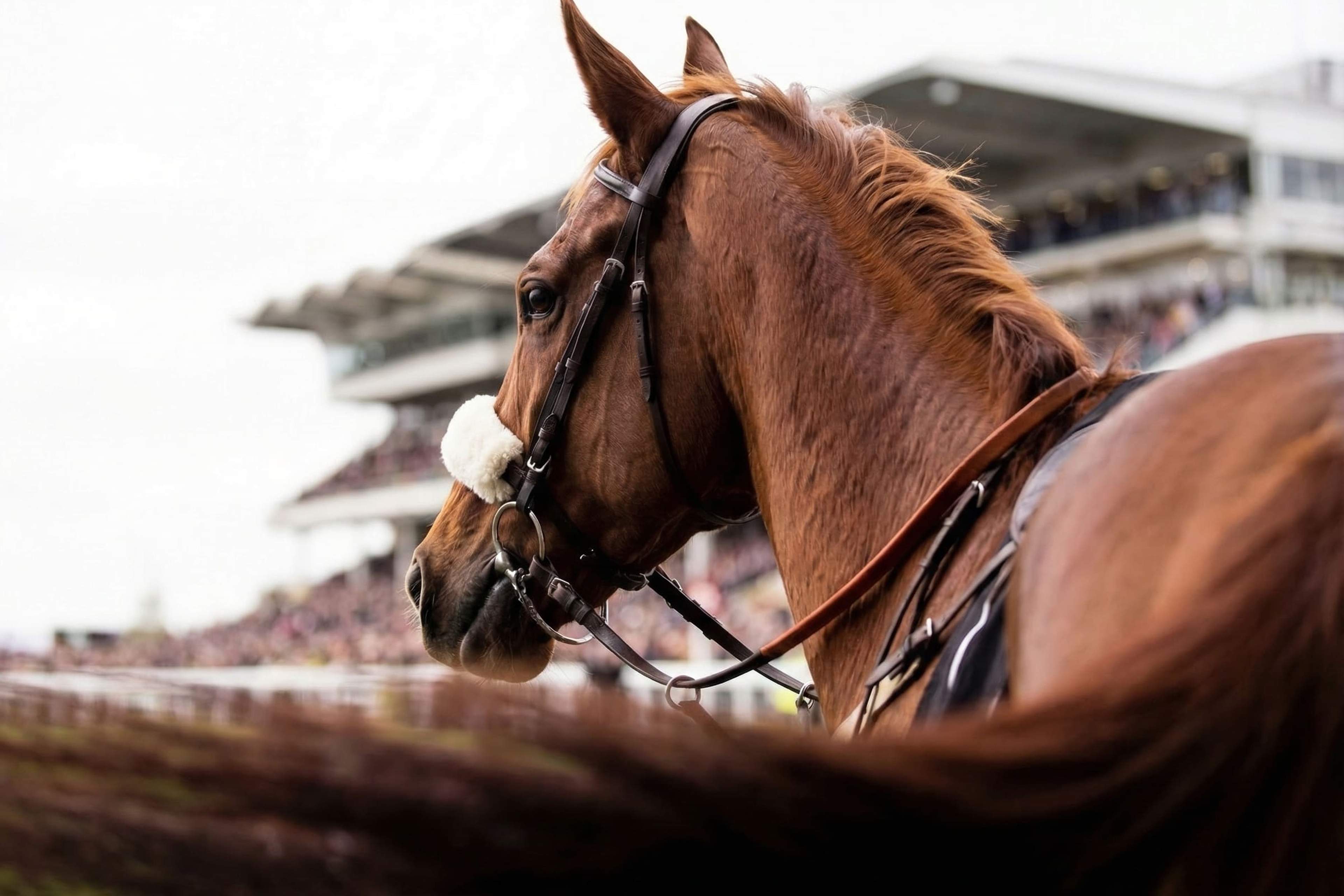
Friday is the closing day. The Gold Cup is the fourth and final championship of the meeting, after the Champion Hurdle on Tuesday, the Queen Mother Champion Chase on Wednesday and the Stayers' Hurdle on Thursday. It draws the largest field of championship-level horses and the deepest history.
The Friday card carries the Triumph Hurdle (Grade 1, four-year-old juvenile hurdlers), the County Handicap Hurdle (handicap), the Albert Bartlett Novices' Hurdle (Grade 1, novice stayers), the St James's Place Festival Hunters' Chase (commonly called the Foxhunters', for amateur riders over the Gold Cup course and distance), the Mrs Paddy Power Mares' Chase, and the Martin Pipe Conditional Jockeys' Handicap Hurdle, which traditionally closes the Festival.
For a one-day corporate visit, Friday is the most in-demand for hospitality and pulls the biggest media coverage. But each day rewards something different. Tuesday has the Roar and the Champion Hurdle; Wednesday brings the two-mile speed of the Champion Chase; Thursday, St Patrick's Thursday, is when the Irish crowd takes over the Village. Friday is still the day most people mean when they say they have done Cheltenham.

Sian Jones
Sport Events Operations Manager
Sport Events Operations Manager at Imperial Corporate Events. She’s the one on the ground making sure your day runs, from the Abu Dhabi Grand Prix to Royal Ascot.