
Summary
A Test match at Lord's is a full day out: about six hours of play, broken up by lunch and tea, at the most famous cricket ground in the world. It is one of the easiest days in sport to bring guests who don't follow the game. Here's what the day looks like, the few cricket words you'll actually need, and how the hospitality works.
Most people you take to their first Test ask the same thing within the hour: five days for one match, and it can still end in a draw? It sounds odd until you're there. By lunch they've settled in. By tea they're the ones explaining what's happening to someone else.
That slow build is exactly why a day at Lord's works so well with guests. You get hours together rather than a frantic ninety minutes, in a place worth visiting in its own right. Here's what to expect.
Why a Test Makes Such a Good Day Out
Most sport you'd take guests to is over in a hurry. A football match is ninety minutes and loud. A race is finished by mid-afternoon. A Test is the opposite, and that's the appeal. Play lasts around six hours, with proper breaks for lunch and tea, so nothing is rushed and there's time to actually talk. It suits a mixed group. The keen ones get a full day of cricket. The ones who came for the day out get the setting, the food and the company without having to follow every ball. Nobody feels lost, and nobody is bored.
How the Day Is Shaped
A day's play runs to a simple timetable, with two breaks built in.
- 11.00, play begins
- 13.00, lunchForty minutes, and the main sit-down meal.
- 13.40, the afternoon session
- 15.40, teaA twenty-minute break, written into the laws of the game.
- 18.00, close of playAround six, sometimes a little later.
Three sessions, two breaks, the whole day unhurried. On a hospitality day the breaks are also when the food comes out, so the cricket and the catering keep the same easy rhythm.
Cricket, in Plain English
If the game itself is new to you or your guests, these are the only words you really need for the day.
Innings
A team's turn to bat. In a Test, each team bats twice, so there can be up to four innings across the five days.
Over
Six balls bowled from one end. When you hear that there are ninety overs in a day, that is just how the play is counted.
Wicket
Getting a batter out. Each team has eleven players, and once ten are out the innings ends, because the last batter has nobody left to bat with.
Declaration
When a captain ends his own team's innings early, judging they already have enough runs and would rather use the time to bowl the other team out.
A draw
If the team batting last can't be bowled out before the five days run out, nobody wins. It isn't a tie, and it's often the tensest finish of all.
Test vs one-day
A Test is the five-day game, played in whites, the oldest and most traditional form. One-day and T20 are the shorter, coloured-kit versions that finish in a single afternoon or evening.
What Makes Lord's Special
Plenty of grounds host Test cricket. Lord's is the one people travel for, because of everything that surrounds the game.
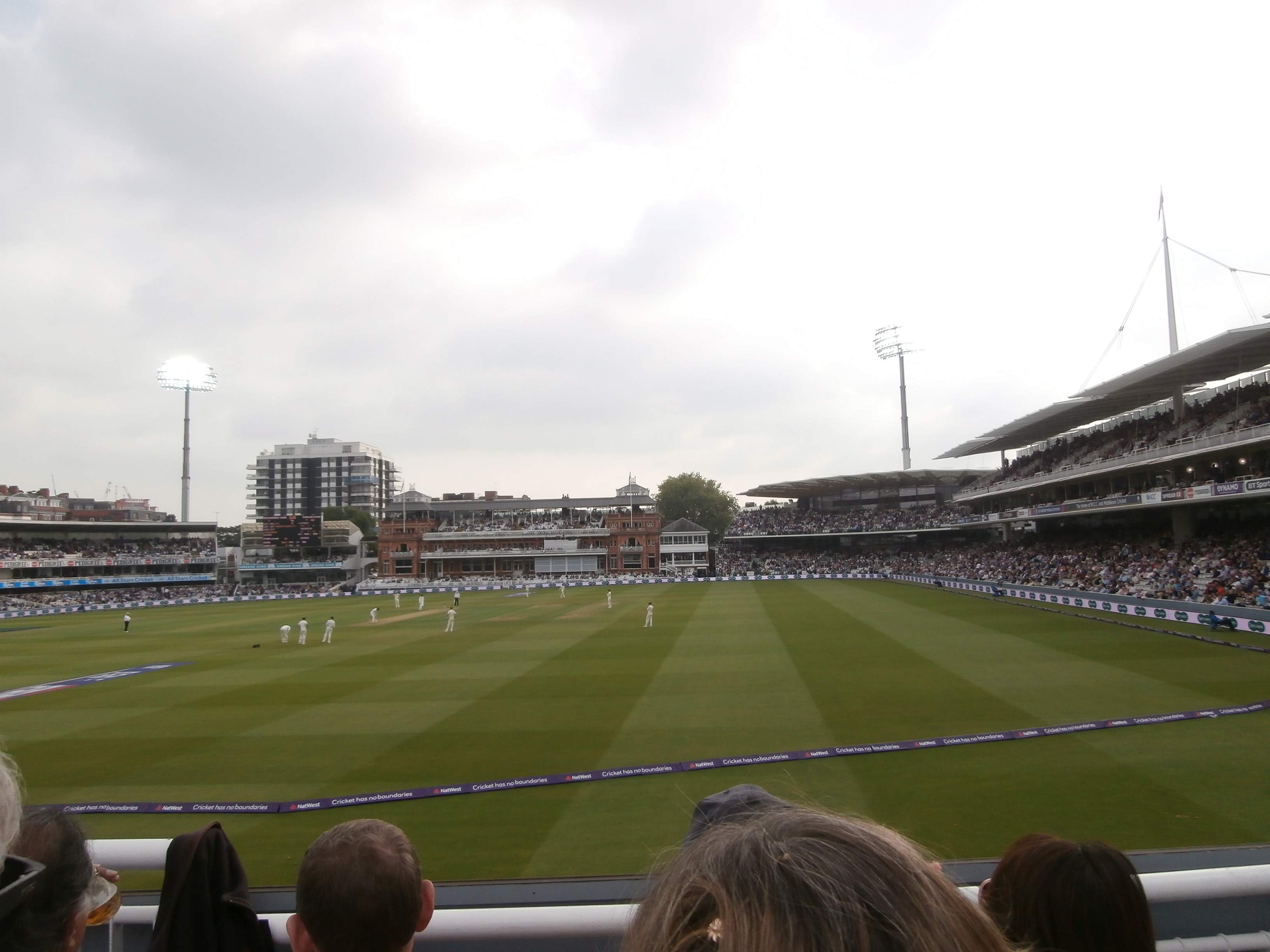
It has been the home of cricket since 1814, and it is still where the sport is run from. The MCC, based at Lord's, writes and keeps the actual Laws of Cricket.
The Pavilion is the grand Victorian red-brick building the players walk out from. Inside it is the Long Room, a wood-panelled hall the batsmen pass straight through on their way to the pitch, right past the members watching from their armchairs.
There is a famous slope across the outfield, a drop of about two and a half metres from one side to the other. It is enough to change how the ball moves through the air and off the ground, so bowlers actually choose which end to bowl from depending on how they want to use it.
The MCC Museum at the ground is the oldest sports museum in the world, and it is where the Ashes urn lives, the tiny terracotta trophy England and Australia have played for since 1882.
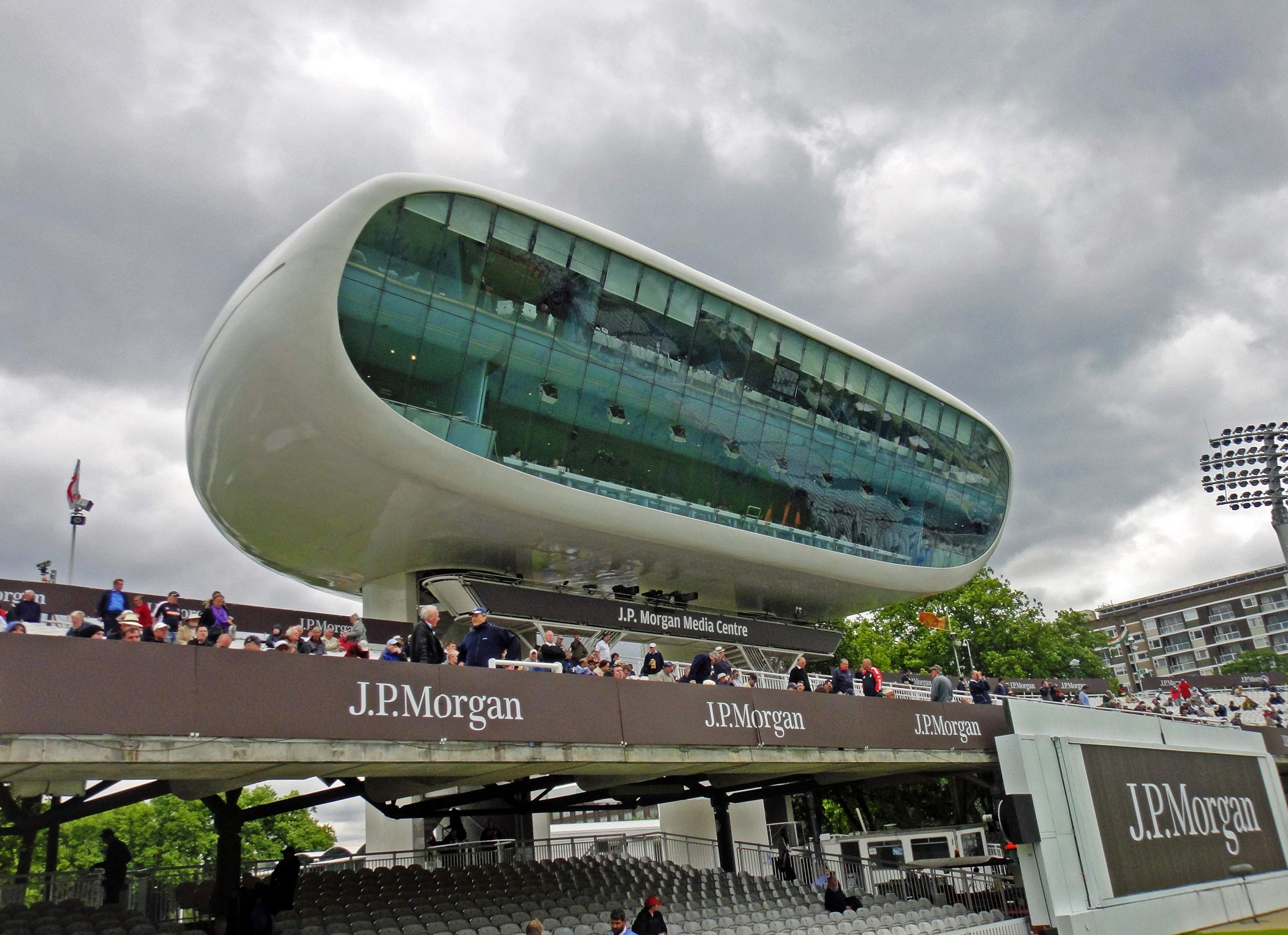
At the far end stands the Media Centre, built in 1999 and looking like it landed from space, the first building of its kind made entirely from aluminium. Old and new at either end, with the cricket in between.
Where You Watch From
This is the part we arrange. Without hospitality, a day at Lord's means a public seat in the stands, out in whatever the weather does for six hours. With it, you have a reserved seat for the cricket and somewhere comfortable to step back to between sessions.
There are a couple of options. A suite in the Pavilion puts you in the historic heart of the ground. The Nursery Pavilion sits at the back, beside the practice ground where the teams warm up, so you see the players up close before they are out in the middle. Either way the day includes a reserved seat for the cricket, a complimentary bar with Champagne, beer and wine, a three-course lunch served at the interval and the full Lord's afternoon tea when tea is called. A current player or a past great usually drops in during the day as well.
A Few Questions Guests Always Ask
Do I need to understand cricket to enjoy it?
Honestly, no. The day is built around long breaks and good food, and there's always someone happy to explain what's going on. Plenty of people come for the occasion as much as the cricket.
Why do they stop for lunch and tea?
Because the playing day is six hours long, and the breaks are part of the game's laws. Lunch is forty minutes, tea is twenty. On a hospitality day, those breaks are when the food is served.
What should I wear?
Smart casual is the safe answer for hospitality. Smart jeans, tailored shorts in warm weather and casual trousers are all fine; sports trainers and flip-flops are not. Some parts of the Pavilion keep a stricter dress code, but in a hospitality suite you won't need a tie unless you fancy one.
If a day's Test cricket at Lord's sounds right for your guests, these are the series we're hosting this summer.

Chloe Burchell
Event Manager
Event Manager at Imperial Corporate Events. She’s hosted clients at everything from the Six Nations to the Eastern & Oriental Express, and she’s good company on the day.