Summary
The F1 sprint is a 100-kilometre Saturday race on six selected 2026 weekends, jump to 2026 sprint weekends: China, Miami, Canada, Britain, the Netherlands and Singapore. The 2027 calendar expands that to ten Sprint weekends: Bahrain, Australia, Japan, Canada, Monaco, Britain, Italy, São Paulo, Qatar and Abu Dhabi. Points pay down to the top eight, jump to Sprint points (8-7-6-5-4-3-2-1) on the same championship table as the Grand Prix, and it runs as a standalone race that does not set Sunday's grid. Whether it actually works, jump to Does it work? as sport is still argued; whether it fills more grandstands and TV slots is not.
In short: a second, faster race, squeezed onto the Saturday.
- A 100km Saturday raceAbout a third of a Grand Prix distance, roughly half an hour, with no mandatory pit stop.
- Its own Friday qualifyingA separate three-part Sprint Qualifying on the Friday sets the sprint grid, nothing else.
- Points to the top eight8-7-6-5-4-3-2-1, added straight onto the season-long championship.
- No effect on SundaySince 2023 it is standalone: the result does not touch the Grand Prix grid.
The F1 sprint race is a shorter, secondary race held on the Saturday of selected Grand Prix weekends. It runs its own qualifying on the Friday, carries its own championship points, and stands separate from Sunday's race.
The format has changed three times since it was introduced in 2021, and the current version is the cleanest of the three.
Why the sprint exists
F1 introduced the sprint race in 2021 to give the Friday and Saturday of a Grand Prix weekend more competitive content. The classic format runs Free Practice 1 on Friday morning, Free Practice 2 on Friday afternoon, Free Practice 3 on Saturday morning and qualifying on Saturday afternoon. Nothing on Friday counts toward the championship. Nothing on Saturday morning counts. The sport's commercial side wanted something happening on every day of a Grand Prix weekend that mattered enough for a fan to fly in for or a broadcaster to commit a slot to.
The first version, in 2021 and 2022, used the sprint as a qualifying session for Sunday. The Saturday sprint's finishing order became Sunday's grid. The argument against that version was that drivers raced cautiously on Saturday to protect Sunday's grid position. The format was revised for 2023 and again for 2024 onwards: the sprint is now a standalone race with no influence on Sunday's grid.
The 2026 sprint weekends
Which races feature sprints
The six 2026 Sprint weekends are China, Miami, Canada, Britain, the Netherlands and Singapore. In 2027, the ten Sprint weekends are Bahrain (12–14 March), Australia (2–4 April), Japan (9–11 April), Canada (21–23 May), Monaco (4–6 June), Britain (2–4 July), Italy (3–5 September), São Paulo (5–7 November), Qatar (3–5 December) and Abu Dhabi (10–12 December). These are race-weekend dates, not a list of trips available to book.
Bahrain, Australia, Japan, Monaco and Abu Dhabi host Sprints for the first time in 2027. Canada and Britain retain the format, while Italy, São Paulo and Qatar bring it back. China, Miami and Singapore return to standard weekends; the Netherlands is absent from the 2027 calendar.
The weekend schedule
Friday and Saturday schedule
A sprint weekend has one practice session instead of three. The schedule, in order:
Friday: Free Practice 1 comes first, followed by Sprint Qualifying, run in three knock-out segments: SQ1 lasts 12 minutes, SQ2 10 and SQ3 eight. The fastest driver in SQ3 takes Sprint pole. Session start times vary by circuit.
Saturday: the Sprint race in the late morning or early afternoon, depending on the circuit. Then standard qualifying for Sunday's Grand Prix later on Saturday. The sprint race and the main qualifying are completely separate sessions; the sprint result does not influence the main qualifying grid.
Sunday: the Grand Prix itself, exactly as on a standard weekend.
A standard weekend has three practice sessions and one qualifying session before the Grand Prix. Most run from Friday to Sunday; Las Vegas follows a Thursday–Saturday schedule and does not host a Sprint in 2027.
The sprint race itself
Sprint race format and rules
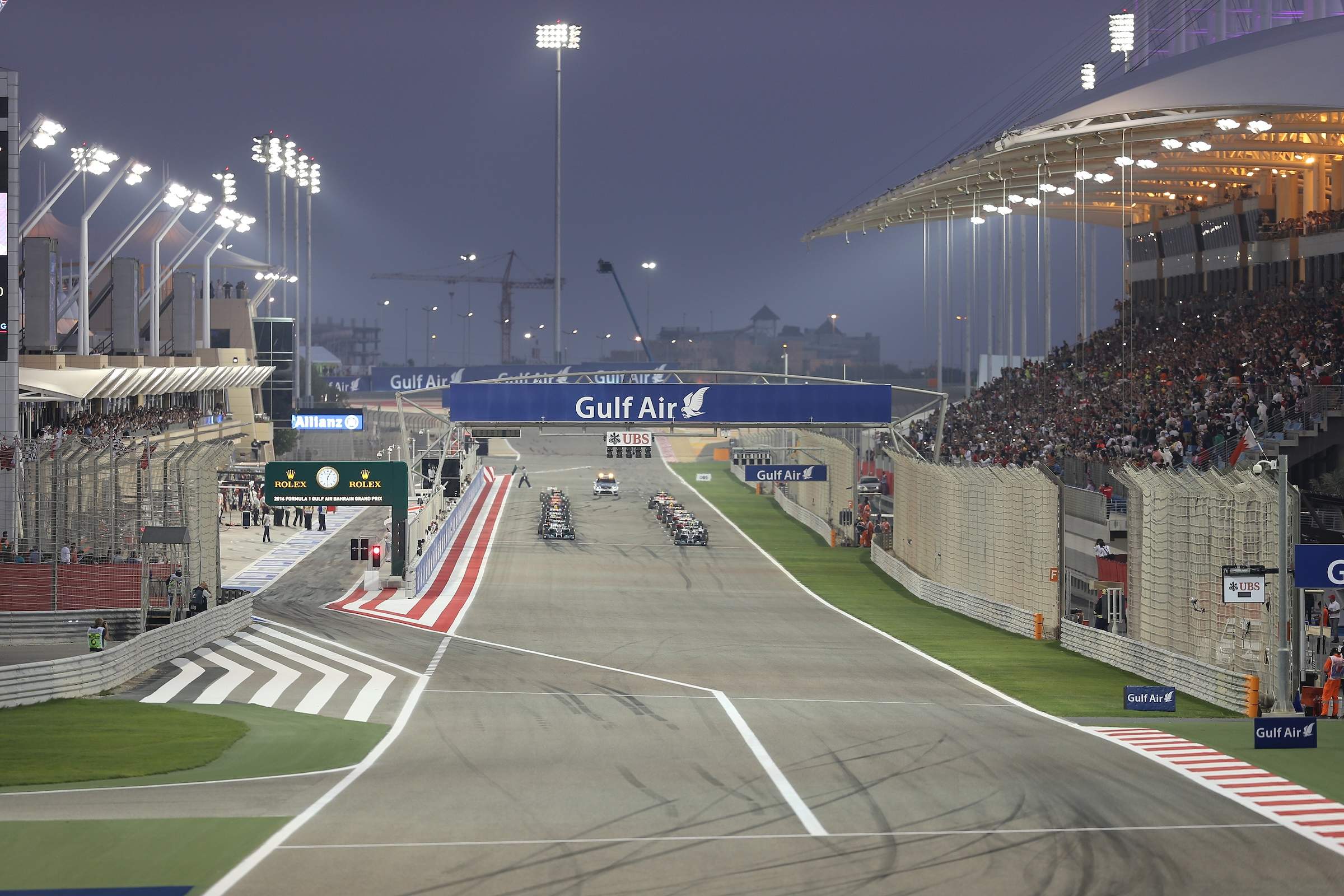
The Sprint covers approximately 100km, so the lap count depends on circuit length. It usually takes around 30 minutes. Pit stops are allowed but are not mandatory, and their time cost makes them unusual in such a short race.
Cars start from a standing start, in the grid order set by sprint qualifying. The race rolls with the same flag and incident rules as a Grand Prix: virtual safety car, full safety car, red flag, blue flags for back-markers. Overtaking relies on the same aids as a normal 2026 race: active aerodynamics on the straights and the Overtake Mode power boost that replaced DRS.
Tyres at sprint weekends are run on a single weekend allocation across all sessions. Drivers receive a fixed number of dry sets (in recent seasons, 12 sets per driver) which they must manage across practice, sprint qualifying, the sprint race, main qualifying and the Grand Prix. The sprint is most commonly run on soft or medium tyres; hard tyres are rarely used.
Points for the sprint
Championship points explained
The sprint pays out championship points to the top eight finishers. The points are added to the season-long Drivers' Championship and the Constructors' Championship. The scale is:
1st
8 points
2nd
7 points
3rd
6 points
4th
5 points
5th
4 points
6th
3 points
7th
2 points
8th
1 point
9th to 22nd
Zero.
A Grand Prix winner earns 25 points and a Sprint winner eight. Winning all six Sprints in 2026 yields 48 points; winning all ten scheduled Sprints in 2027 yields 80. Those are the maximum Sprint points for one driver, assuming every Sprint awards full points.
Fastest lap awards no points, in the sprint or the Grand Prix: F1 scrapped the fastest-lap bonus point from the 2025 season.
Sprint Qualifying versus standard Qualifying
Structure and timing differences
Both sessions follow the same knock-out structure: three segments, six cars eliminated after the first two segments, ten cars contesting the fastest lap in the third. The difference is timing:
Standard Q1 is 18 minutes, Q2 is 15, Q3 is 13. SQ1 is 12 minutes, SQ2 is 10, SQ3 is 8. SQ runs around 45 minutes from start to finish; standard qualifying runs about 60.
Sprint Qualifying has its own tyre rules and shares the weekend’s tyre allocation with practice, the Sprint and the Grand Prix. It should not be treated as an unrestricted choice of tyres; the regulations and conditions govern what teams can use.
Does the sprint work?
The sporting argument against the Sprint is that it can give another eight points to the driver already best placed to win the Grand Prix. A driver who wins both races on a full-points weekend earns 33 points. Across the ten scheduled Sprints in 2027, a driver can earn up to 80 Sprint points, compared with 48 across the six in 2026.
Formula 1 cites audience and attendee demand in its decision to expand the format for 2027. A Sprint weekend provides competitive sessions on Friday, Saturday and Sunday, rather than concentrating qualifying and racing into the final two days.
The expansion is confirmed for 2027: ten of the 24 Grands Prix will have a Sprint, with 14 retaining the standard format. A circuit’s Sprint status can change between seasons, so the year matters when planning which days to attend.
How to watch one
A sprint weekend simply means more racing for the same trip. Friday brings competitive content in sprint qualifying, Saturday delivers an actual race plus qualifying for Sunday, and Sunday is the Grand Prix exactly as ever.
For a guest unfamiliar with F1, the Sprint offers a shorter race to follow: approximately 100km, usually around half an hour. Tyre choice and race management still matter. For a guest who already follows F1, it can give an early indication of race pace and tyre wear.


Chloe Burchell
Event Manager
Event Manager at Imperial Corporate Events. She’s hosted clients at everything from the Six Nations to the Eastern & Oriental Express, and she’s good company on the day.