Summary
Goodwood Revival is the only motor weekend in Britain where period dress from 1948 to 1966 is the unwritten uniform, and the crowd cheerfully out-dresses the cars. Modern clothes will not get you turned away, but against a field of tweed and tea dresses they feel like a tracksuit at a wedding. Here are the looks for men, jump to Men and women, jump to Women, plus the stricter Central Paddock, jump to Central Paddock: a stricter brief brief.
Nobody enforces it at the gate. The crowd, and the photographs, do that for them.
Goodwood Revival is a three-day historic motor-racing meeting at the Goodwood Motor Circuit in West Sussex each September, built around the years the track ran top-flight racing: 1948 to 1966. The dress code is the whole point. Period attire is encouraged rather than required, but so many people commit that turning up in modern clothes feels like missing the joke everyone else is in on.

What period dress actually means
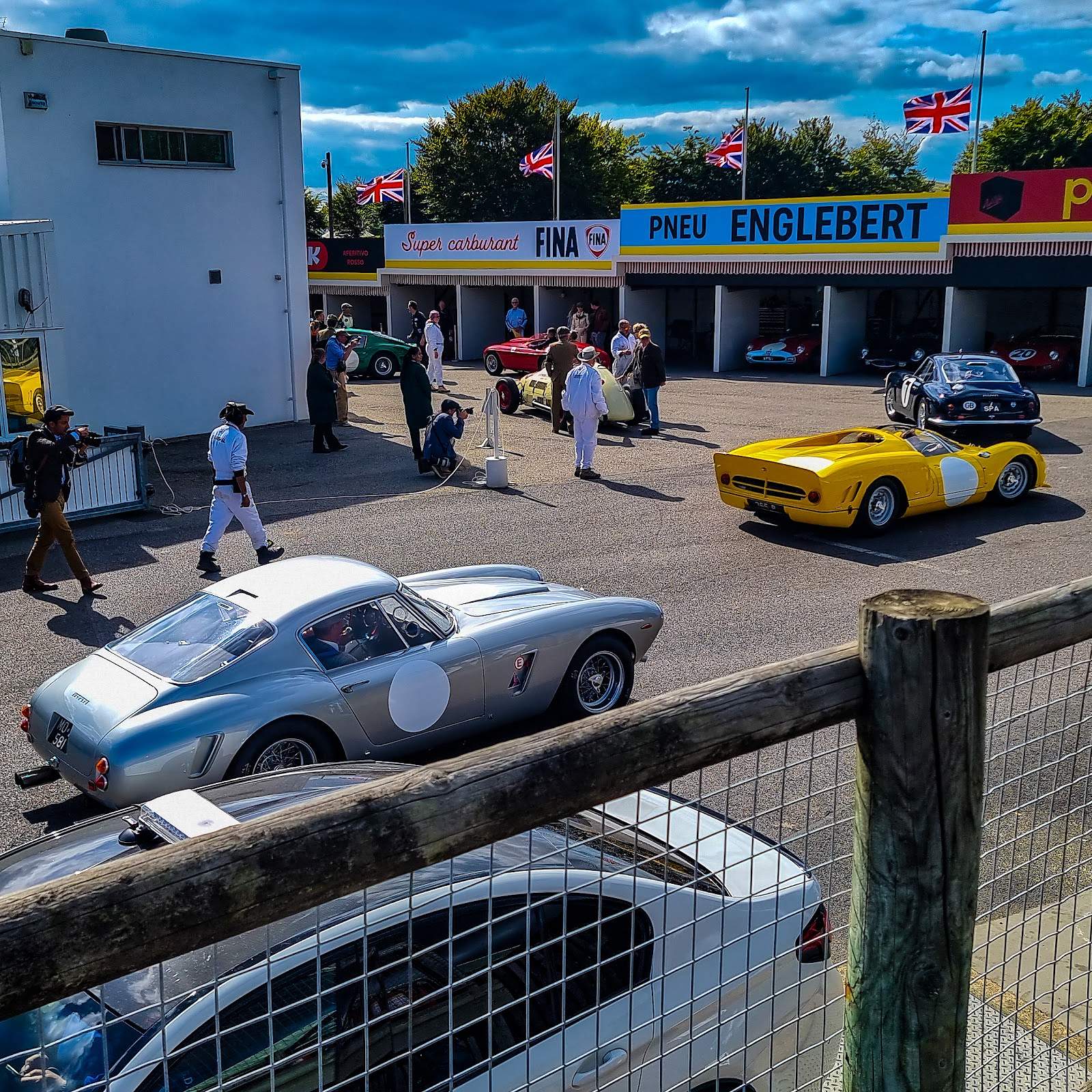
It means the 1940s, 1950s or 1960s, read broadly. Authenticity is celebrated, precision is not policed: a 1950s tea dress will not be quizzed on its exact year, but 1980s jeans and a band T-shirt will stand out a mile. Wartime utility cuts, the New Look, swinging-sixties tailoring, all of it works. The one firm line is tone rather than fabric, since the Revival's guidance rules out controversial uniforms and costumes that appropriate or offend, while welcoming authentic British and European period military dress.
Men
- The 1950s tweed lookA tweed three-piece, a flat cap or trilby, brogues, a pocket square and a leather-strap watch. The Revival default, and there are more flat caps here per square foot than anywhere in Britain.
- The late-1940s demob suitNavy serge, wide shoulders, double-breasted. Wartime tipping into peacetime, and quietly sharp.
- Mid-1960s modSlim-cut Italian tailoring in fine wool, the sharpest end of the period.
- The teddy boyDrape jacket, drainpipe trousers, brothel creepers, slicked hair. A 1950s subculture that reads dead right.
- Period uniformAn authentic RAF, Army or Navy officer's uniform from the war years. Welcomed; the line is respect, not the decade.
Accessories carry a lot of it: a pocket watch on a chain, horn-rimmed glasses, driving gloves, braces under high-waisted trousers. What kills the look is a modern-cut suit, jeans of any vintage, trainers, a smartwatch or wraparound sunglasses. A modern haircut is fine; a modern suit is not.
Women
- The 1950s tea dressFitted bodice, full skirt, gloves, seamed stockings, modest heels, in polka dots, gingham or ditsy florals. It dominates the lawns because it photographs beautifully.
- 1940s utilityA knee-length skirt, a square-shouldered jacket and victory-roll hair in muted tones. Wartime make-do, done well.
- Late-1950s circle skirtA full circle skirt over a petticoat, often in candy-coloured cotton. Maximum twirl.
- 1960s shift or Mary Quant miniA-line shifts and bouffant hair, or a mod mini if the rest of the outfit reads period.
Hats are encouraged and the Ascot base rules do not apply: pillboxes, tied headscarves, wide-brim straws for sun, felt cloches for cooler days. On the feet, kitten heels, T-bars, Mary Janes or two-tone saddle shoes for the long walks. Finish with cat-eye sunglasses, white gloves and pearls. What reads wrong is modern trainers, visible logos and a smartwatch on the wrist.
Central Paddock: a stricter brief
The Central Paddock, where the cars are prepared and the most coveted enclosures sit, adds a rule on top of the period encouragement: a jacket and tie for men, a dress or suit for women, in or out of period. A man in 1950s tweed simply adds the tie, and a woman in a 1960s shift is already there. Modern dress is allowed if it meets the bar, but in the smartest corner of the meeting it sticks out badly, and almost nobody risks it.
What gets you turned away
Outside the Central Paddock there is no hard code, and modern dress will not see you refused. The real bars are about tone: controversial uniforms, SS dress above all, are out, and costumes that appropriate are discouraged in writing. Beyond that, enforcement is left to the crowd. The Revival's photographs are full of the people who got it right, while the visitors in modern clothes mostly end up photographing each other realising they did not.
Where to find the look
First-timers almost always hire. Several British vintage costumiers carry full Revival wardrobes from late August, and Goodwood publishes a list of suppliers each year; it costs less than building an outfit from scratch and spares you the question of what to do with a tea dress for the other 364 days. Repeat guests tend to buy, trawling vintage fairs in Lewes, Brighton and Spitalfields, or the dedicated shops in Soho and Brighton, and the Revival's own Over the Road vintage village is good for a last-minute accessory.
Practical notes
Three things the regulars sort in advance. Sussex in September can give you sun, cloud and showers in one afternoon, so layer where the period allows. The circuit is the better part of two and a half miles around, so period flats or low heels win, with modern insoles hidden inside vintage shoes. And a film camera, or at least a phone kept discreet, keeps your photographs in step with everyone else's.
Getting the look right is most of the day at the Revival, and getting the access right is the other half, which is where we come in.
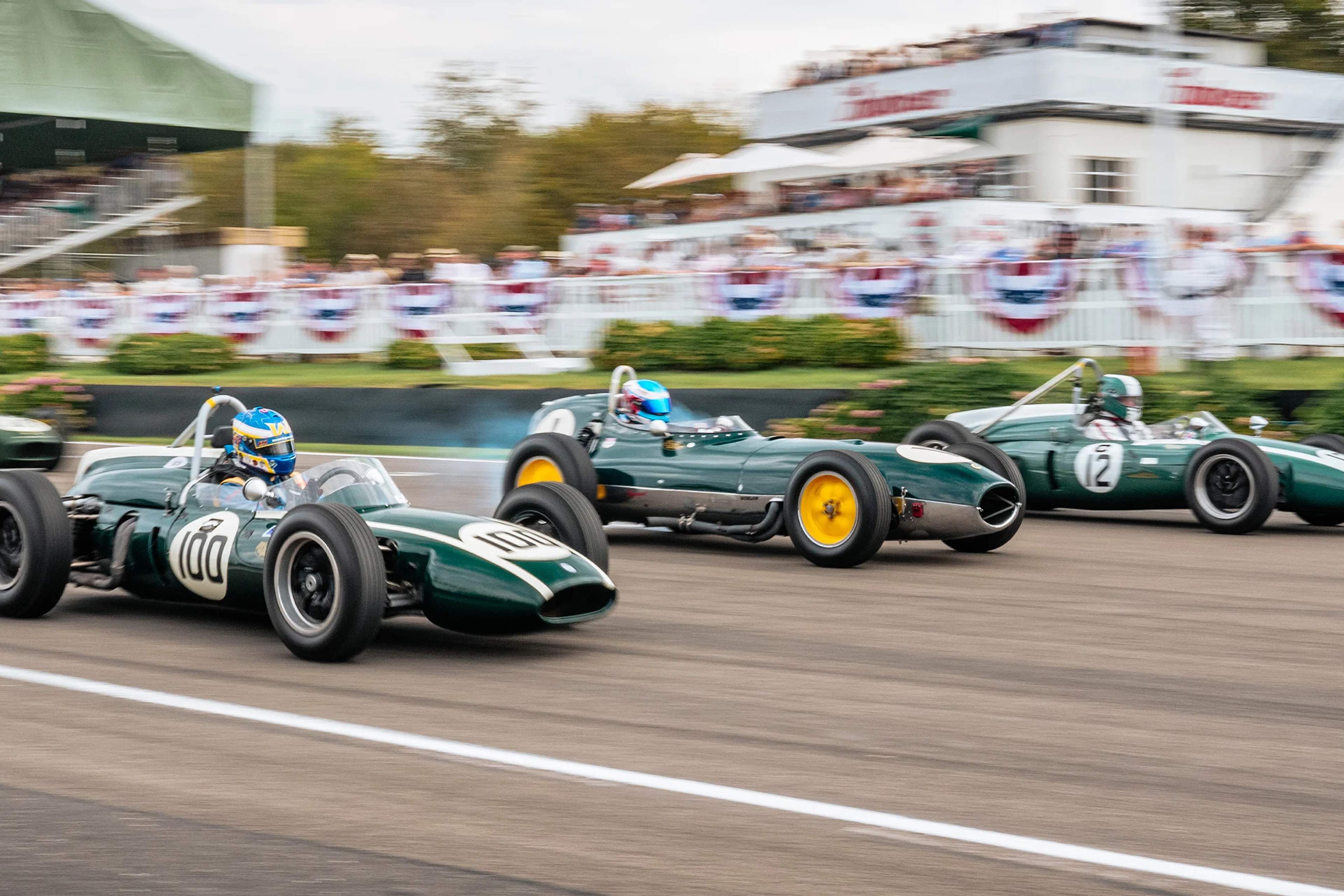
At Goodwood Revival the cars are the smallest part of the costume. Dress for the era they came from and you vanish happily into the crowd; turn up in modern clothes and the day's photographs become a record of standing just outside a party you came for.

Sian Jones
Sport Events Operations Manager
Sport Events Operations Manager at Imperial Corporate Events. She’s the one on the ground making sure your day runs, from the Abu Dhabi Grand Prix to Royal Ascot.