Summary
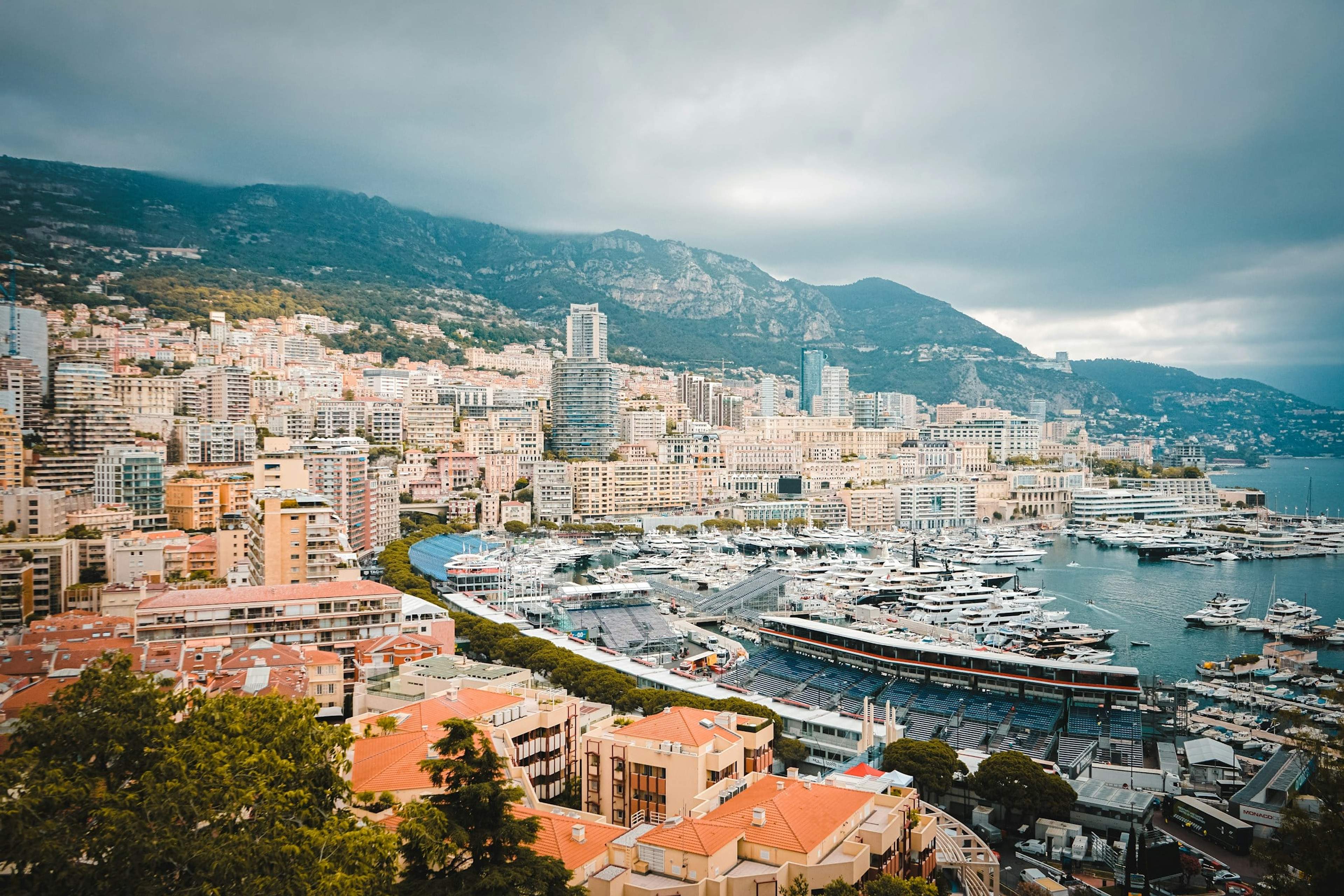
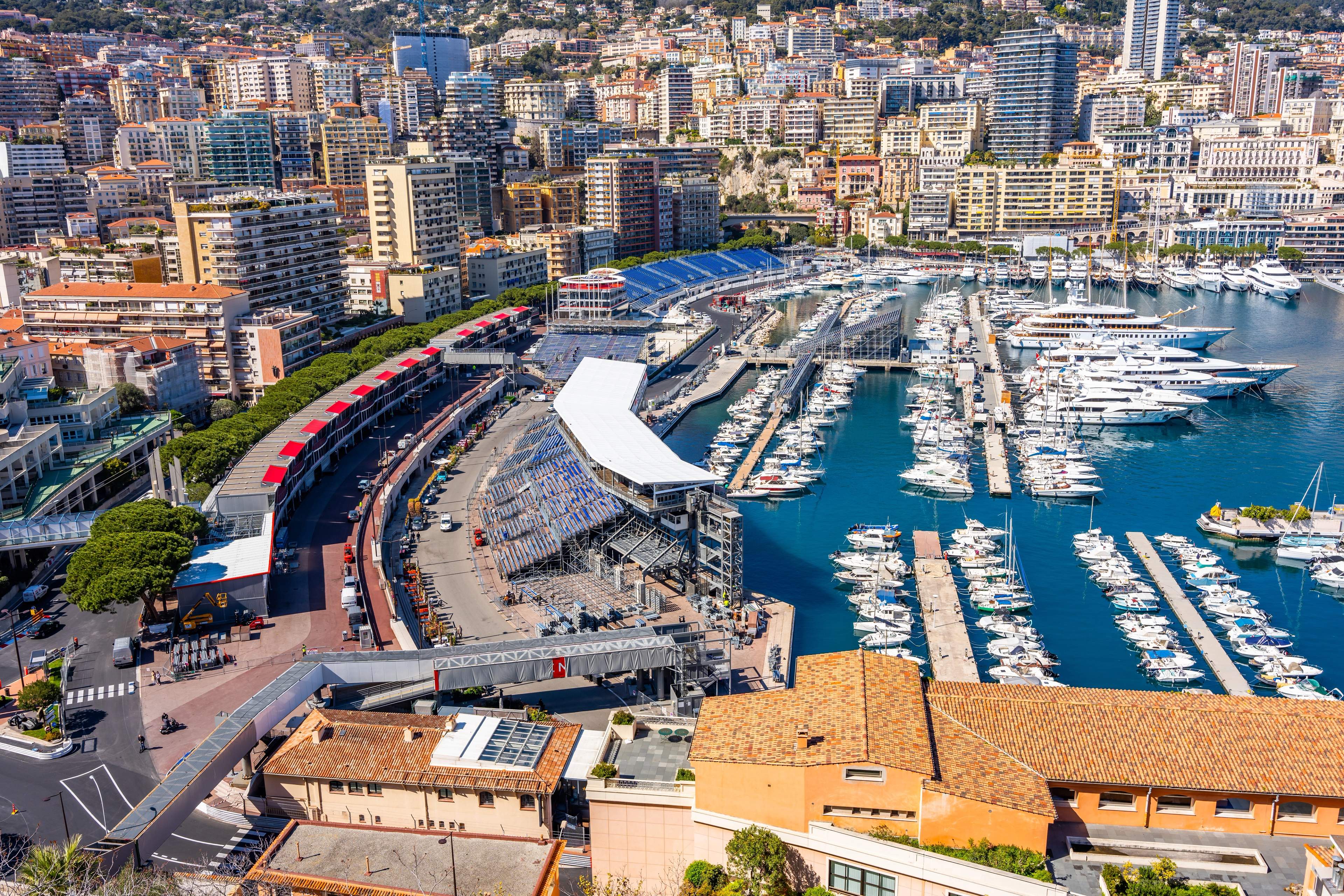
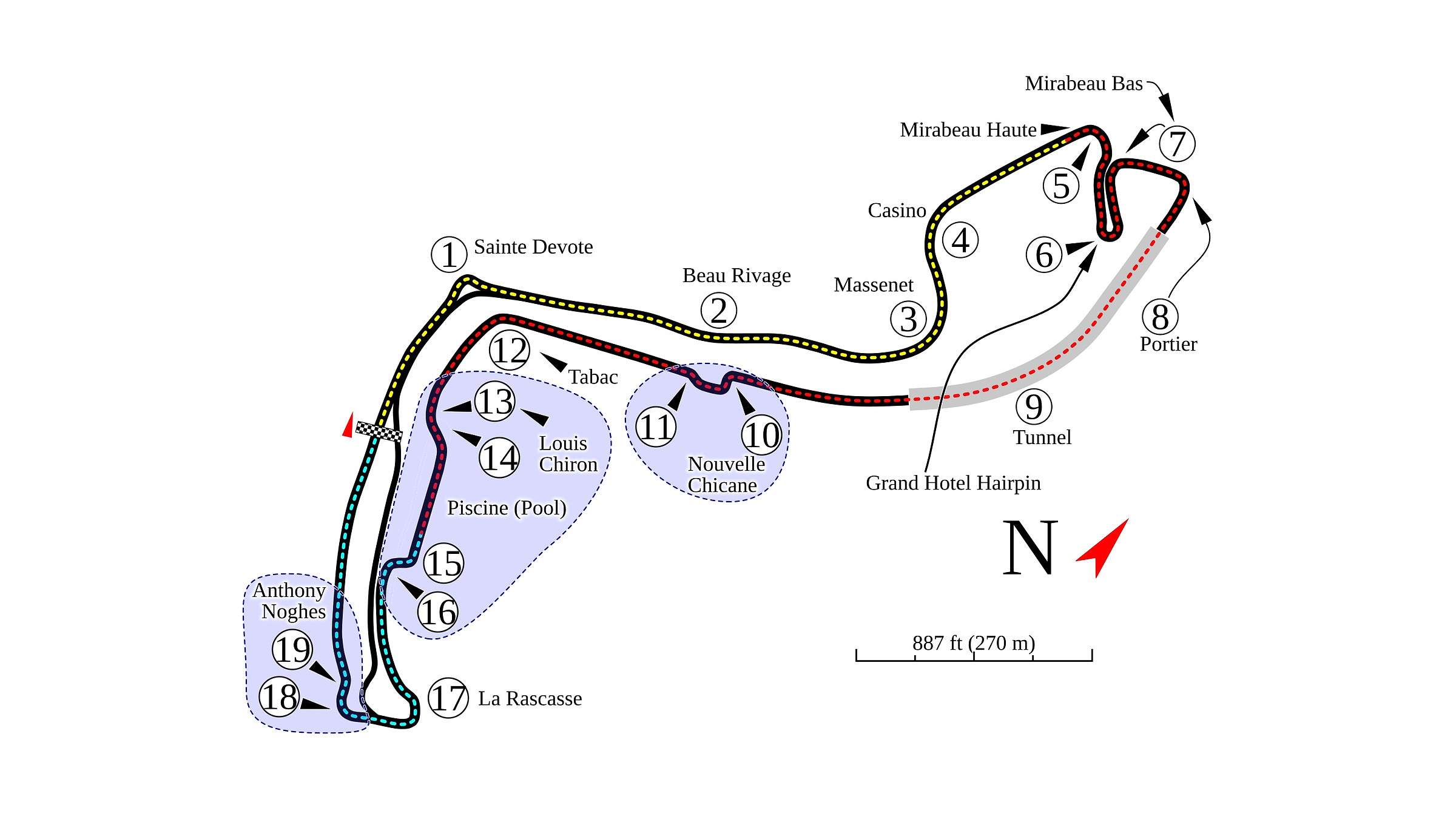
The Circuit de Monaco is 3.337km of public streets, closed and fenced off for the race. A lap has 19 corners. It climbs from Sainte-Dévote to Casino Square, drops through the slowest corner in Formula 1, jump to The hairpin and runs through a tunnel under a hotel, jump to The tunnel before it finishes along the harbour. In 2027 you can watch from three places on it with us, jump to Where we watch: above the hairpin, at Tabac and between the swimming pool and La Rascasse.
The Monaco Grand Prix is raced on the streets of Monaco itself. The circuit is 3.337km long and has 19 corners, and the Grand Prix runs for 78 laps. Several corners take their names from what stands beside them. The list includes a chapel, a casino, a hotel and a tobacco shop.
What kind of circuit is Monaco?
Monaco is a street circuit. Its track is made of ordinary public roads, which are closed and lined with barriers for the racing. Cars have raced on these streets since 1929. That year the Automobile Club de Monaco organised the first Grand Prix. The idea came from Antony Noghès of the Automobile Club. William Grover-Williams won the race in a Bugatti.
When Formula 1 asked the organisers about the job in 2014, they put the build at about six weeks and the dismantling at about three. The build used around 21km of safety rail and 3,000 tyres for the barriers. Around 250 people worked on it.
The roads stay in use while the circuit stands. In 2014 the organisers told Formula 1 that they reopened the roads to ordinary traffic each evening of race week, once the day on track was over. Some streets stay closed for much longer. In 2026 the same streets held three race meetings in a row. The Historic Grand Prix ran in April and the Grand Prix in June. Formula E, the electric racing series, raced there in May. The government’s notice for the works ran from 23 February to 17 July.
Lap length
One lap is 3.337km.
Race distance
The Grand Prix runs for 78 laps. The official race distance is 260.286km.
Corners
A lap has 19 corners.
Slowest corner
The cars take the Fairmont Hairpin at under 50km/h.
Fastest point
The cars pass the kink inside the tunnel at more than 260km/h.
First race
The first Monaco Grand Prix ran on 14 April 1929.
Sainte-Dévote, the first corner
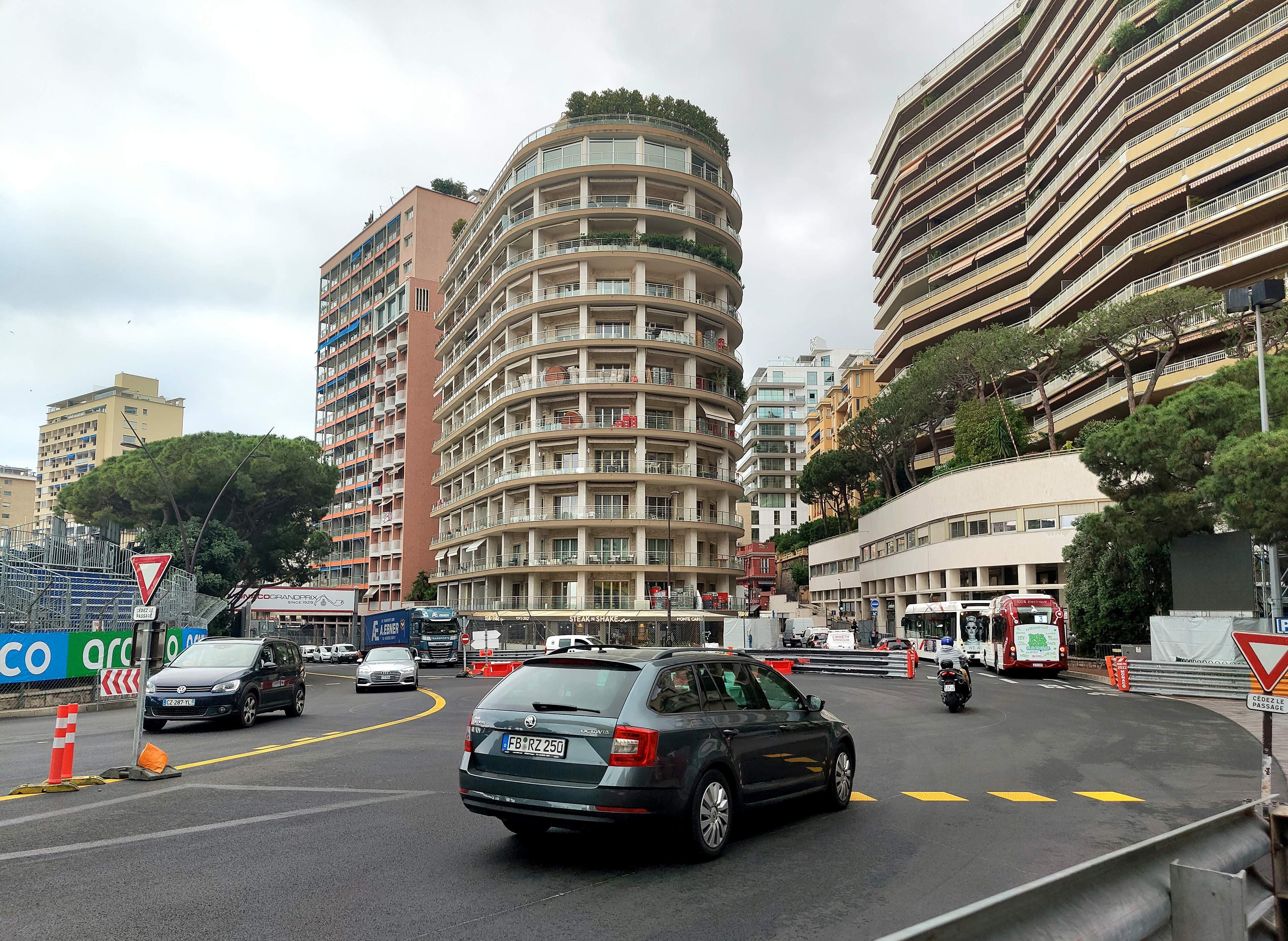
The lap starts on Boulevard Albert Ier, the straight that runs along the top of the harbour. After a short sprint the cars reach Sainte-Dévote, a right-hand turn of almost 90 degrees. On the first lap of the Grand Prix the whole field arrives here at once, and many first-lap accidents have happened at this corner.
The corner is named after the small chapel just behind the barriers. Dévote is the patron saint of Monaco. According to the legend, her body was carried to Monaco by boat and buried in the valley where the chapel now stands. Every year on the evening of 26 January, Monaco burns a boat by the harbour on the eve of her feast day.
Up the hill to Casino Square
From Sainte-Dévote the track climbs Avenue d’Ostende. The gentle bend on the way up is called Beau Rivage, which means beautiful shore. The road rises steeply here, and the drivers can’t see over the crest at the top.
Massenet is the long left-hand corner at the top of the hill. It takes its name from Jules Massenet, the French opera composer, whose statue stands nearby.

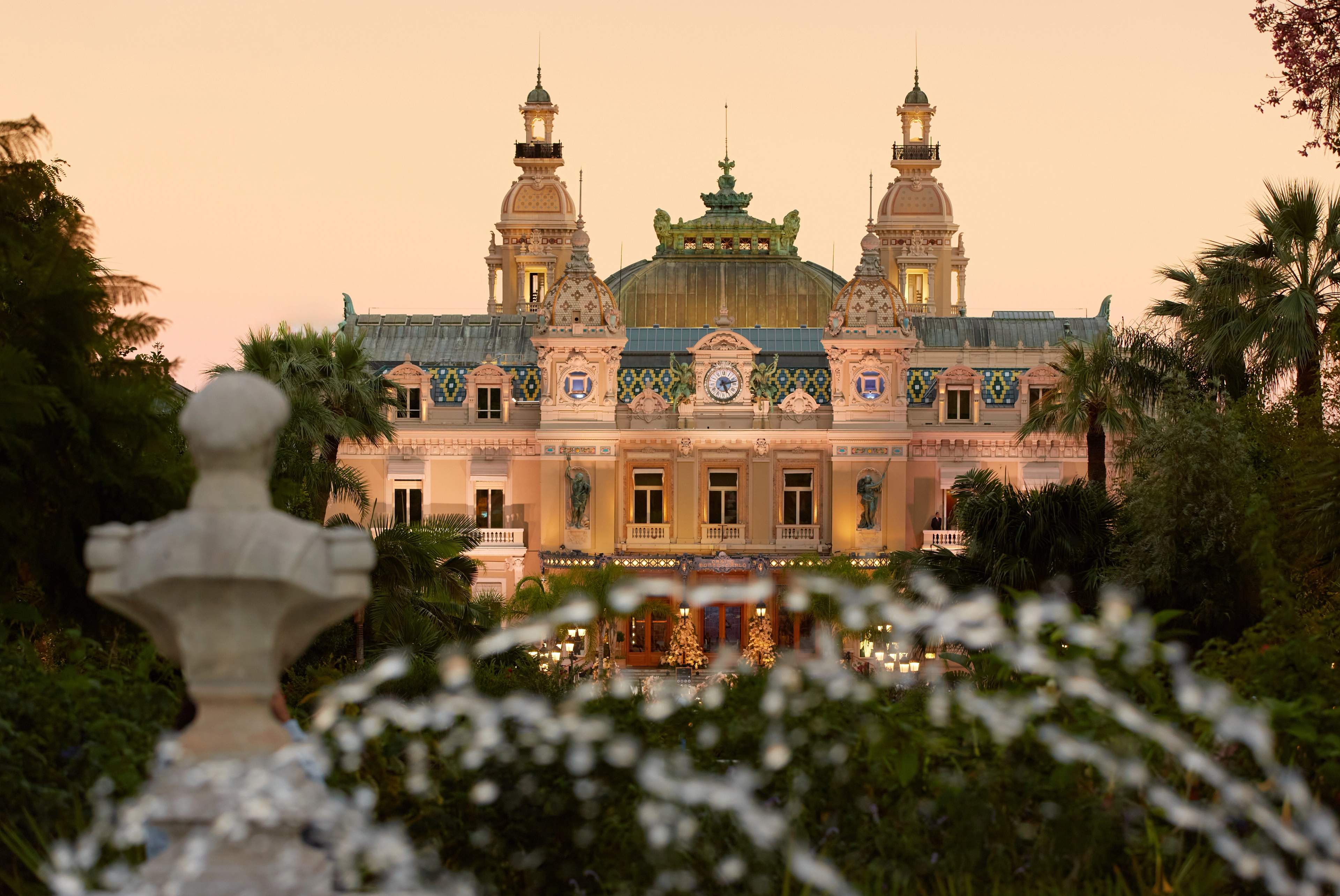
Casino Square comes straight after. The cars pass the front of the Casino de Monte-Carlo and the Hôtel de Paris, then turn right and start downhill. From here the road falls almost all the way to the sea at Portier.
Mirabeau and the Fairmont Hairpin
Mirabeau Haute is a tight right-hand corner at the bottom of a short run down from the casino. It shares its name with Mirabeau Bas further down the hill. Both are named after the Hotel Mirabeau, which stood beside the track and is now an apartment block. Haute and bas are French for high and low.
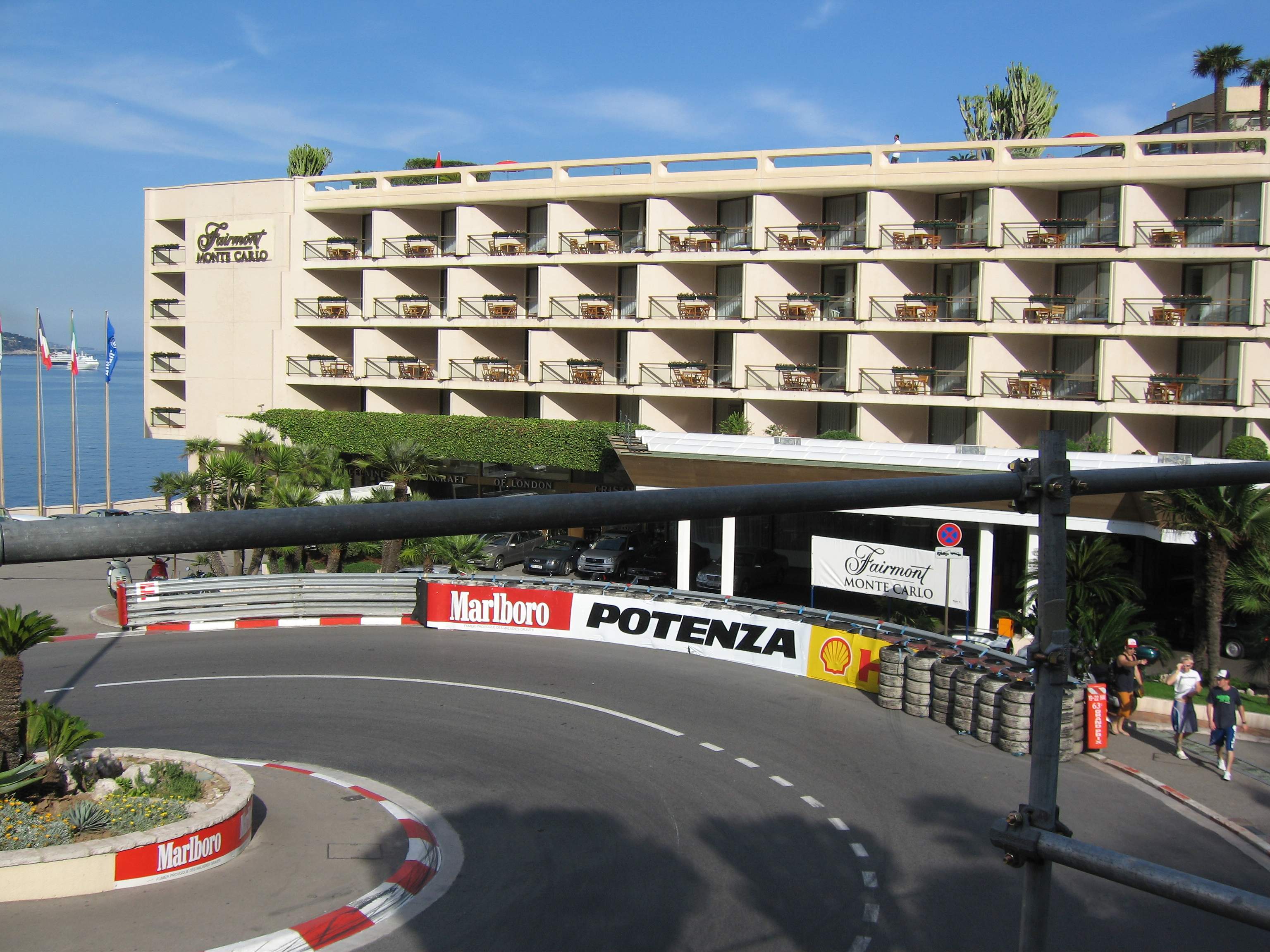
Between the two is the hairpin, a corner that turns back on itself like the bend in a hairpin. It is the slowest corner in Formula 1, and the cars take it at under 50km/h. It needs so much steering lock that the teams adjust the steering and suspension so the front wheels can turn further than usual.
The hairpin has had four names, and each came from the building beside it. It was the Station Hairpin while a railway station stood on the site. The hotel built there opened as the Loews in 1975, and the corner became the Loews Hairpin. It turned into the Grand Hotel Hairpin when the hotel was sold in 1998. It has been the Fairmont Hairpin since the hotel became the Fairmont Monte-Carlo.
Portier and the tunnel
Portier is a double right-hand corner that takes the cars down onto the seafront. It is named after Le Portier, the neighbourhood around it. Ayrton Senna crashed out of the lead here on lap 67 of the 1988 race, after he lost concentration and hit the barrier.
The tunnel follows. It runs underneath the Fairmont along the seafront. It is the fastest part of the lap. The cars pass the gentle right-hand kink inside it at more than 260km/h. At that speed the drivers go from daylight into artificial light and back into daylight again.
In the rain the tunnel tends to stay drier than the rest of the track. Before the wet 1984 race, the local fire crews wet the road inside it to try to even out the grip.

The harbour: the Nouvelle Chicane and Tabac
The cars come out of the tunnel and brake hard for the Nouvelle Chicane. A chicane is a tight sequence of bends put in to slow the cars down. This is the heaviest braking point after the fastest part of the lap, so it is where most overtaking moves at Monaco are tried.
It used to be called the Chicane du Port. It was rebuilt as a slower corner in 1986 and renamed Nouvelle, which is French for new. Before today’s barriers, two drivers went off here and ended up in the harbour. Alberto Ascari went into the water while leading in 1955, and Paul Hawkins did the same in 1965.
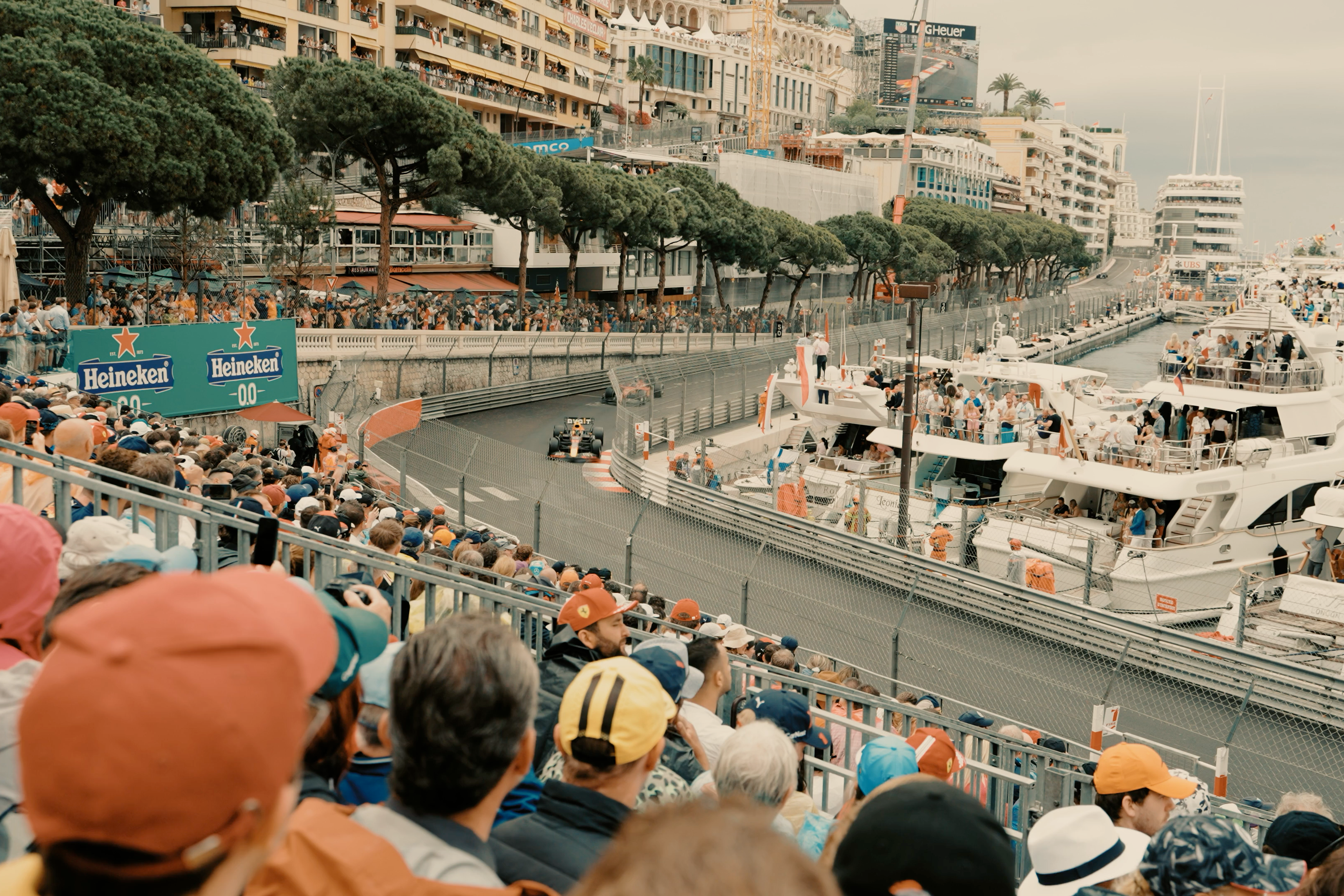
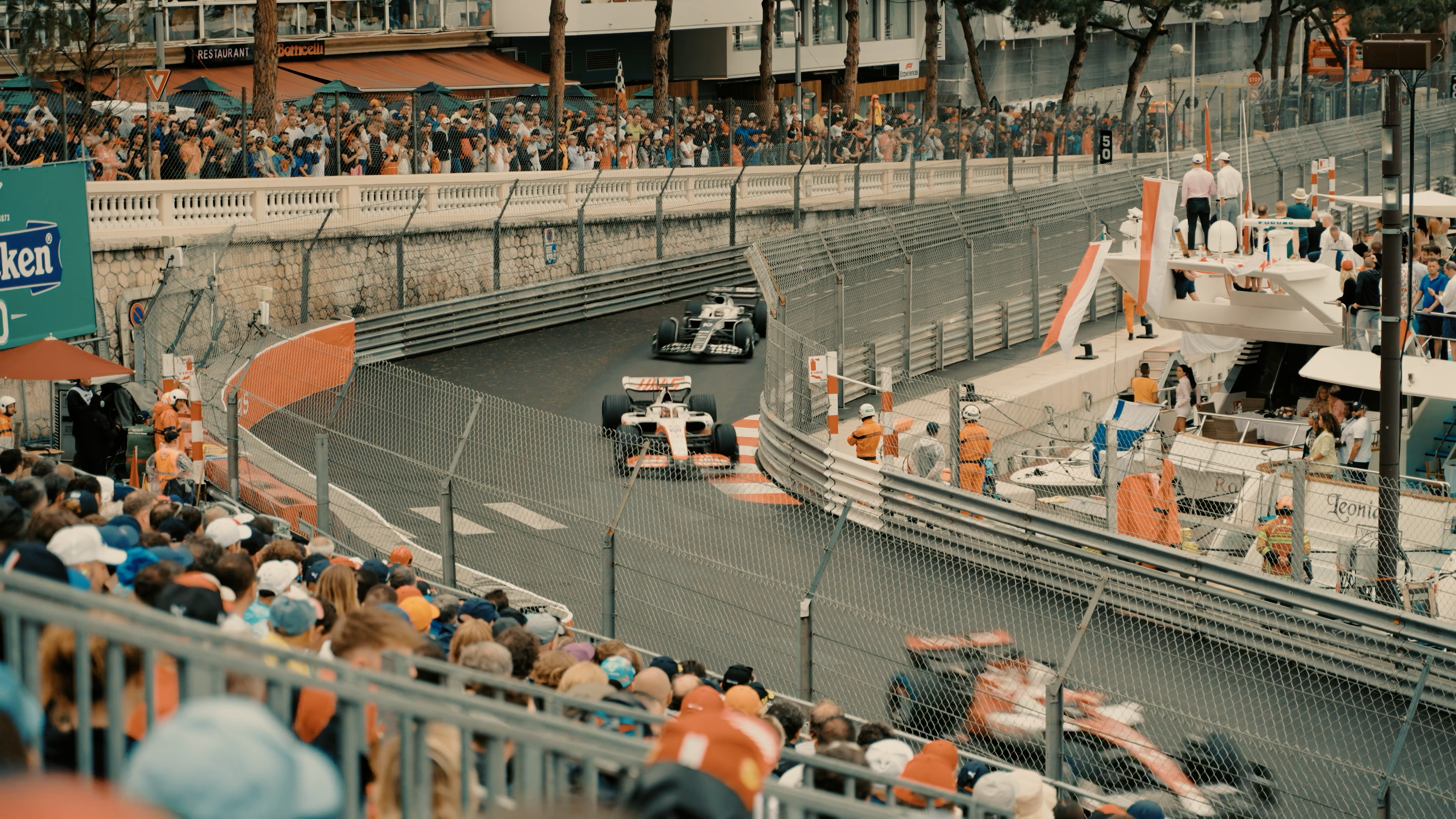
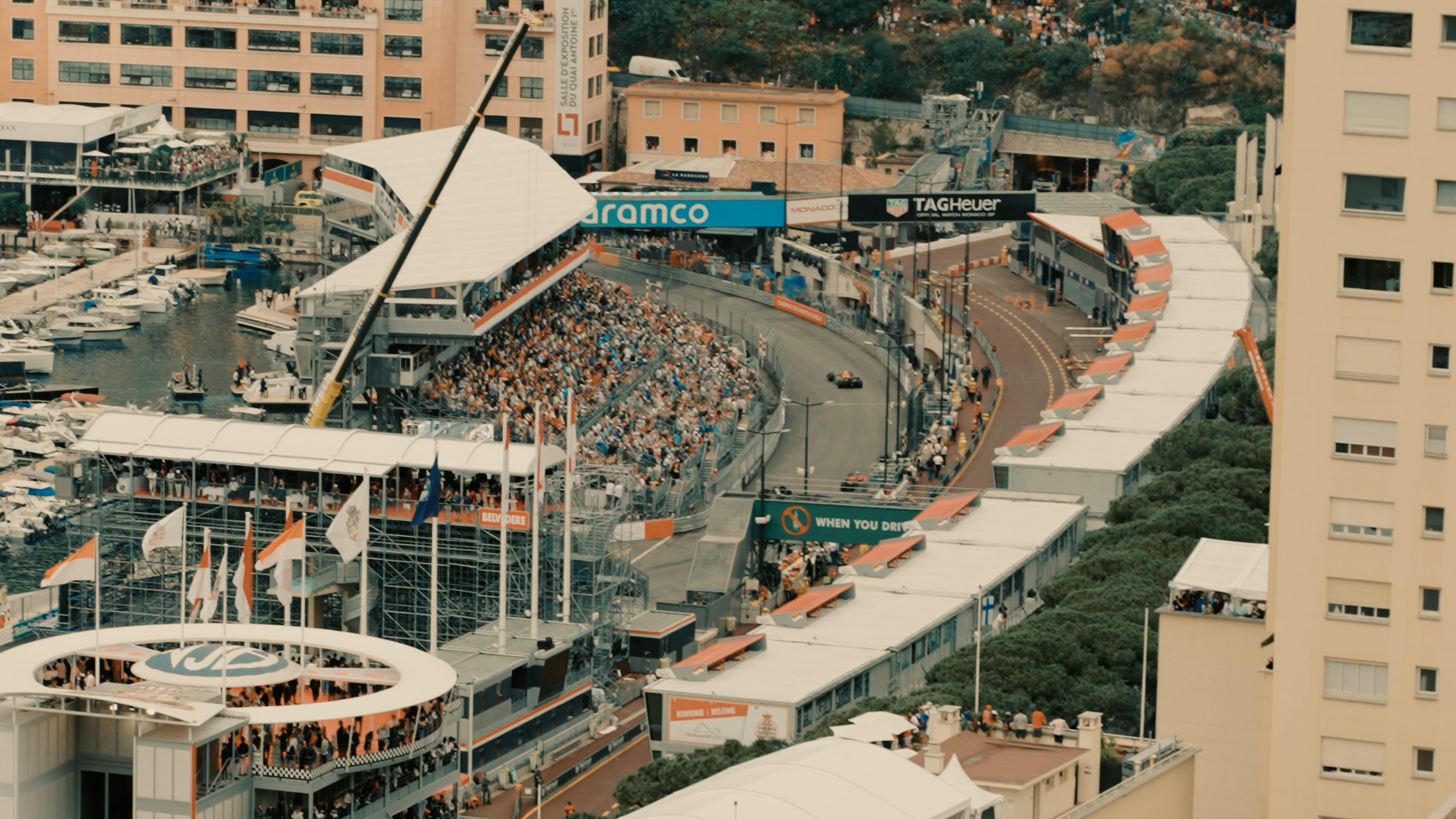
Tabac comes next. It is a quick left-hand corner onto the waterfront. It is named after the tobacco shop tucked into the corner. From Tabac the track runs along the edge of Port Hercule, Monaco’s main harbour. Yachts moor along the harbour wall beside the track, and on race day their decks fill with people watching.
The swimming pool, La Rascasse and the last corner
The swimming-pool section is two quick chicanes either side of the Rainier III Nautical Stadium, a public swimming pool on the harbour front. Its French name is Piscine. It was added to the lap in 1973. Formula 1 puts the speed through the first chicane at around 200km/h. The barriers are close on both sides.
The first part of the section is named after Louis Chiron. He won the Monaco Grand Prix in 1931, and no other driver from Monaco won the Grand Prix until Charles Leclerc in 2024.
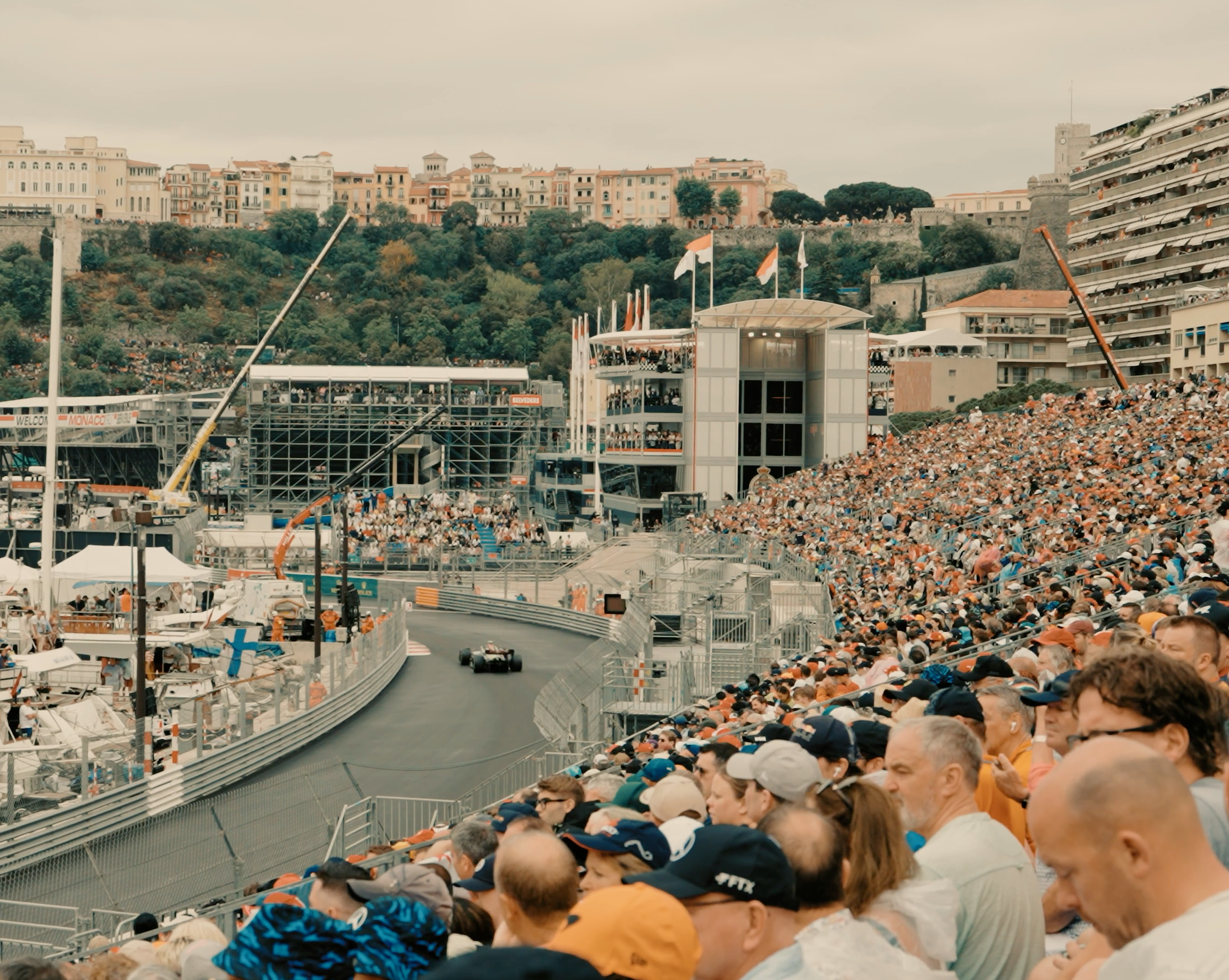
La Rascasse is a slow, tight right-hand corner at the end of the harbour. The cars reach it straight after a quick left-hand turn that has no name of its own. It is named after the bar beside it, which takes its name from a Mediterranean fish. In 2006 Michael Schumacher stopped his car here in qualifying, the session that sets the starting order. His car blocked Fernando Alonso from improving his time.
The last corner, Antony Noghès, is a tight right-hand turn named after the man who organised the first race. It takes the cars back onto the start-finish straight. Formula 1 also credits Noghès with the idea that every race should end with a chequered flag.
Where you watch with us in 2027
The 2027 Monaco Grand Prix runs from Friday 4 to Sunday 6 June. It is the first year Monaco holds a Sprint, which is a shorter race on the Saturday with its own qualifying session on the Friday. The Grand Prix itself is on Sunday.
We arrange three ways to watch it, and each one puts you at a different corner.
Above the Fairmont Hairpin
You stay at the Fairmont Monte-Carlo from Thursday to Monday. You watch all three days from the hotel’s seventh floor, above the hairpin. You fly from London to Nice, and a helicopter takes you along the coast to Monaco in about seven minutes. It brings you back the same way at the end of the weekend. There is an after-party on the Saturday night and another on race night, when Nikki Beach holds its party at the Fairmont itself. This is the one for a group that wants the whole weekend in Monaco. You can see every Formula 1 session from the same place.
Grandstand K, at Tabac
Grandstand K runs along the inside of Port Hercule, between Tabac and the swimming pool. You look out over the harbour and its yachts as the cars come through Tabac onto the waterfront. Your reserved seat is for the Grand Prix on Sunday. It suits a group that wants the harbour in front of them for the race.
Grandstand T, between the pool and Rascasse
Grandstand T stands on the short straight between the swimming pool and La Rascasse. Your seats are in the open-air lower tier, and the cars brake for Rascasse right in front of you. The upper tiers look over the pit lane, where the cars stop for new tyres. This is the seat for watching the cars through the corners rather than the pit stops. It is also a Sunday seat for the Grand Prix.
With either grandstand, you stay on the French Riviera for three nights, from Friday to Monday. That is the stretch of coast around Nice and Cannes. Your hotel is in Nice, Cannes or nearby Mandelieu-la-Napoule. You fly from London to Nice, and a coach takes you from the airport to your hotel. On race day your transport to the circuit and back is arranged. From the Nice hotels it is a coach, and from the hotels near Cannes it is the train from Cannes along the coast.
If you are unsure which corner suits your group, that is the conversation we have with you before anything is booked.

Two more questions about the circuit
Why is the circuit called Monte Carlo?
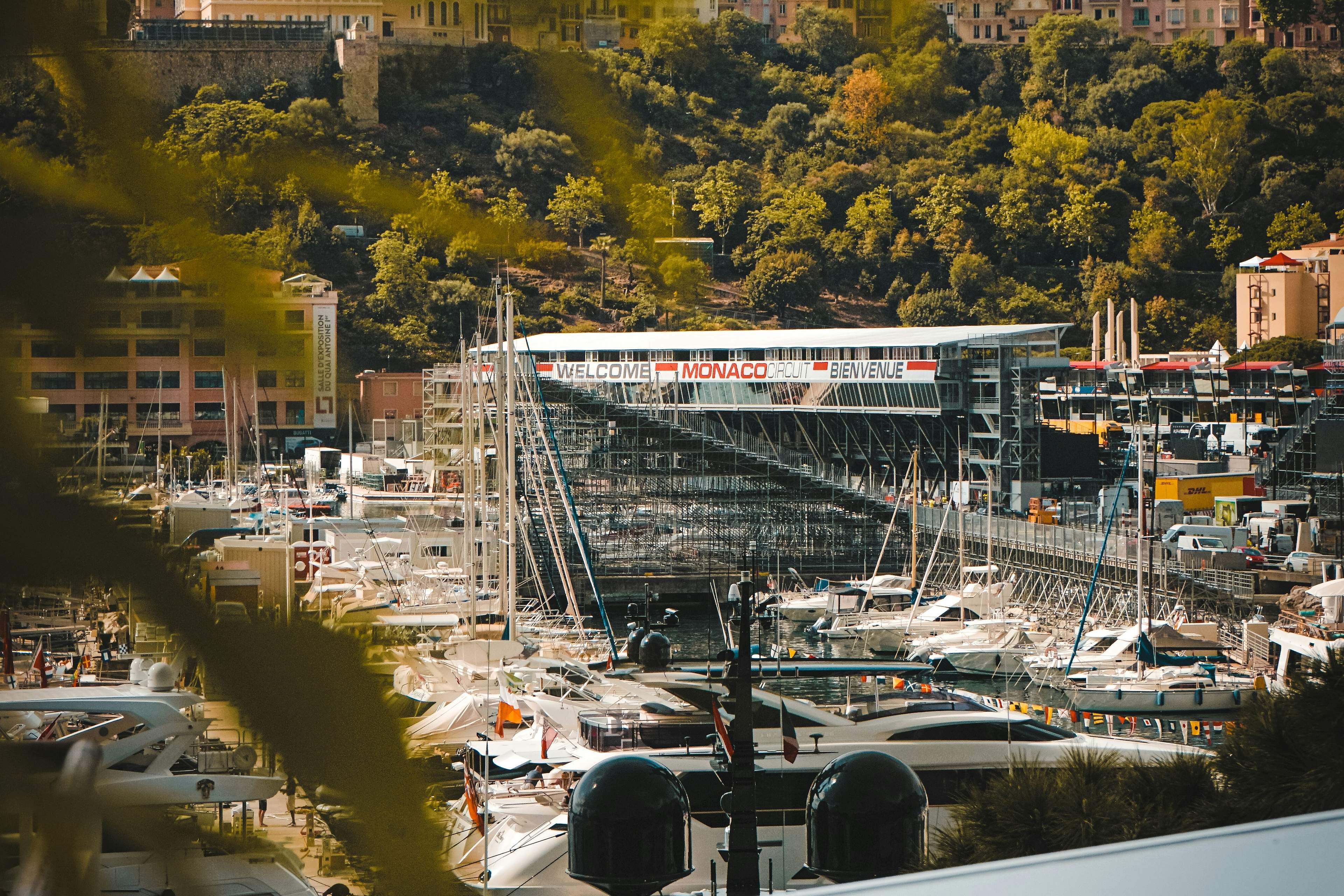
Monaco is the country, and Monte Carlo is one of its districts. The circuit runs through Monte Carlo and through La Condamine, the district around Port Hercule. The track is often simply called Monte Carlo, after the district.
How long does a lap take?
A lap takes a little over a minute. The race lap record is 1m 12.909s, which Lewis Hamilton set in 2021. The cars go faster in qualifying, and in 2025 Lando Norris set the first qualifying lap under 1m 10s.

Chloe Burchell
Event Manager
Event Manager at Imperial Corporate Events. She’s hosted clients at everything from the Six Nations to the Eastern & Oriental Express, and she’s good company on the day.