Summary
A Loggia box seats eight, one level above the Stalls, and sits almost at eye level with the stage, the closest private room in the Hall. A Grand Tier box is one ring higher, looking down on the stage from the same level as the Royal Box, and seats up to twelve across stepped rows. More than eight guests? Grand Tier. Eight or fewer? The Loggia gets you closest to the performance. The longer answer covers which box suits which night, jump to Which box for which night, and who owns the boxes, jump to Who owns the boxes explains why the choice changes from night to night.
The three rings
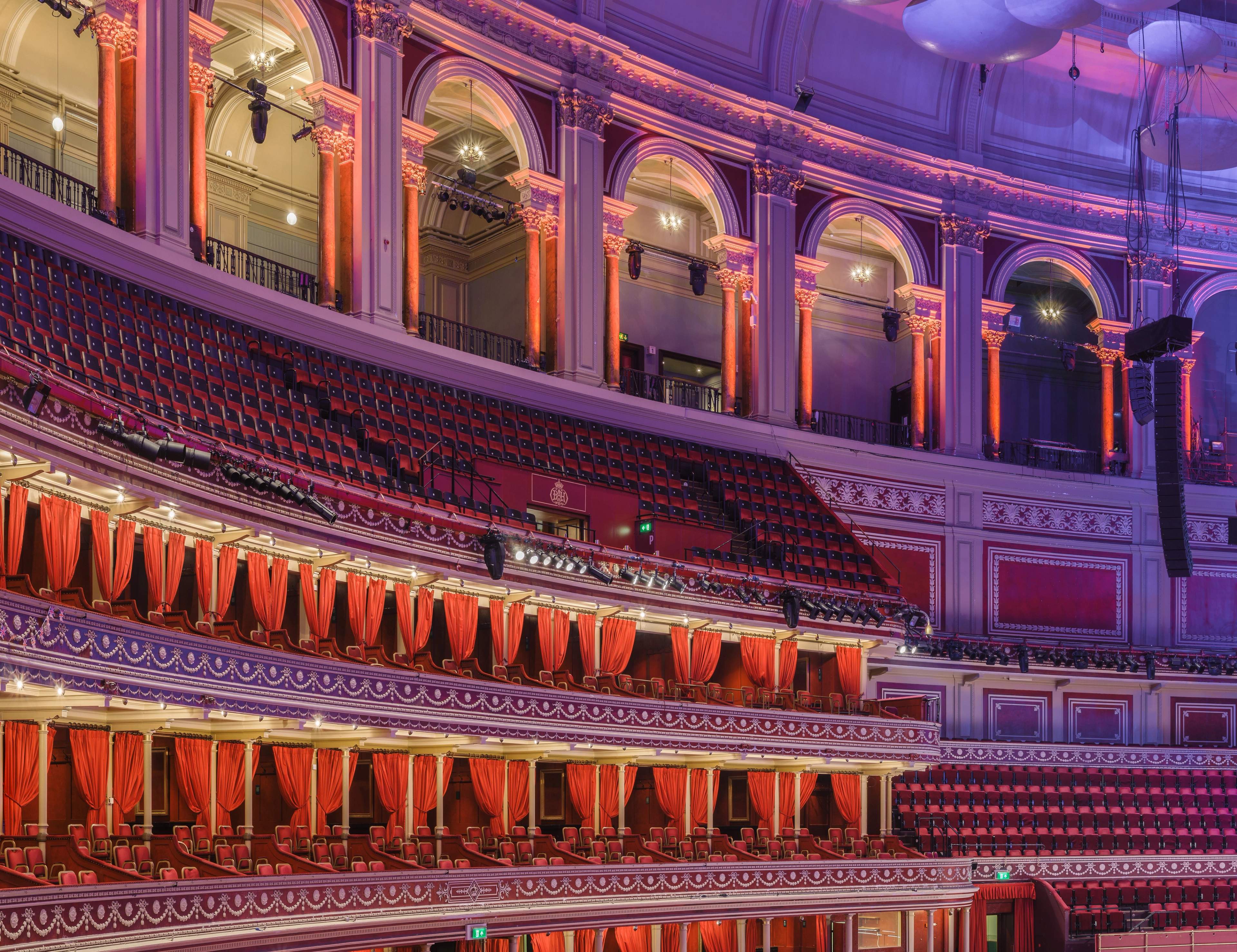
A box at the Royal Albert Hall comes with its own front door. You come in off Kensington Gore, the road that runs behind the Hall. Once inside, follow the curved corridor until you find the door with your box number on it. Behind that door is a small private room, open on its far side to the Hall itself, with your seats looking onto the stage.
Which ring that room sits on is the decision this guide covers, and the two rings differ in height as much as in size. A Loggia box seats eight, almost at eye level with the stage. A Grand Tier box seats up to twelve one ring higher, looking down on the stage from the same level as the Royal Box. Party size usually decides for you. The rest of this page explains the exceptions, and the details that separate a good box from the right one.
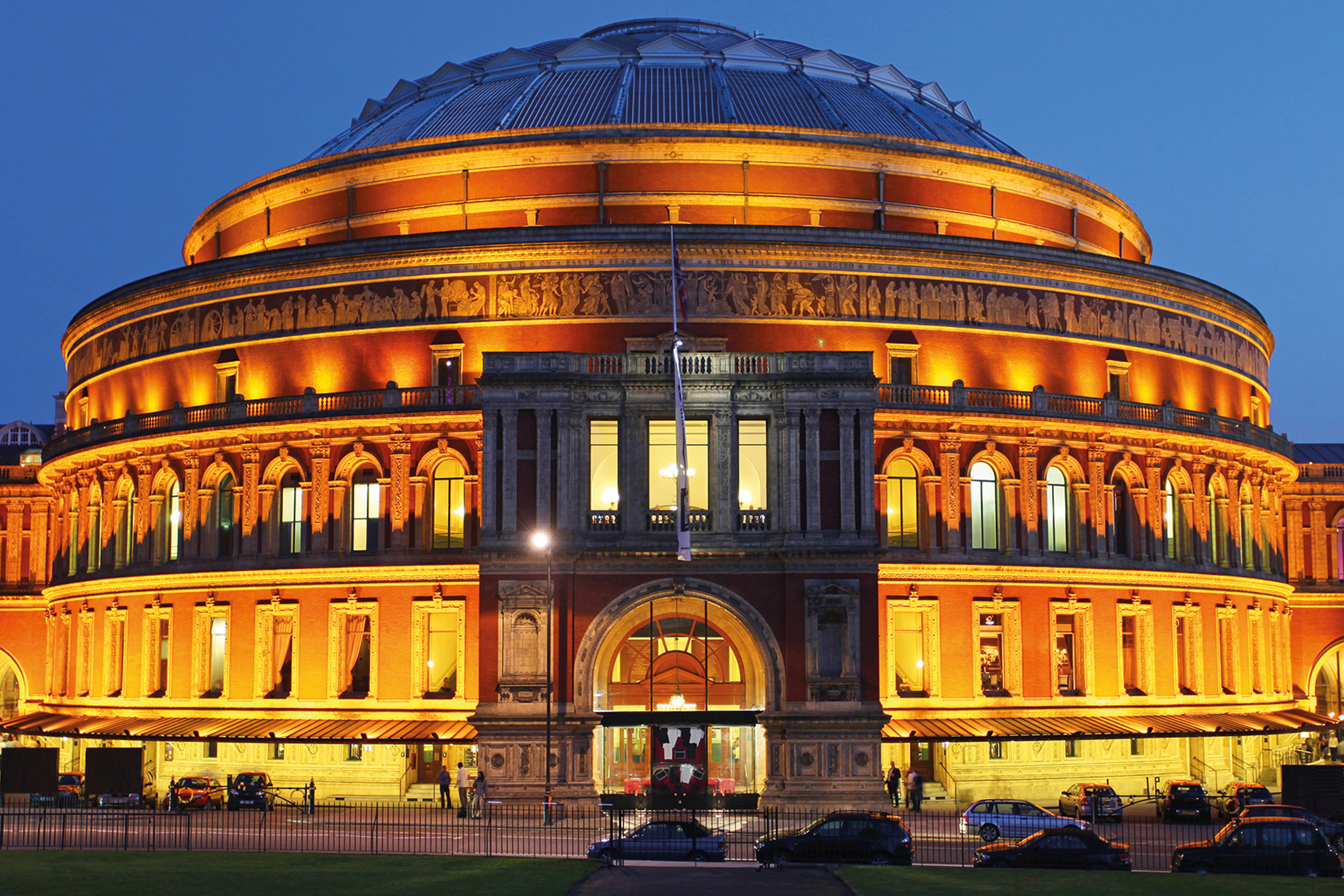
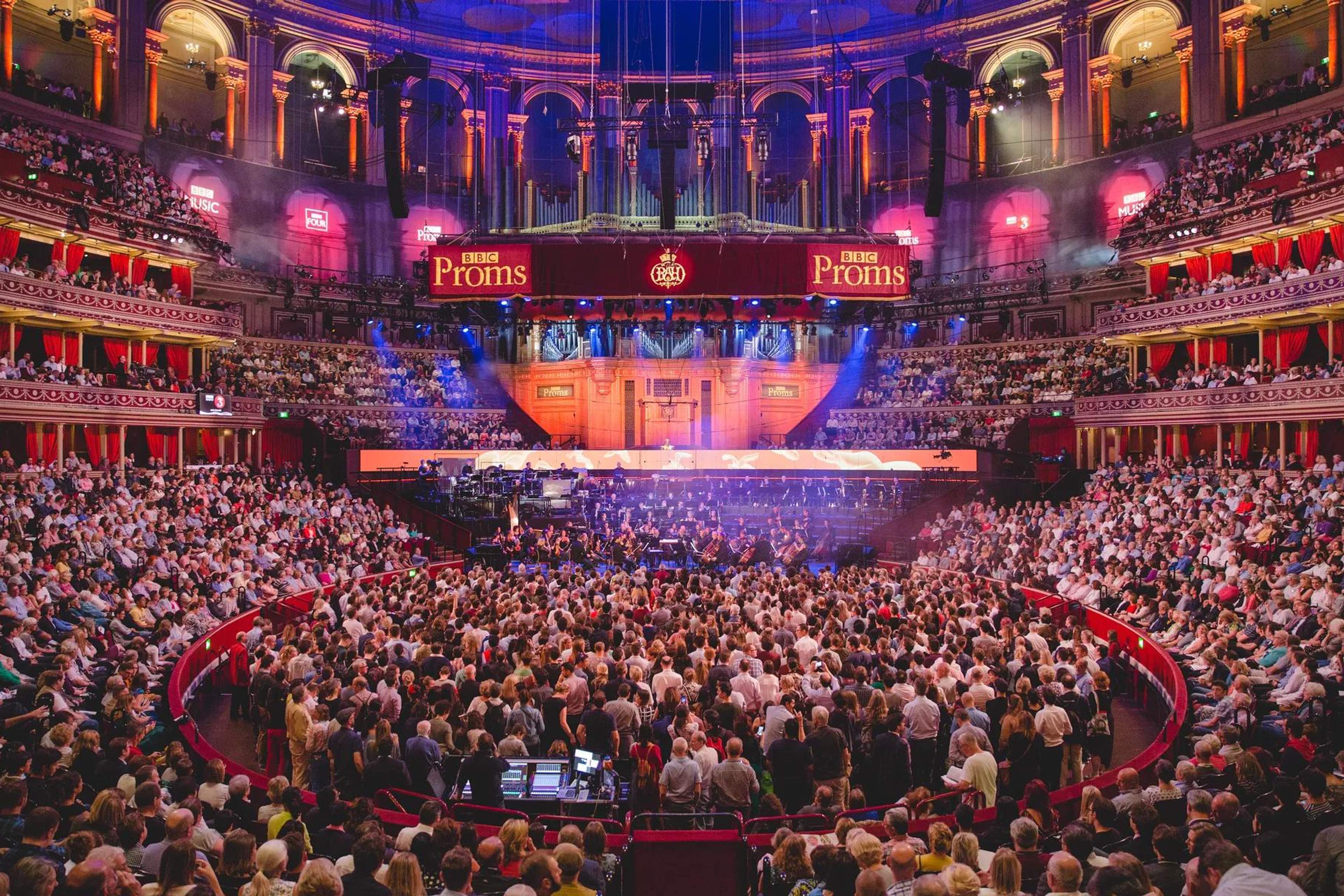
The Hall seats 5,272 people, arranged in rings around an oval floor. That floor is called the Arena. During the Proms the Arena is standing room; for most of the rest of the year it is set with seats. The Stalls rise around the Arena, and above the Stalls come the three rings of boxes: the Loggia first, the Grand Tier above it, and the Second Tier above that. Higher still sit the Circle and the Gallery, and behind the stage the Choir seats look back across the room.
Because the boxes run the full oval, where a box sits on the curve matters as much as which ring it is on. A box facing the stage from across the Hall gives you the straight-on view from further away. A box beside the stage is close, but at an angle. That trade is the same on all three levels. And because the boxes released for sale change from night to night, for reasons covered further down, this is not a map you browse and pick from. When we book, the box's position on the curve gets as much attention as the ring.
The Loggia
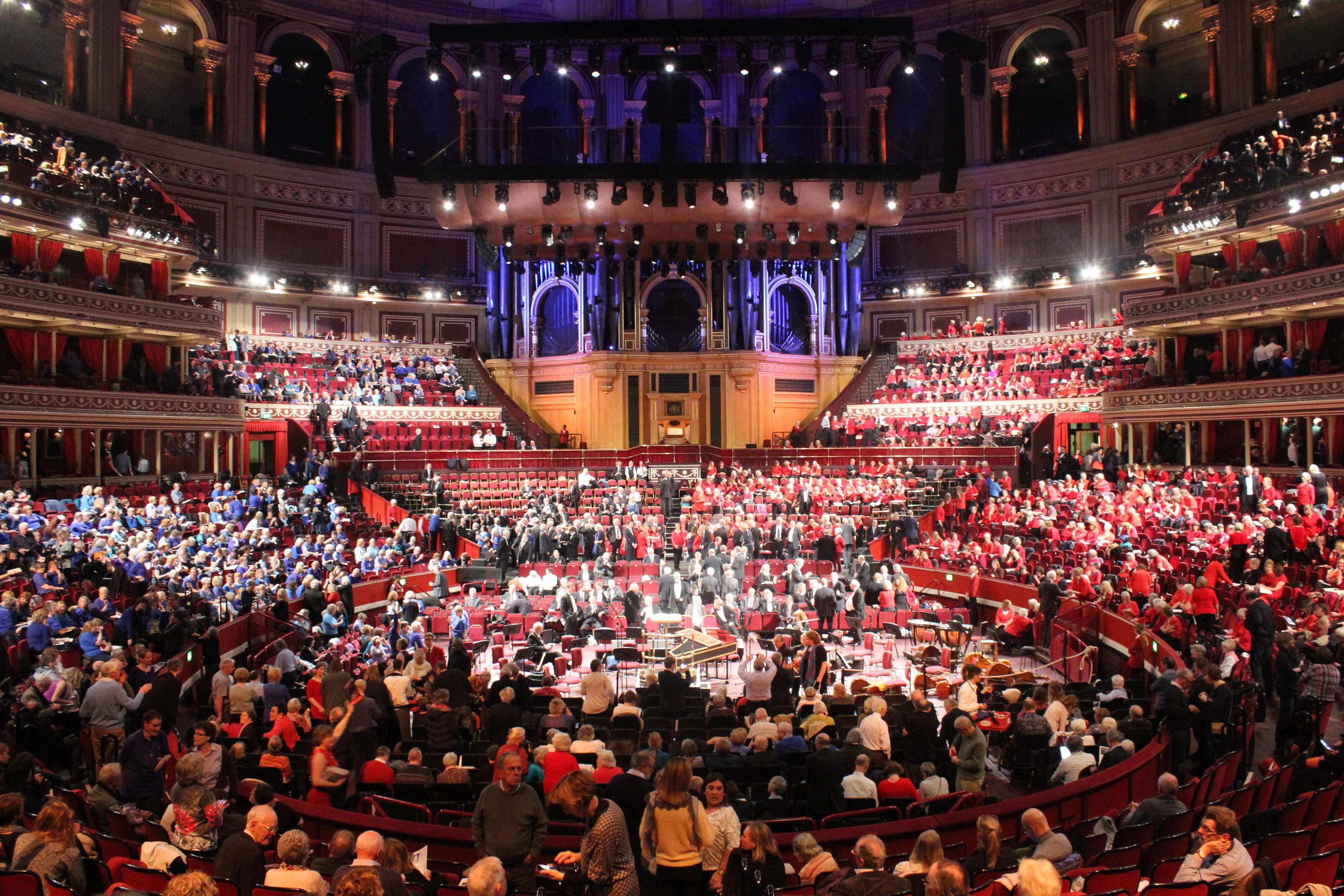
The Loggia is the lowest of the three box rings, directly behind the Stalls, and it is the ring that gets you closest to the performance. The room sits at close to eye level with the stage rather than high above it. Eight chairs stand in two rows of four, and the floor steps down inside the box, so the two rows sit at different heights and both see the stage. In the boxes nearest the stage, numbers 1 to 6 on one side and 31 to 36 on the other, you are near enough to a concert to watch the percussionist counting bars.
Not every box on the ring is equal, though. A few Loggia boxes have one of the Hall's supporting pillars at a corner, and the seat map does not make that obvious. Details like that are why we match the box number, not just the ring, to your party before anything is confirmed.
For a party of six or eight who came for the music, this is the ring to choose. Nothing else in the Hall puts a private room this close to the stage.
The Grand Tier
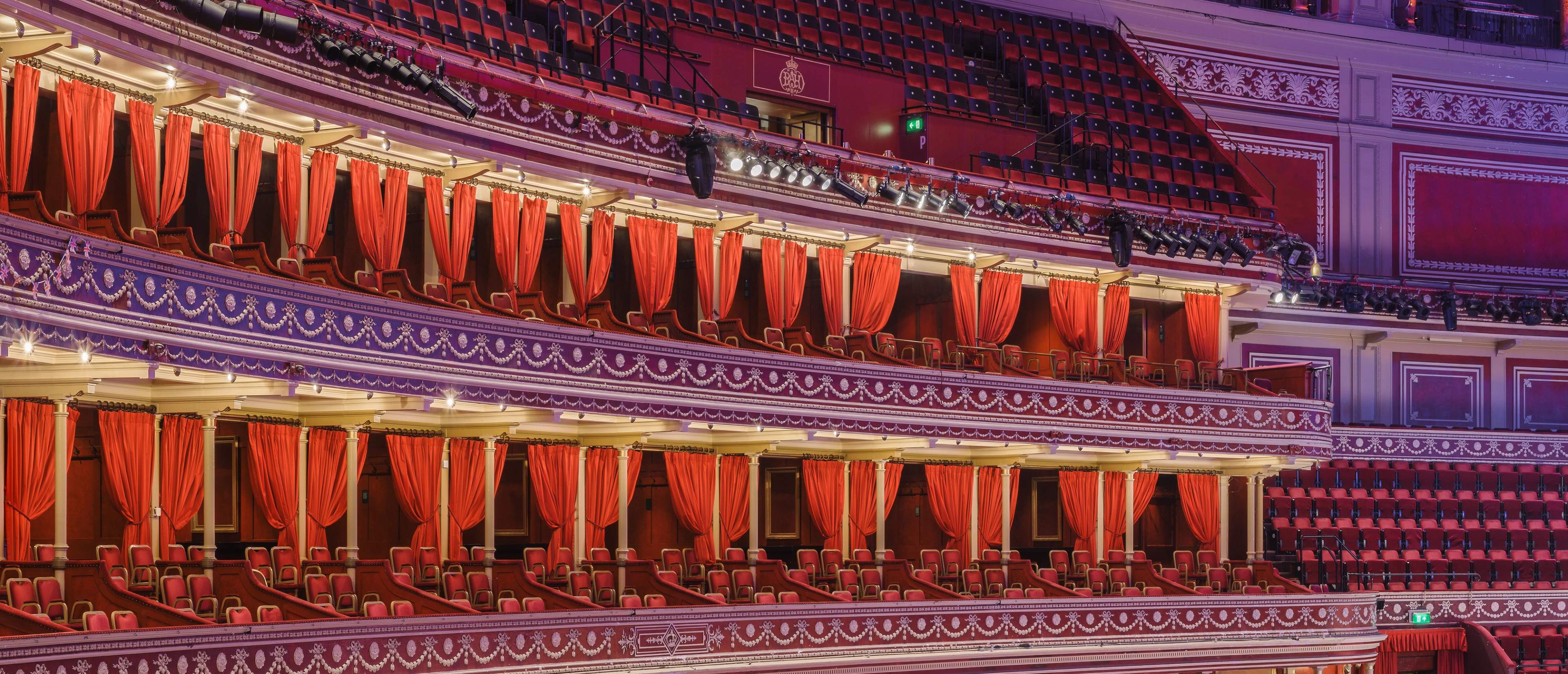
One ring up, the Grand Tier boxes are the largest in the Hall: twelve seats on stepped levels, so each row sits higher than the one in front and all twelve guests face the stage. This is also the ring the Royal Box sits on, a twenty-seat box at the centre of the curve. Hitchcock staged the climax of The Man Who Knew Too Much on this ring twice, in the 1934 original and again in the 1956 remake with James Stewart and Doris Day.
Grand Tier boxes are the ones that make the news when they change hands. One was listed at £2.5 million, another at £3 million. Prices like that hold because the boxes work: the extra height takes in the stage and the whole room at once, and the stepped seating means twelve guests all get a proper view rather than a compromised one.
If you are hosting more than eight people, the decision makes itself, because the Grand Tier is the only ring where twelve sit together behind one door. The height helps too, for shows that use the whole space, which the next section covers.
Which box for which night
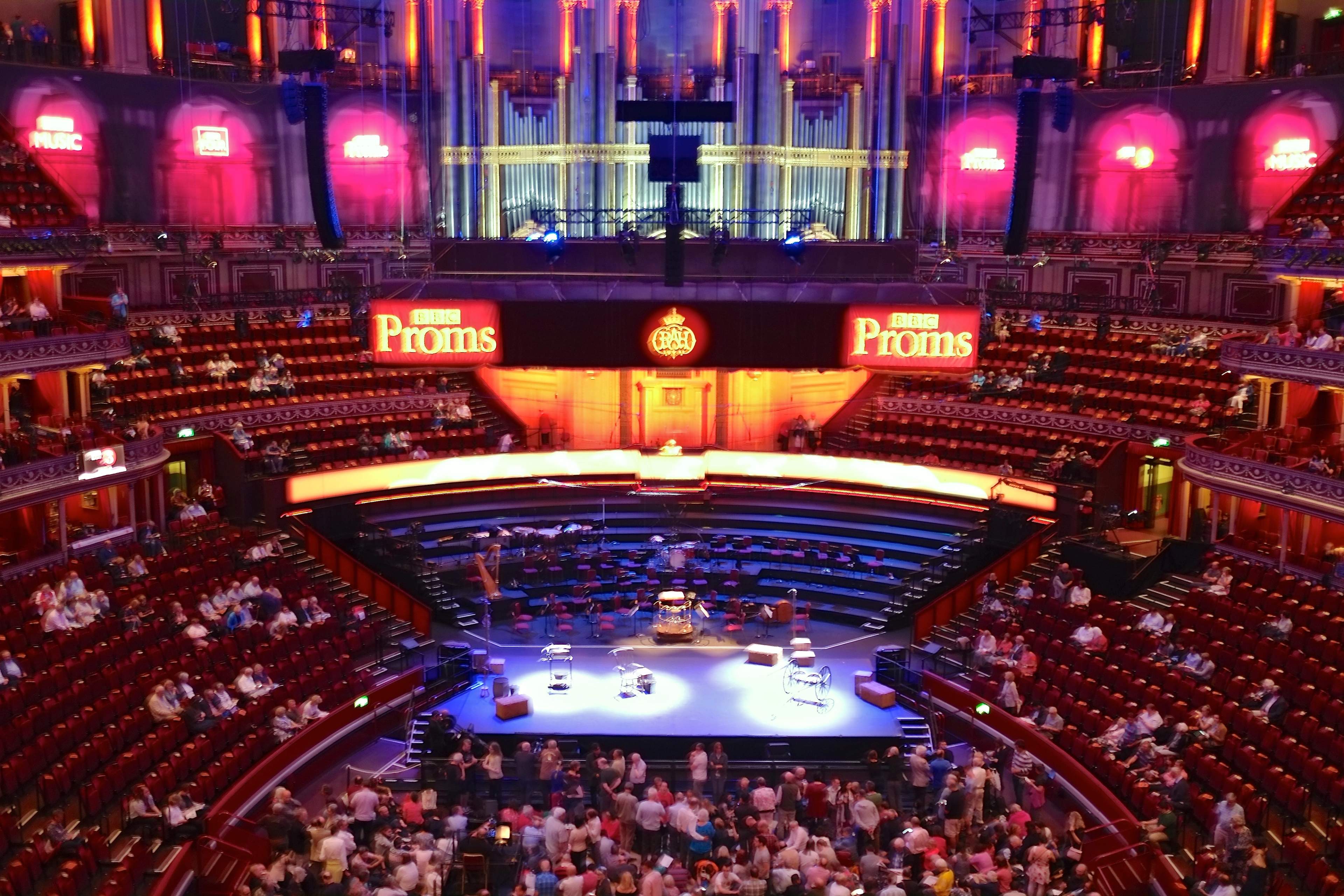
Match the ring to the show. For music where you want to be near the players, a recital, a touring songwriter, an orchestra, a near-stage Loggia box is the closest private room you can get. Cirque du Soleil rewards the opposite: much of the show happens in the air, so a stage-facing Grand Tier box watches the aerial work straight on instead of craning up at it. The Hall's boxing nights, which have run on and off since 1918, also favour height, because the ring is set up on the Arena floor and a box looks straight down onto it.
The Last Night of the Proms is the one night where the ring barely matters, because the room itself is the show: flags across the Arena, the organ at full stretch, and the audience as much a part of the evening as the orchestra.
If someone else has done the choosing and you are the guest, the same logic works in reverse. The ring on your invitation tells you what kind of evening you have been invited to.
The three rings at a glance
Loggia
Lowest of the three box rings, directly behind the Stalls. Eight seats a box. Choose it to be close to the performance with a party of up to eight.
Grand Tier
The middle ring. Twelve seats on stepped levels, with the Royal Box at the centre of the curve. Choose it for hosting nine to twelve, and for shows that use the air.
Second Tier
The highest ring, mostly five-seat boxes. Choose it for a smaller party that wants its own door; the front row has the clear view.
The Second Tier deserves a word of its own as the quiet third option. It is the highest of the three rings, its boxes mostly seat five, and for a small party it does the private-room part of the job at a smaller scale and a lower price of entry to box life.
Who owns the boxes
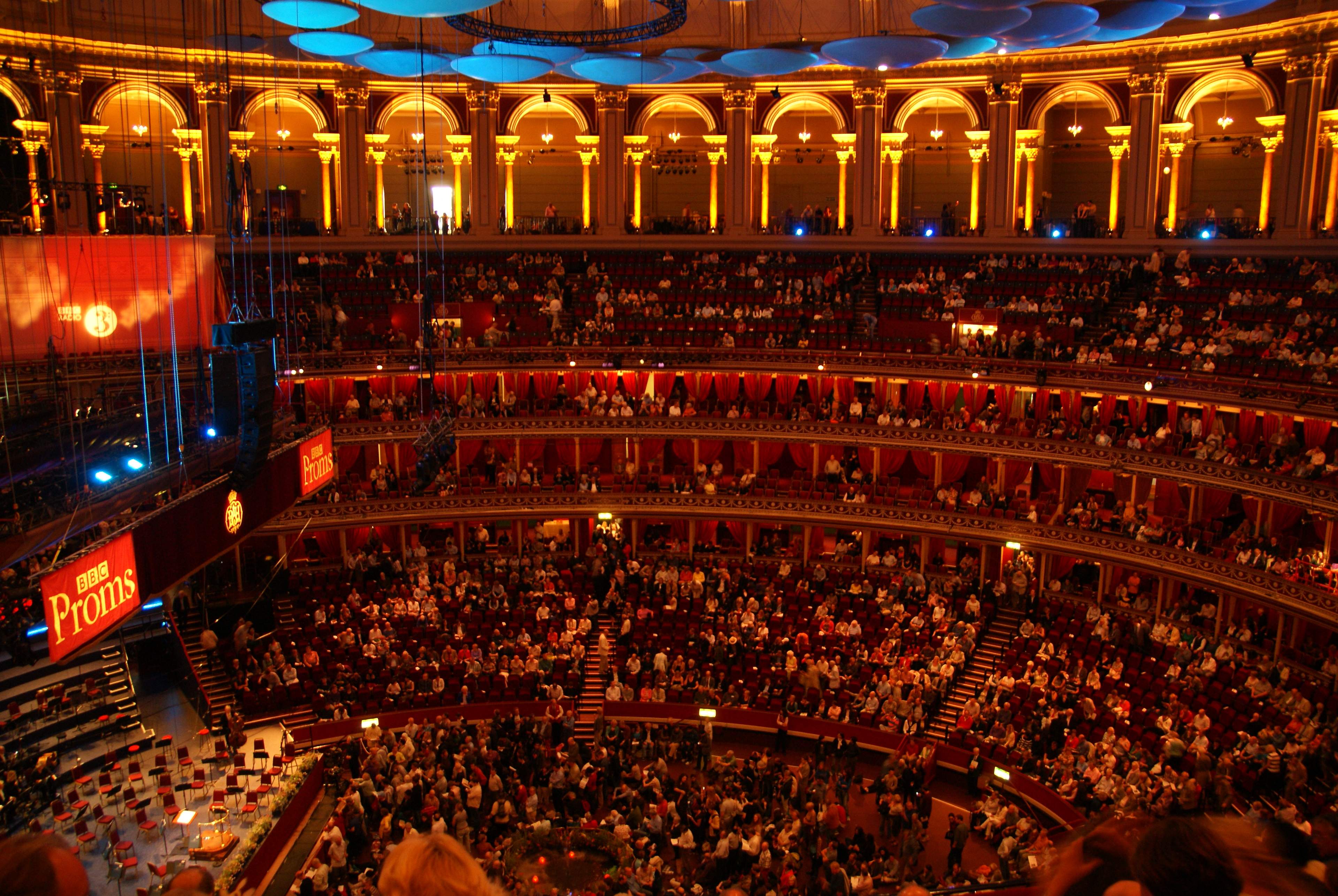
You cannot simply pick any box off a map, and the reason goes back to how the building was paid for. To fund construction, the founders sold seats outright on 999-year leases before the Hall opened in 1871, and those leases are still running. Today 1,268 of the 5,272 seats remain in private hands, spread across some 329 owners, a few of them descendants of the families who bought in under Queen Victoria.
The owners are called Members. They elect most of the Hall's governing council, they pay an annual seat rate of about £1,900, and for roughly a hundred performances a year they hand their seats back to the Hall so the box office has something to sell. On any given night, the boxes on sale are a patchwork of Hall-released and Member-released seats, which is why a box that was on sale last week may not exist this week.
It also means a box is a thing you can, very occasionally, buy outright. When one comes up, it is priced like the Kensington property it technically is.
As a guest
What the evening looks like depends on the booking. Our current Last Night of the Proms evening starts across town: a six-course tasting menu at HIDE, the Michelin-starred restaurant on Piccadilly, timed so you finish dinner and arrive at the Hall for the performance, with a reserved seat in the Stalls for the concert itself.
A box evening keeps everything behind your own door. Our box evenings at the Hall typically include arrival through a dedicated entrance, a steward looking after the box through the evening, and Champagne, wine and beer served with canapés and bowl food in the box itself. When the interval arrives, it arrives to you, rather than you queuing at a bar three floors down.
The current listing is the Last Night of the Proms in September. If the night you have in mind is a different one, the team books boxes across the Hall's calendar. It starts with a phone call about who is coming and what the occasion is, and we take it from there.

Chloe Burchell
Event Manager
Event Manager at Imperial Corporate Events. She’s hosted clients at everything from the Six Nations to the Eastern & Oriental Express, and she’s good company on the day.