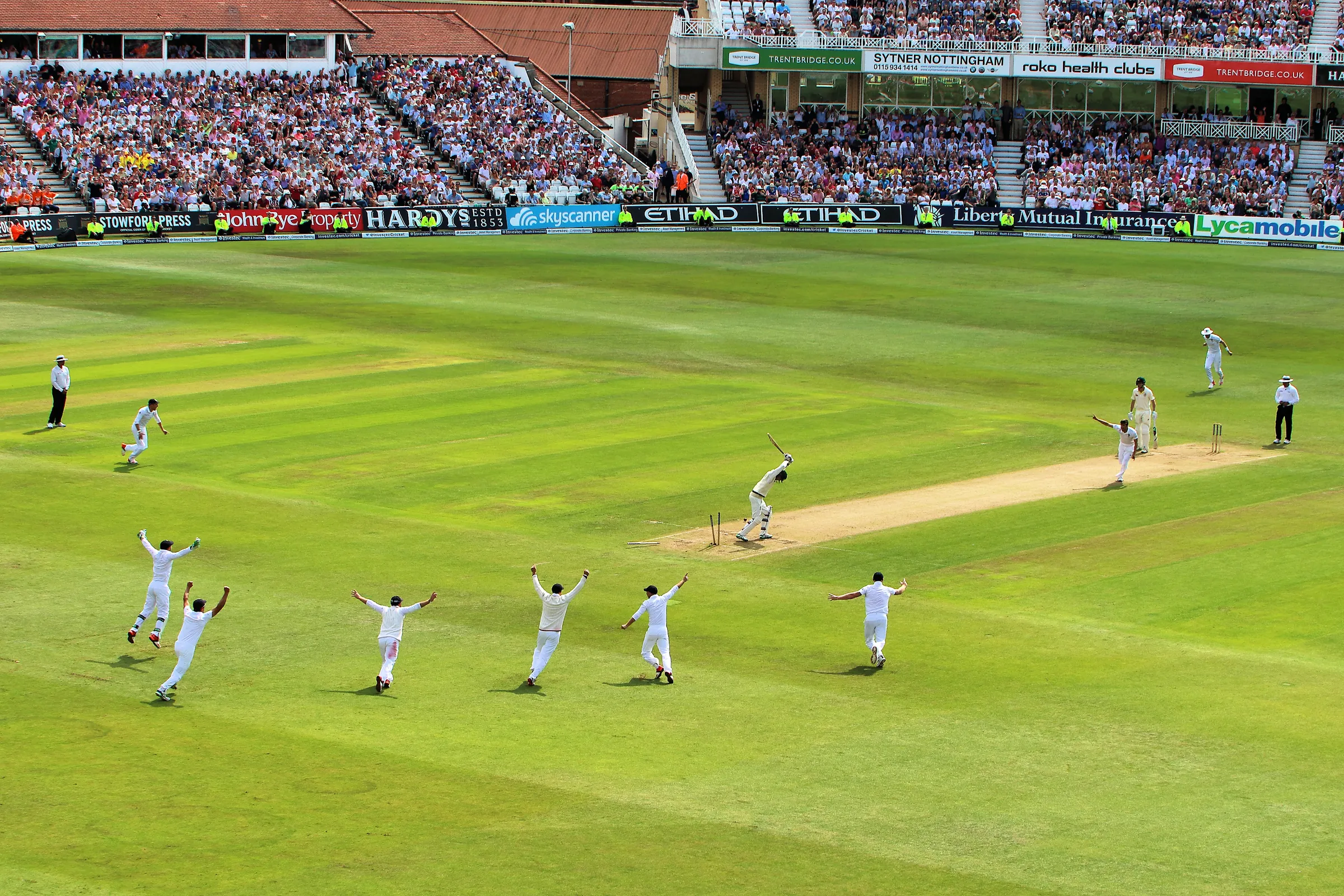
England and Australia play for the men’s Ashes in the summer of 2027. The series is five Test matches at five grounds, and it runs from Friday 18 June to Monday 2 August.
A Test match is the longest form of cricket. It lasts up to five days, and each day’s play is scheduled to start at 11am.
Each side can bat up to twice, and each turn at batting is called an innings. An innings usually ends when ten of the side’s eleven batters are out. A match that runs out of time before either side has won is a draw.
Australia hold the Ashes after winning 4-1 at home in 2025-26. England last won the series in 2015, and they sealed it at Trent Bridge, where the 2027 series begins.
2027 is also 150 years since the first Test match of all, which Australia and England played in Melbourne in March 1877. Four of this summer’s grounds staged their first Ashes Test more than a century ago. The fifth, the Utilita Bowl near Southampton, stages its first men’s Ashes Test.
We arrange a day at the Ashes at whichever of the five grounds you choose. The grounds follow here in the order the series visits them.
| Test | Ground | Dates |
|---|---|---|
| First Test | Trent Bridge, Nottingham | Friday 18 to Tuesday 22 June |
| Second Test | Lord’s, London | Wednesday 30 June to Sunday 4 July |
| Third Test | Edgbaston, Birmingham | Thursday 8 to Monday 12 July |
| Fourth Test | Utilita Bowl, Southampton | Wednesday 21 to Sunday 25 July |
| Fifth Test | The Oval, London | Thursday 29 July to Monday 2 August |
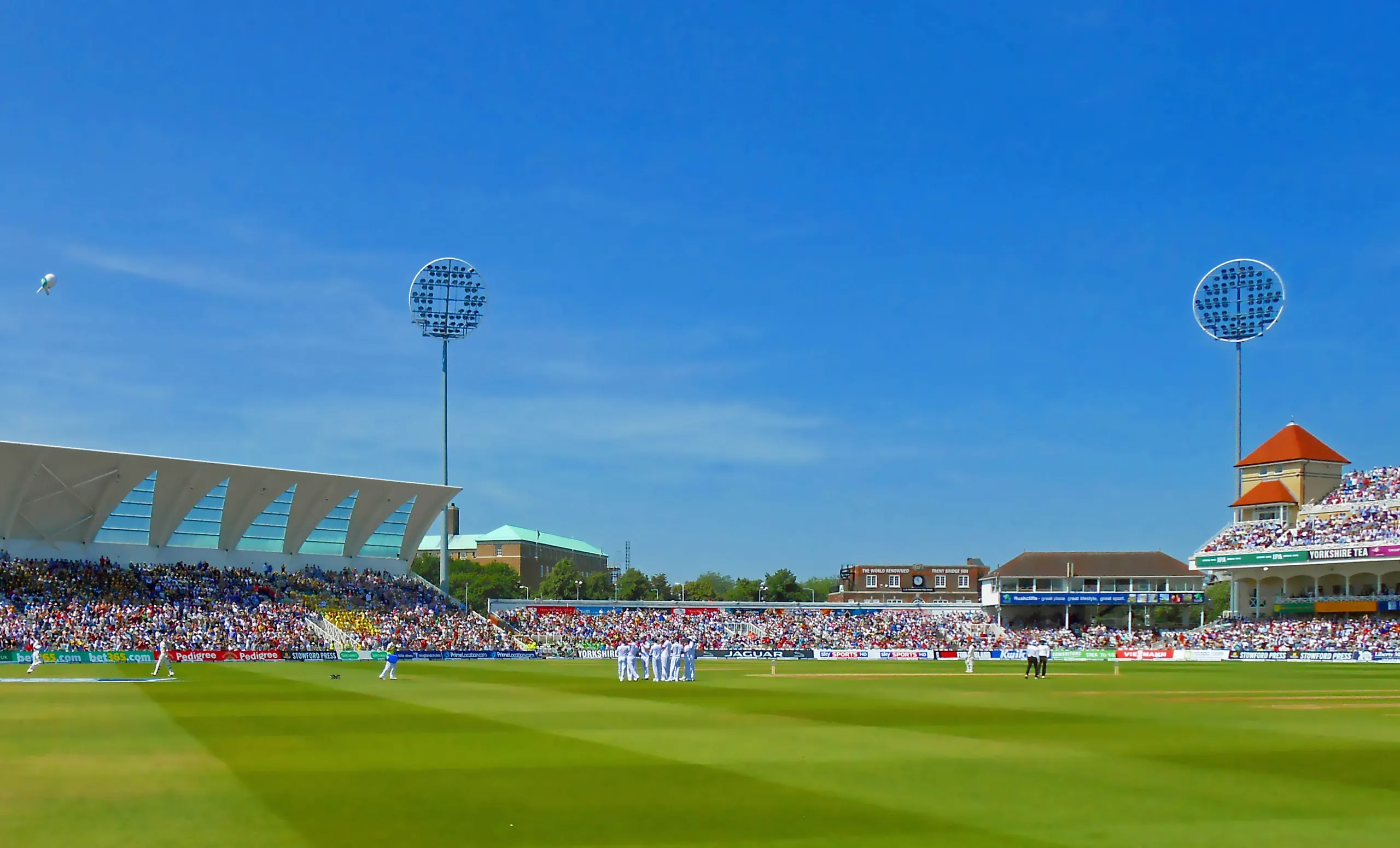
Trent Bridge: The First Test
The series starts at Trent Bridge in Nottingham on Friday 18 June. It is the ground’s first men’s Ashes Test since 2015.
Trent Bridge began as a meadow behind a pub. William Clarke, a Nottingham cricketer, married the landlady of the Trent Bridge Inn in 1837. He opened a cricket ground in the meadow behind it the following year.
The ground’s first Test match was against Australia, in June 1899. It was also the last Test that W. G. Grace played for England. He was 50.
The last men’s Ashes Test at Trent Bridge turned on its first morning. On 6 August 2015 Stuart Broad took eight wickets for 15 runs. That means he dismissed eight Australian batters, and 15 runs were counted against his bowling. Broad played for Nottinghamshire, the county side based at Trent Bridge.
Australia were all out for 60 in 111 balls. No side has lost all ten wickets in fewer balls in the opening innings of a Test match. England won by an innings and 78 runs. That means England batted once, and Australia batted twice and still finished 78 runs behind. The win gave England the Ashes with one Test still to play.
One end of the pitch at Trent Bridge is now the Stuart Broad End. The ground announced the new name in 2023, and Broad unveiled its plaque in July 2024.
Two years before Broad’s morning, Ashton Agar batted last for Australia on his Test debut at Trent Bridge. He was 19, and he made 98. It is still the highest Test score by a batter who went in last. England won that match by 14 runs.
Choose Trent Bridge if you want the opening Test, before either side has won a match.
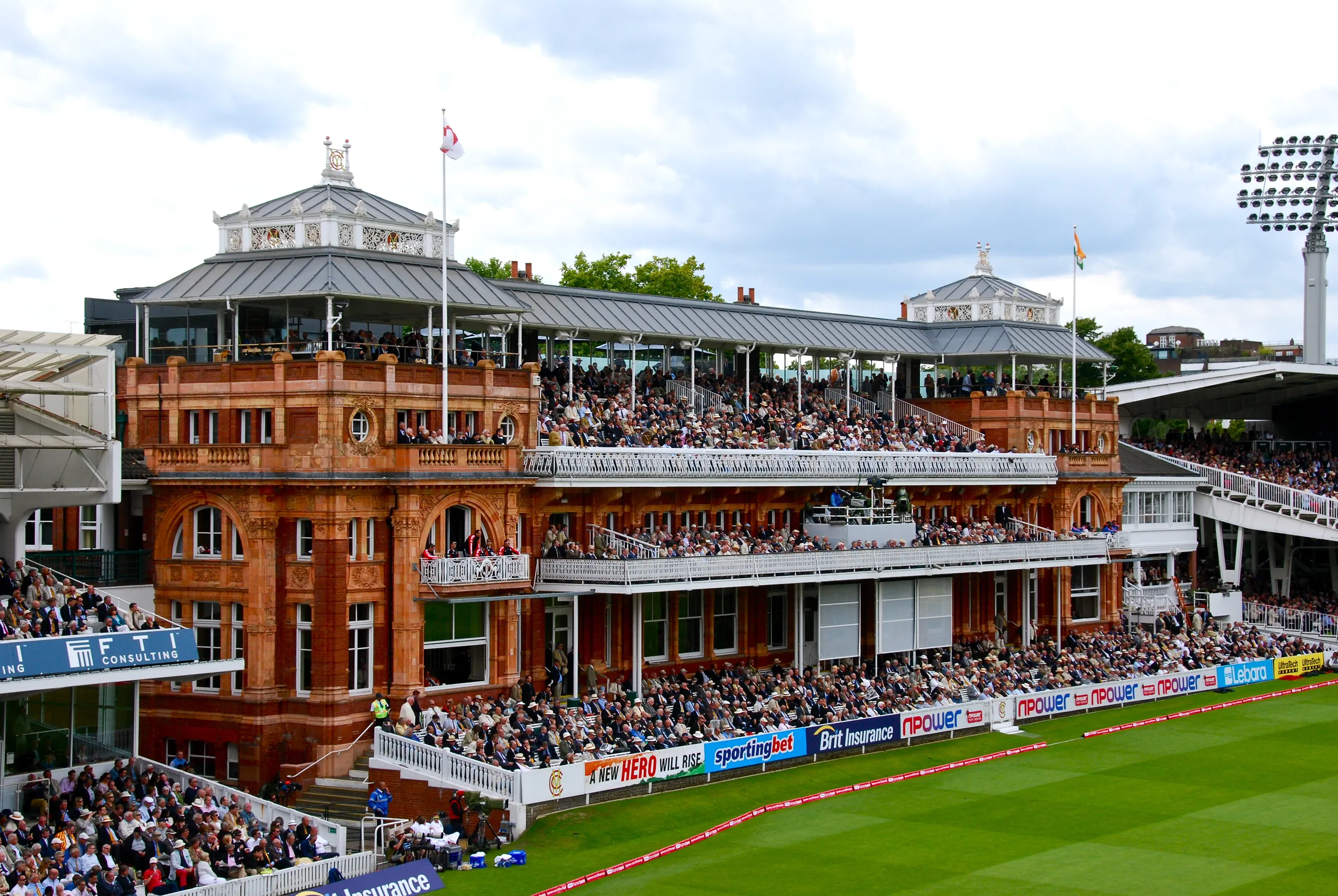
Lord’s: The Home of the Urn
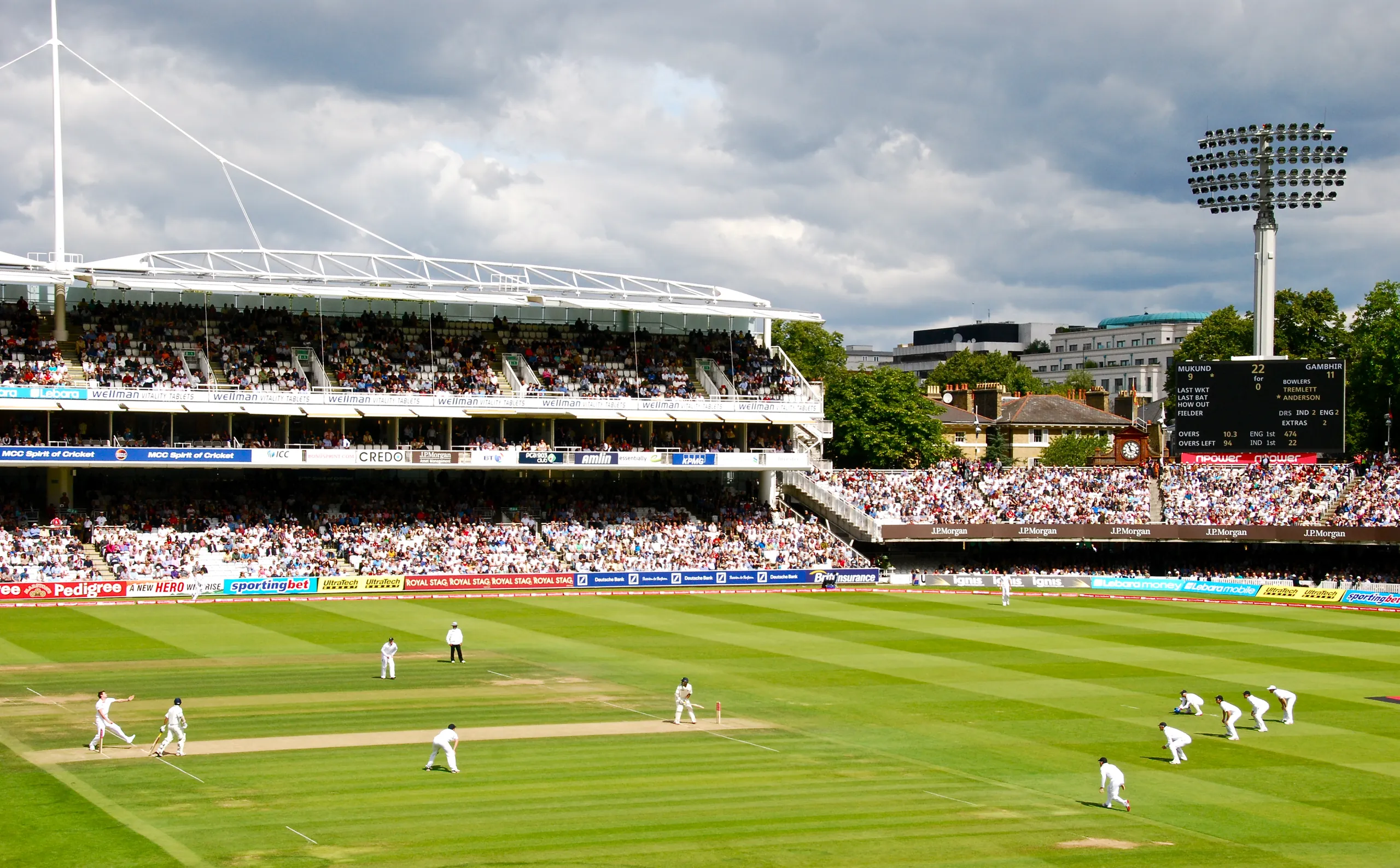
The second Test is at Lord’s in north-west London, from Wednesday 30 June to Sunday 4 July.
Lord’s has stood on its present site in St John’s Wood since 1814. It belongs to Marylebone Cricket Club, which is known as MCC. Its first Test match was against Australia, in 1884.
The Ashes urn is kept here. It is made of terracotta and stands 10.5 centimetres tall. MCC’s account is that the England captain Ivo Bligh was given it on Christmas Eve 1882 at Rupertswood, an estate outside Melbourne.
Bligh kept the urn at home until he died in 1927. His widow Florence then gave it to MCC, and it is kept in the MCC Museum at the ground. MCC says that nobody can be sure what is inside it.
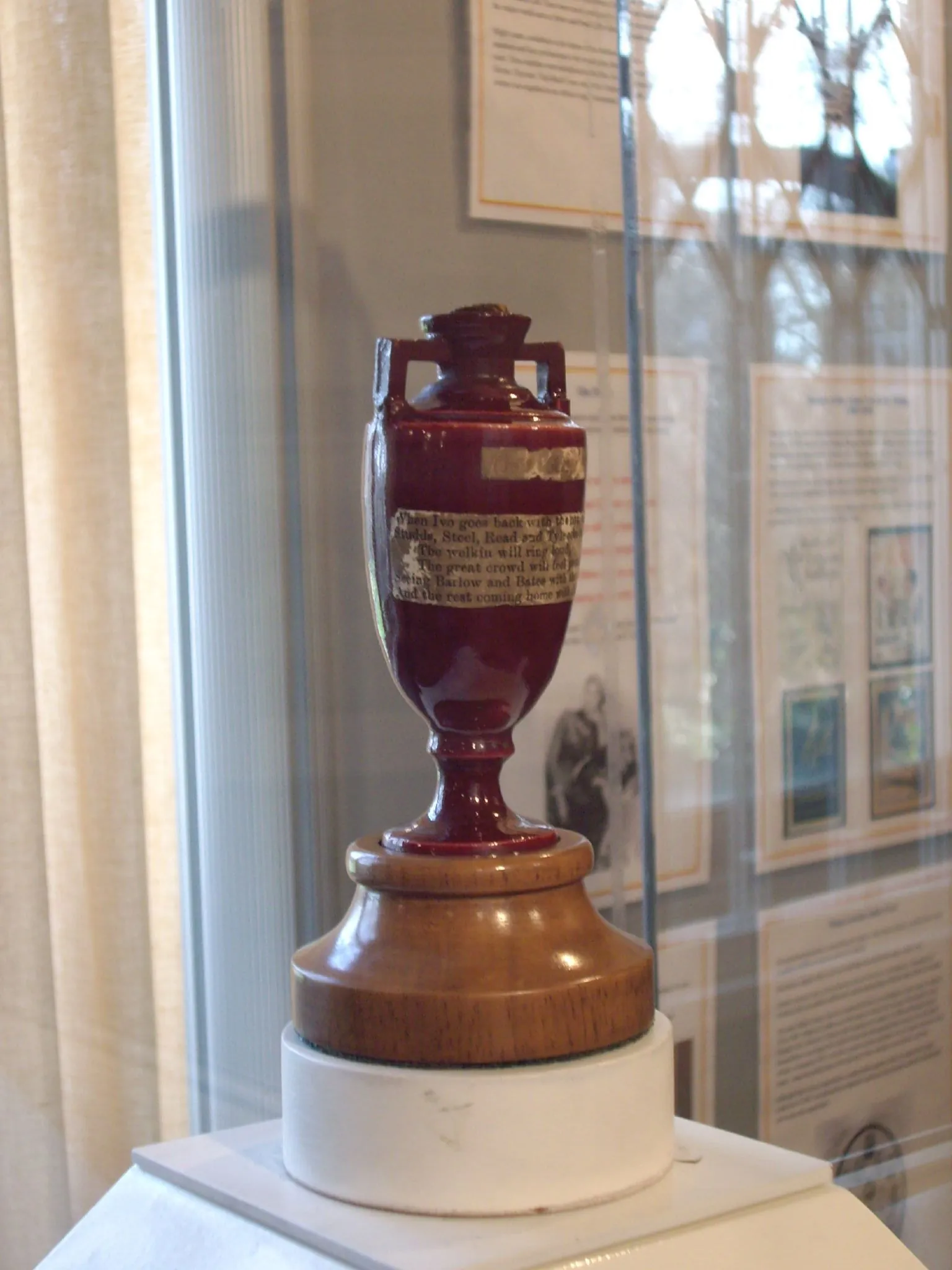
The urn is not the trophy. MCC describes it as something that is not and never has been a trophy, and it belongs to the club whoever wins the series. Since 1998-99 the winning captain has been presented with a Waterford Crystal trophy in the shape of the urn.
England have found it hard to beat Australia at Lord’s. After 1896 they won one Ashes Test here in 113 years. That was in 1934, when the Yorkshire bowler Hedley Verity took 15 wickets. They won again in 2009 and in 2013.
In 1972 the Australian bowler Bob Massie took 16 wickets at Lord’s in his first Test.
Choose Lord’s if you want the ground where the urn is kept. We have written separate guides to a day at a Lord’s Test and to the Lord’s dress code.
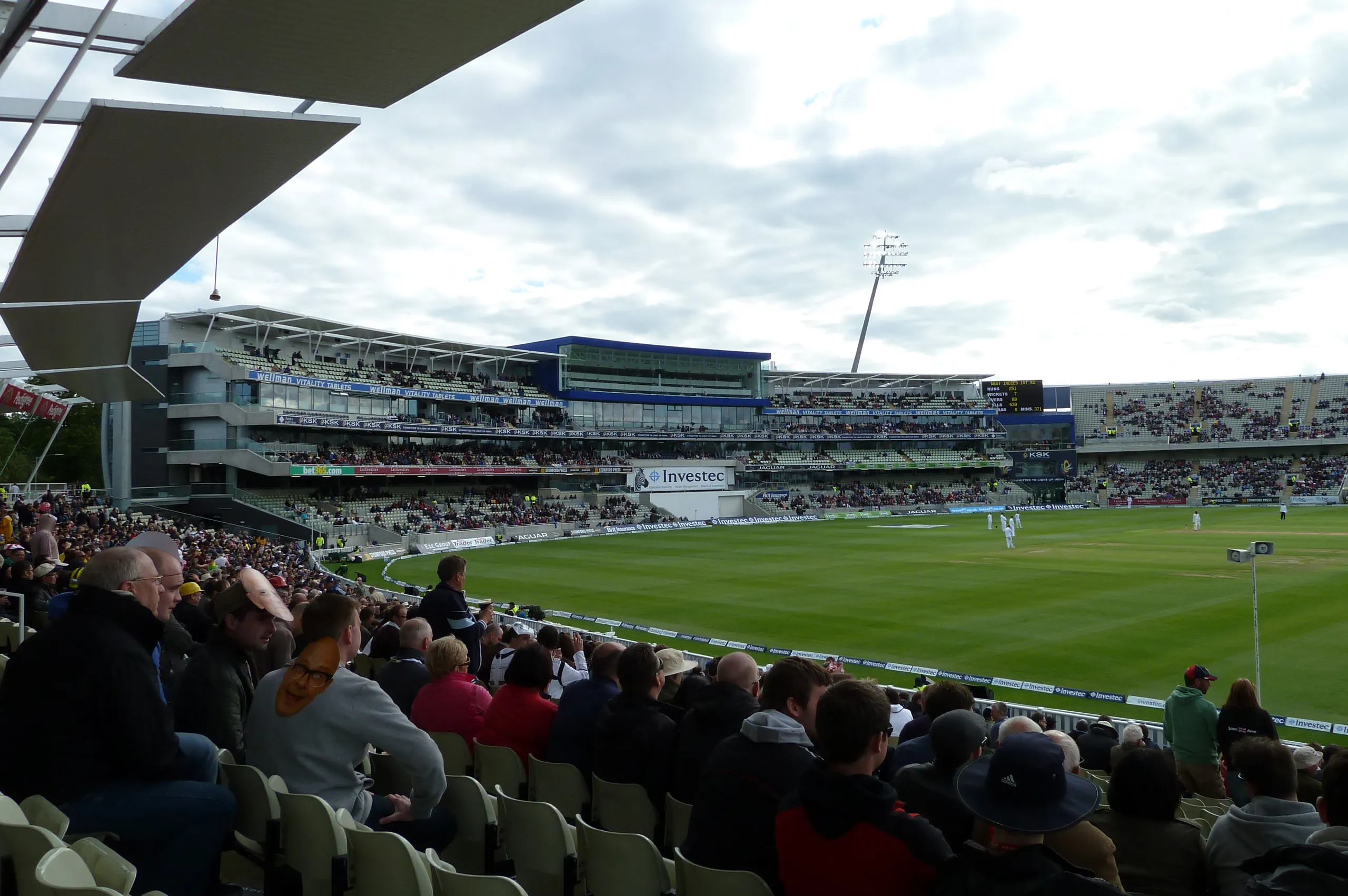
Edgbaston: The Two-Run Test
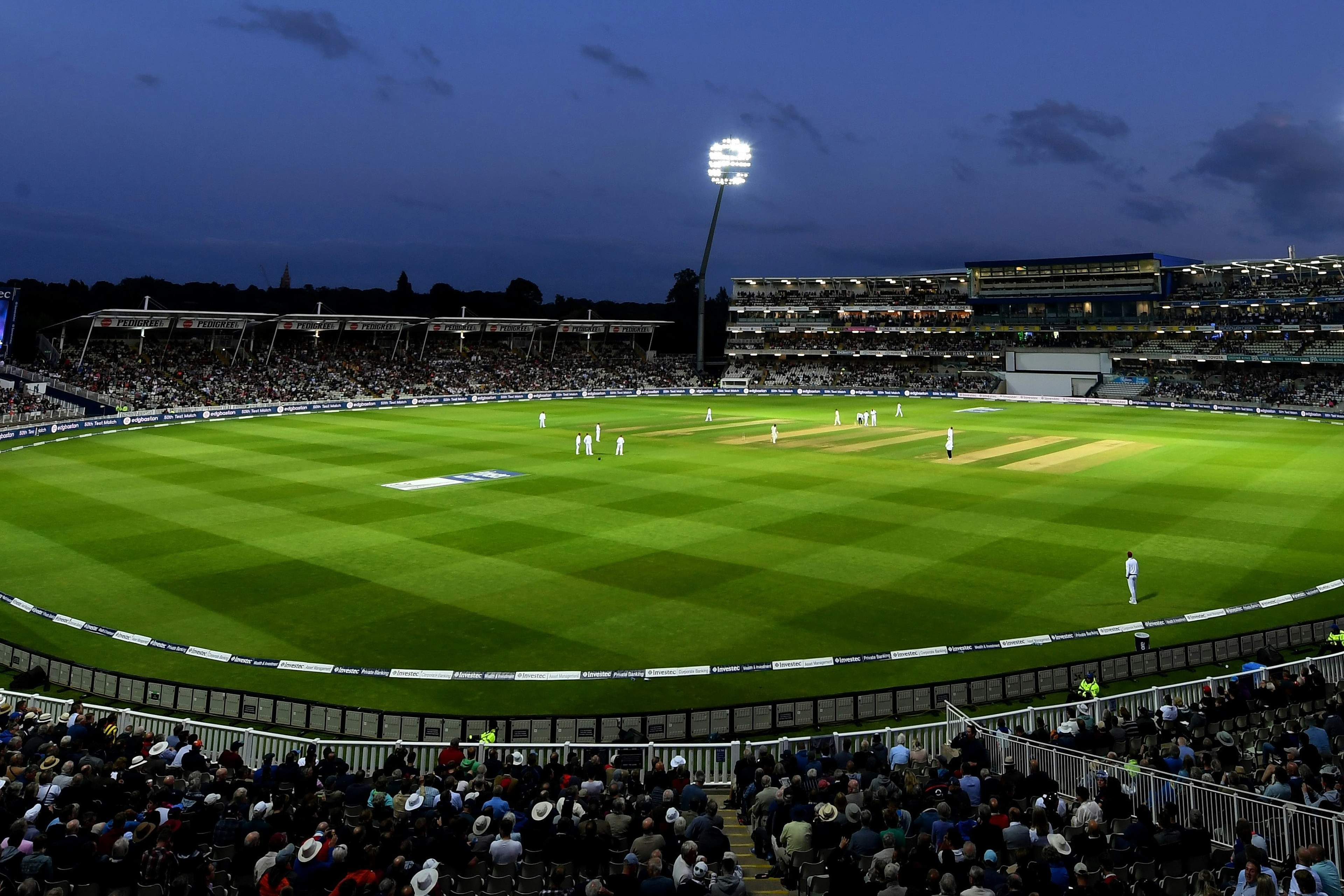
The third Test is at Edgbaston in Birmingham, from Thursday 8 to Monday 12 July. Edgbaston staged the opening Test of the last two Ashes series in England, in 2019 and 2023.
Edgbaston is the home of Warwickshire. Its first Test match was against Australia, in May 1902. Australia were all out for 36 in their first innings, which is still their lowest total in a Test match. Rain then cut the match short and it ended in a draw.
The closest Ashes Test by runs was played here in 2005. Australia needed 282 to win. Their last two batters, Brett Lee and Michael Kasprowicz, added 59 runs together.
They were three runs from winning when Kasprowicz was caught off the bowling of Steve Harmison. England won by two runs. No Ashes Test has been won by a smaller margin of runs.
In 1981 Ian Botham took five wickets for one run in 28 balls at Edgbaston, and England won by 29 runs.
One of the stands is named after Eric Hollies, a Warwickshire bowler. Hollies dismissed Don Bradman without a run at The Oval in 1948, in Bradman’s last Test innings.
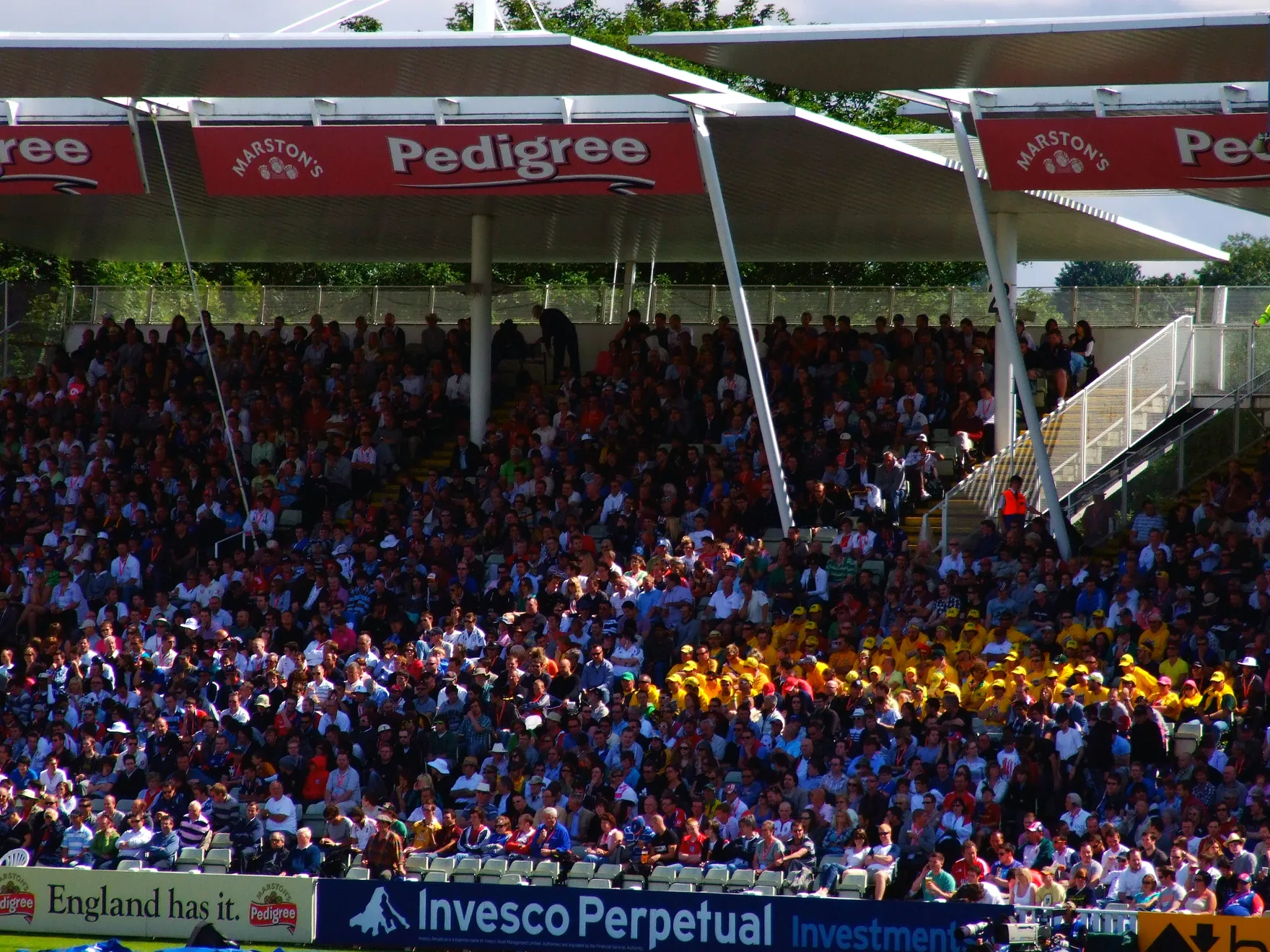
Choose Edgbaston if your guests are coming from the Midlands, or if you want the Test in the middle of the series.
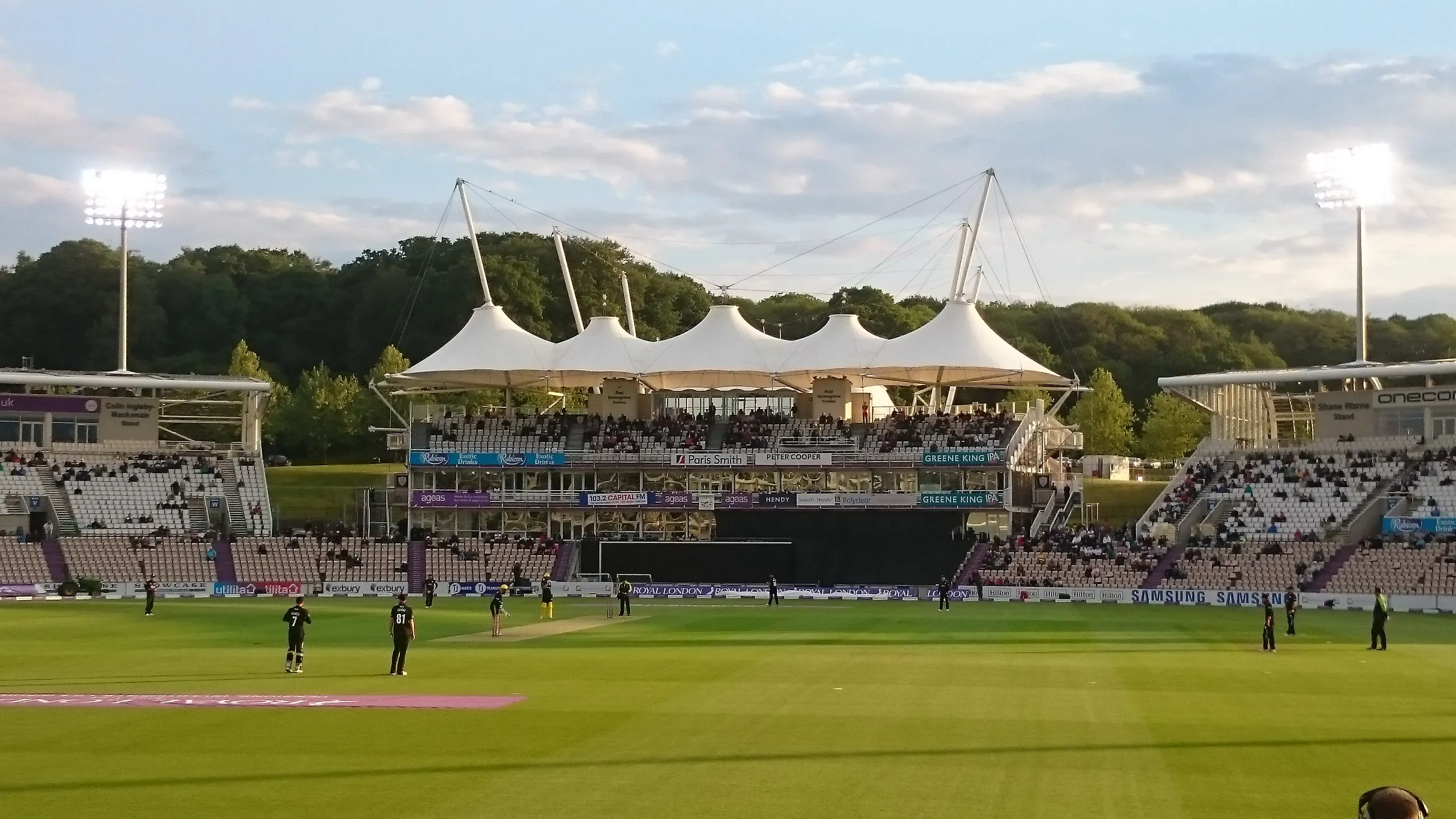
The Utilita Bowl: A First Ashes Test
The fourth Test is at the Utilita Bowl, from Wednesday 21 to Sunday 25 July. It is the first men’s Ashes Test the ground has staged.
The ground is in West End, on the edge of Southampton, and it is the home of Hampshire. It opened in 2001 as the Rose Bowl. It was called the Ageas Bowl from 2012 and has been the Utilita Bowl since 2024.
It is the youngest of the five grounds by more than a century. The other four had all staged a Test match by 1902. The Utilita Bowl staged its first in 2011, when England played Sri Lanka.
In June 2021 it staged the first World Test Championship final. The championship is a league for nine of the Test-playing countries, and the final decides its winner. New Zealand beat India.
The ground has an Ashes connection of its own. Shane Warne, the Australian bowler, took more wickets in Ashes Tests than anyone else. He first played for Hampshire in 2000 and captained the county from 2004 to 2007. A stand at the ground is named after him.
Choose the Utilita Bowl if your guests are on the south coast, or if you want to see a ground stage a men’s Ashes Test for the first time.
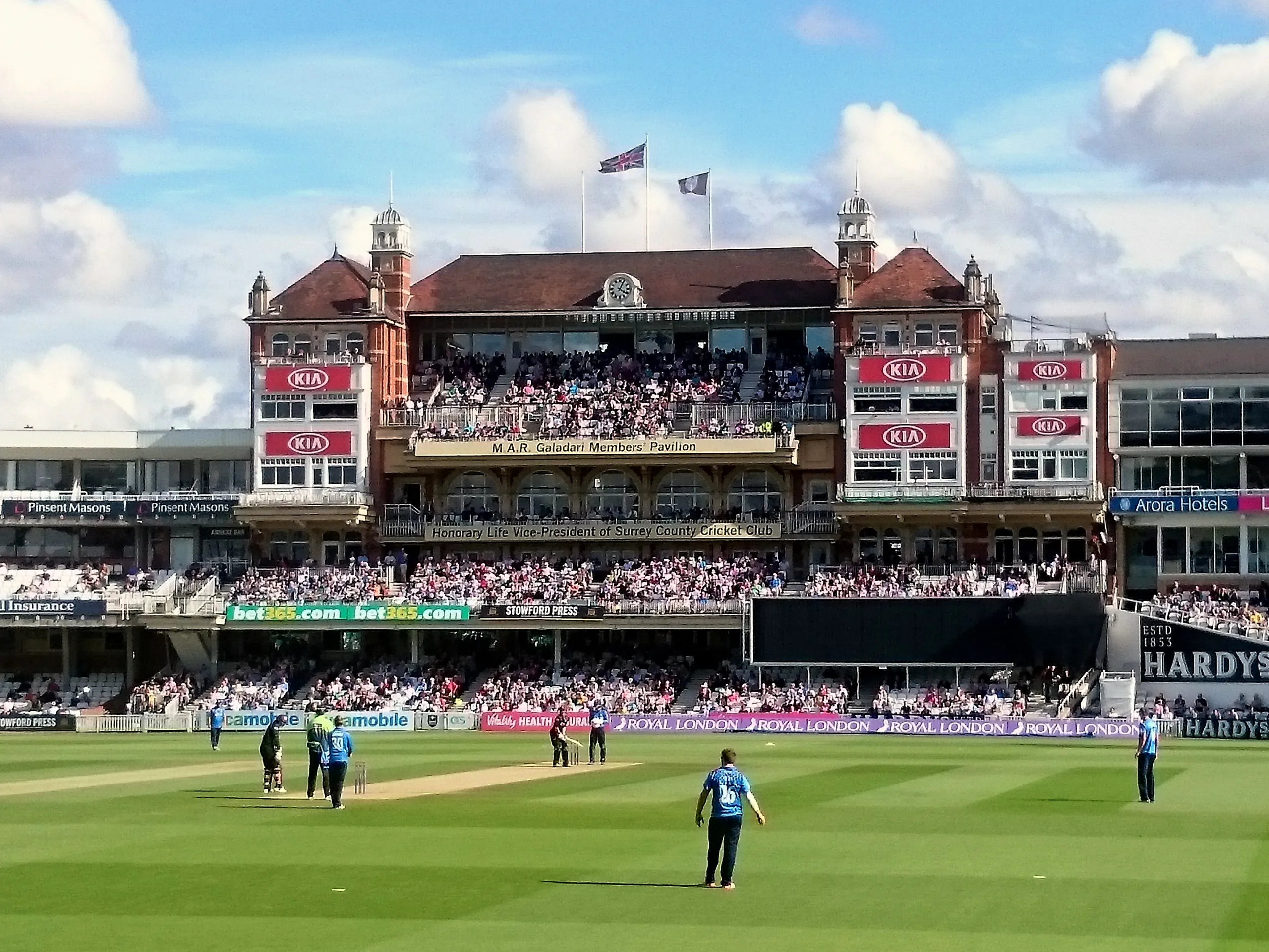
The Oval: Where the Ashes Began
The series ends at The Oval in south London, from Thursday 29 July to Monday 2 August. The final Test of an English summer is traditionally played here.
The Oval is the home of Surrey. It staged the first Test match played in England, against Australia, in September 1880. W. G. Grace made 152 and England won.
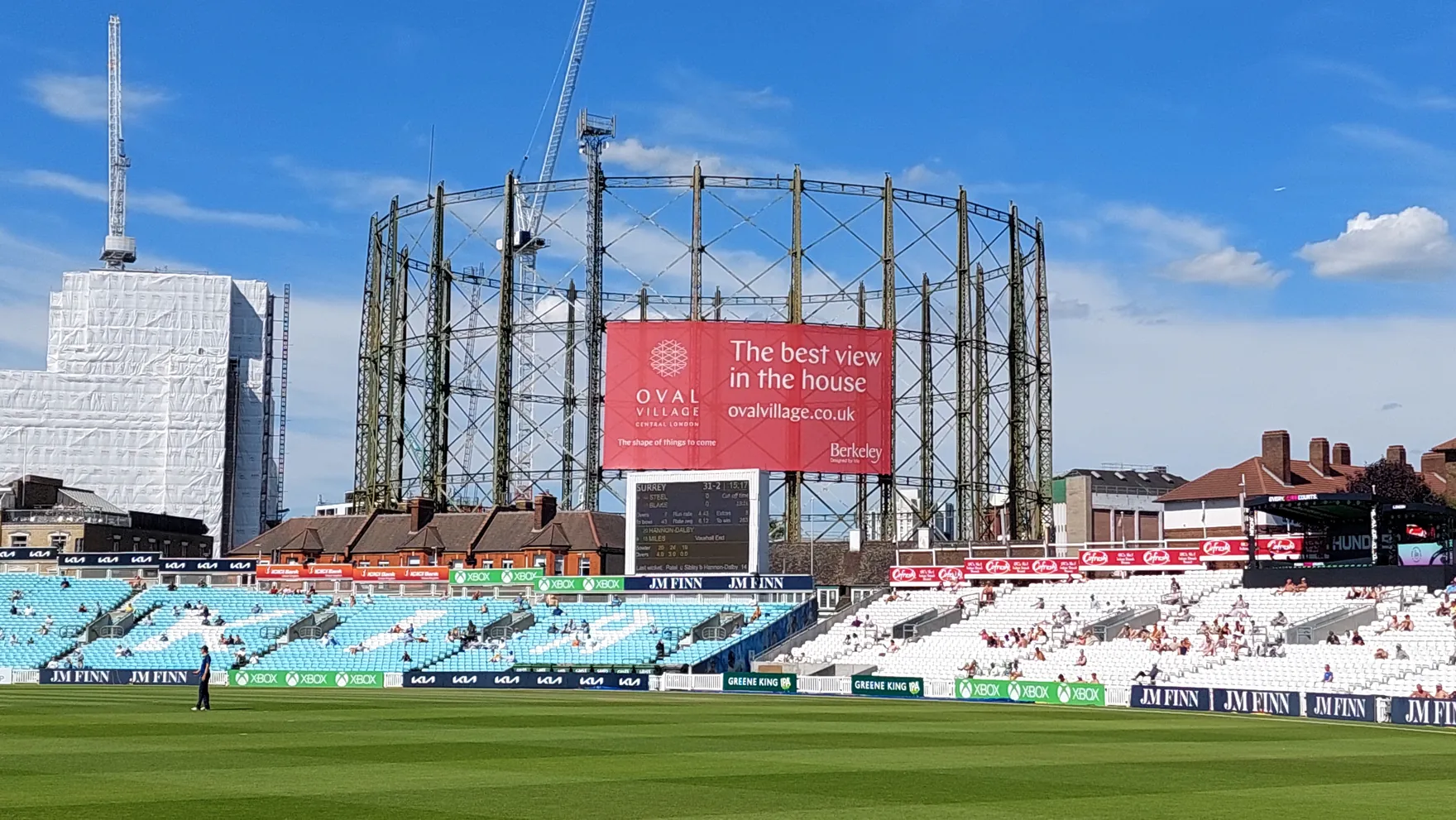
The Ashes began here two years later. On 29 August 1882 Australia beat England by seven runs, and it was England’s first Test defeat at home. Fred Spofforth, an Australian bowler, took 14 wickets in the match.
Four days later a weekly paper, the Sporting Times, printed a mock obituary of English cricket. Its last line read: “The body will be cremated and the ashes taken to Australia.” The series takes its name from that notice.
Don Bradman played his last Test innings at The Oval in 1948. A batting average is the runs a batter has scored divided by the number of times he has been out. Bradman needed four runs to finish with an average of 100 in Test cricket. Eric Hollies dismissed him with the second ball he faced, before he had scored a run. Bradman’s average fell to 99.94.
In 2005 Kevin Pietersen made 158 here on the last day of the series. The match was drawn, and England won an Ashes series for the first time since 1986-87.
In 2023 Stuart Broad played his last Test at The Oval. He took the final two Australian wickets, and England won by 49 runs to draw the series 2-2.
Choose The Oval if you want the last Test of the series.
A Day at the Ashes with Imperial
A day of Test cricket is scheduled to start at 11am and is played in three sessions. Lunch comes after the first session and tea after the second.
With us, you choose the ground and we arrange the day. You have a reserved seat for the day’s play. Food and drink are served through the day and timed around the lunch and tea intervals.
You also have an indoor space at the ground, away from the public stands. You can eat, drink and watch the cricket from there. A host looks after your group from arrival to the close of play.
The menu and the bar depend on the option you choose. Our Ashes experience covers all five grounds, and we talk you through the options for each when you enquire.