
Summary
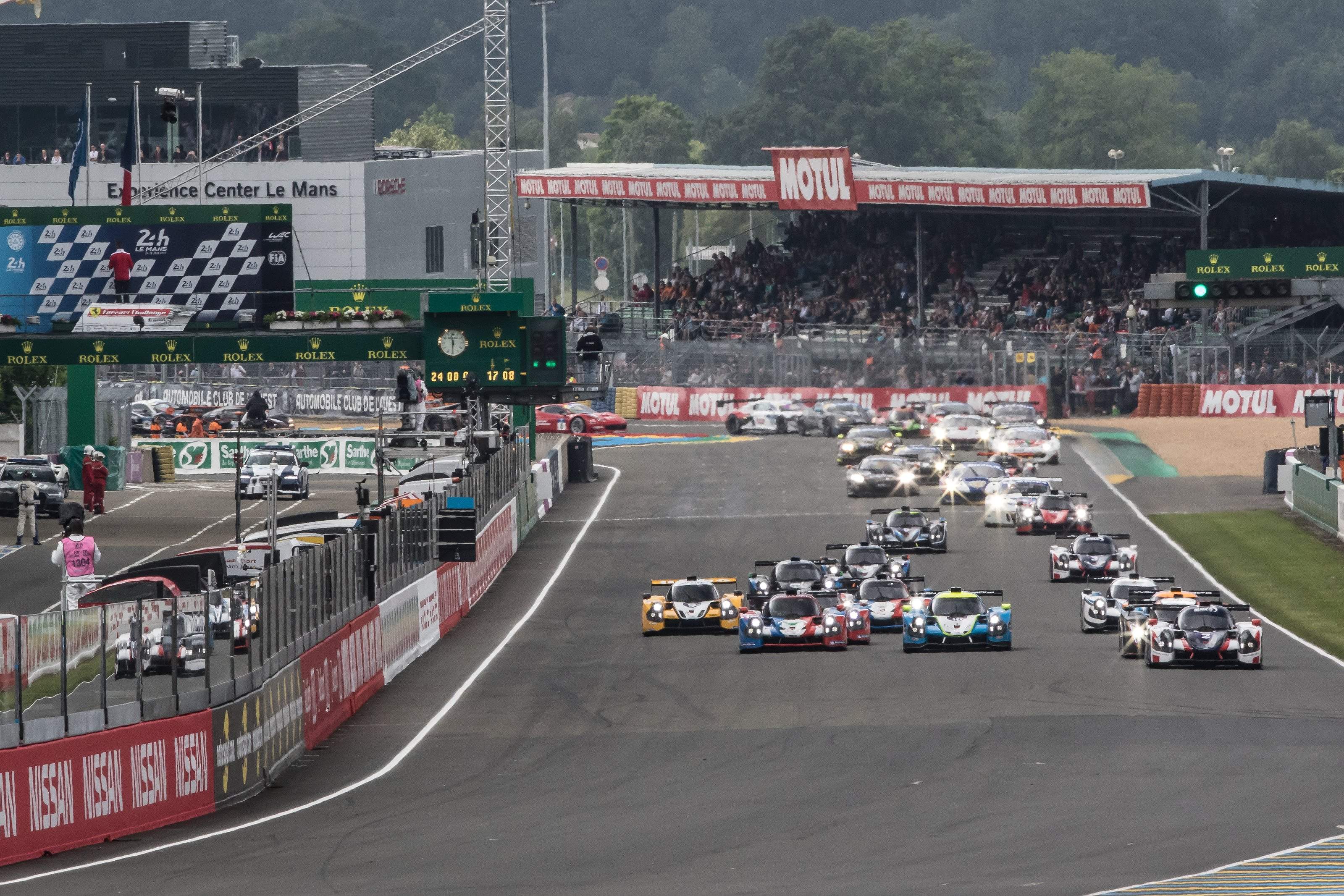
The 24 Hours of Le Mans is an endurance race that has been run since 1923, on a 13.626 km circuit just south of the town of Le Mans in western France. Each car is shared by three drivers, jump to How it works, and the winner is the car that covers the greatest distance in 24 hours. The 2027 race starts at 4pm French time on Saturday 12 June, jump to The weekend and finishes at around 4pm on Sunday 13 June. We take guests for four nights. On the Saturday and the Sunday you have Starter24, shared hospitality at the circuit, jump to With us.
It is the oldest endurance race still contested, and the 2027 race is the 95th. It is also the fifth round of the 2027 FIA World Endurance Championship.
How a 24-hour race works
The race does not run to a set number of laps. It runs for 24 hours, and once the time is up the leader takes the chequered flag the next time it crosses the line, at around 4pm on Sunday. The car that has completed the most laps wins, and the cars behind take the flag as they cross the line after it. If two cars finish on the same number of laps, the one that crossed the line first is placed ahead.
Modern rules limit how long any one driver can be at the wheel, so each car is shared by a crew of three who take turns. Drivers change during pit stops, when the car stops outside its garage for fuel and tyres or goes inside for repairs. A driver usually stays in the car for a few hours at a time. Between stints the drivers eat, sleep for a few hours if they can, and watch the data with their engineers.
A car that breaks down out on the circuit can only be repaired by its driver, using whatever is in the car, until it limps back to the pits. A stop like that can wipe out a lead of several laps before morning.
Three classes on one track
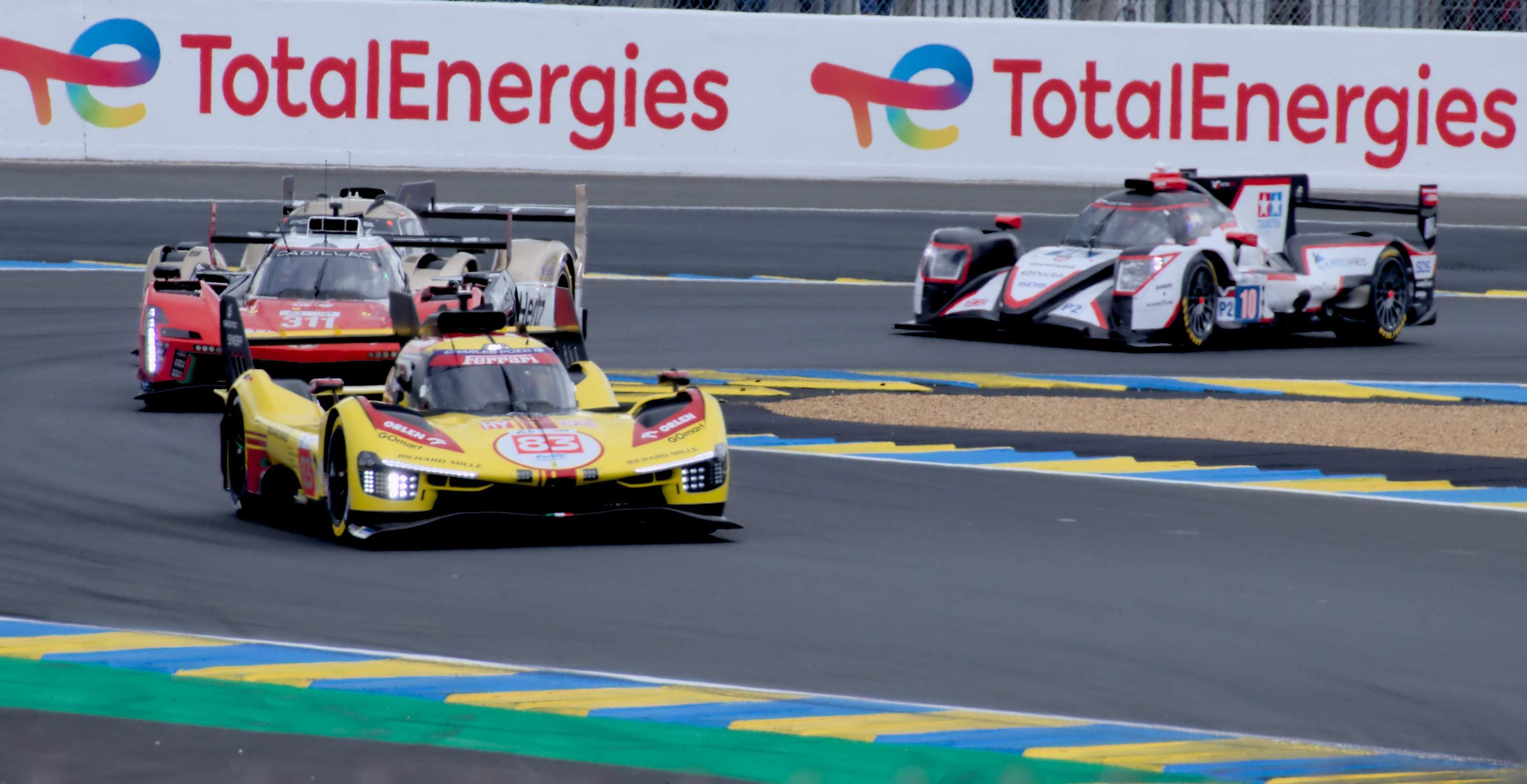
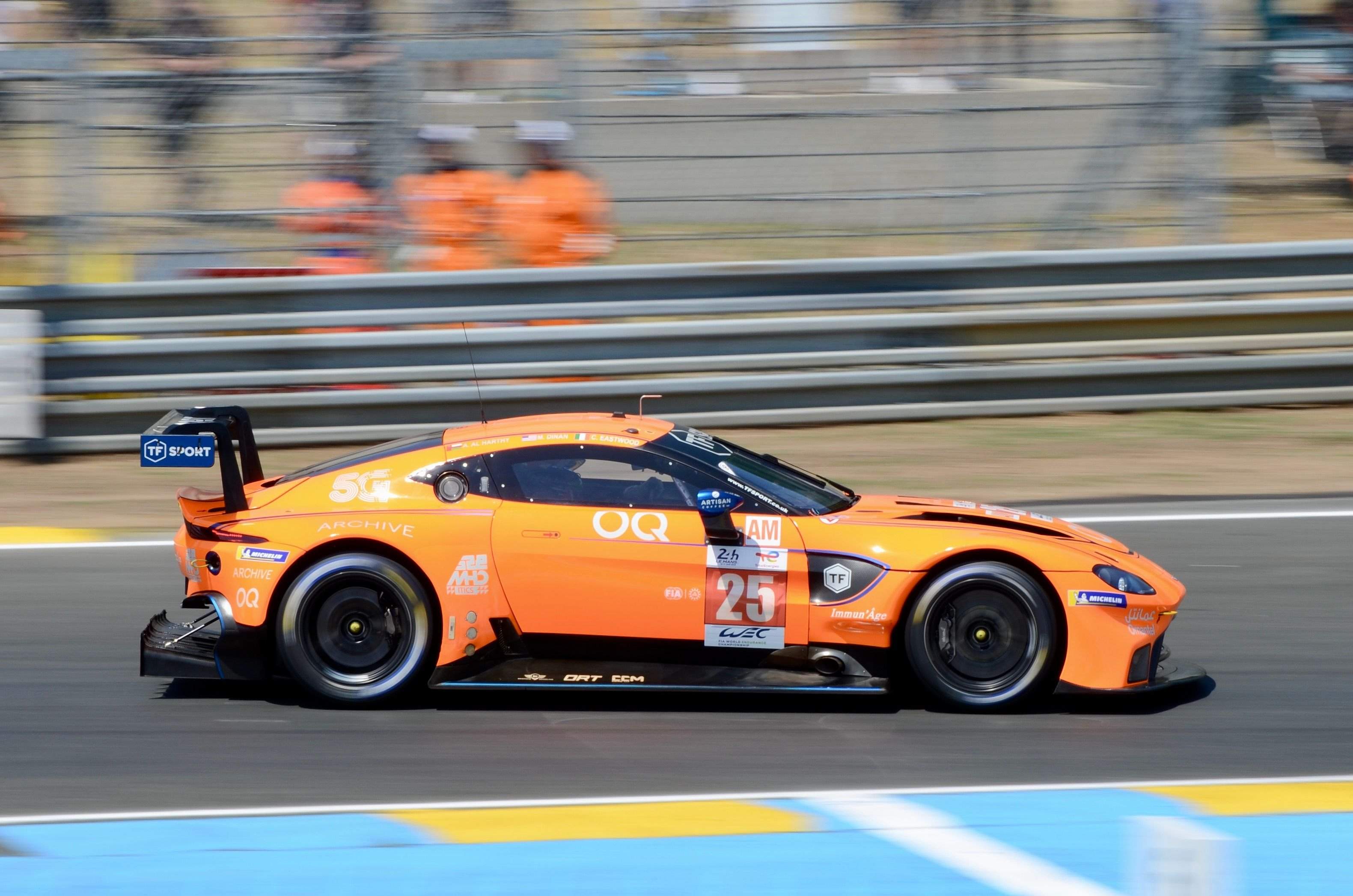
Cars of three different speeds share the track at the same time, and each class has its own winner. In 2026 there were 62 cars: 18 in Hypercar, 19 in LMP2 and 25 in LMGT3.
Hypercar
This is the fastest class, made up of purpose-built prototypes from car manufacturers. Toyota, Ferrari, BMW, Cadillac and Aston Martin all race in it. It normally supplies the overall winner.
LMP2
These are smaller, slower prototypes raced by private teams rather than car manufacturers.
LMGT3
These are racing versions of road cars you might recognise, such as the Aston Martin Vantage, the Porsche 911 and the Corvette. They are the slowest class, and the most familiar to look at.
Because the classes run together, the fast cars are always lapping the slow ones. Much of the racing is about getting past traffic without losing time or crashing, which is where a lot of the drama comes from. Toyota won overall in 2026 with Mike Conway, Kamui Kobayashi and Nyck de Vries. Ferrari had won the three races before that, from 2023 to 2025.
The circuit
The Circuit des 24 Heures du Mans is 13.626 km long, which makes it one of the longest circuits in motor racing. About two-thirds of the lap is public road that is closed to traffic for practice and the race, so the cars race along roads that local drivers use the rest of the year.
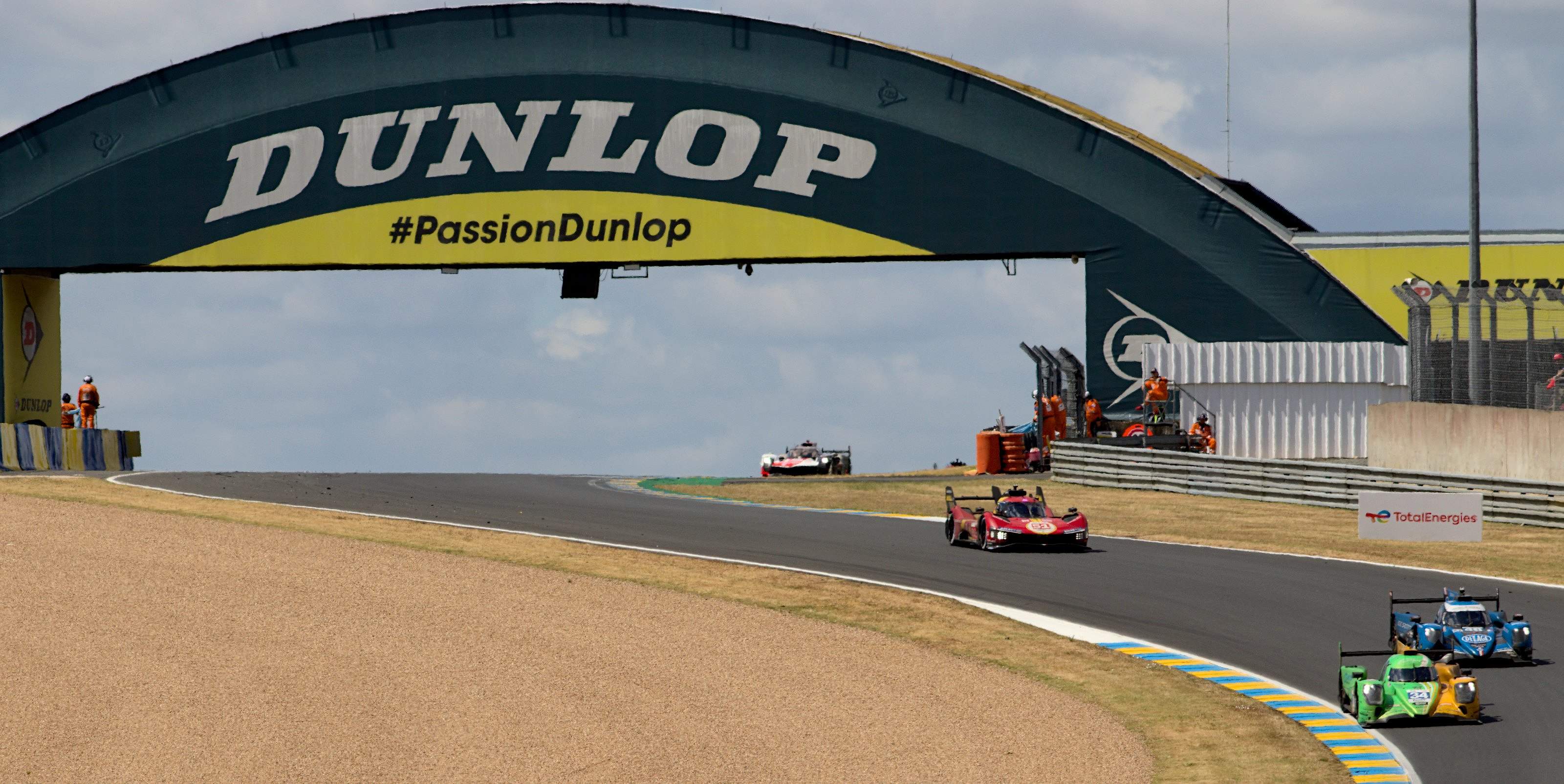
The best-known part is the Mulsanne Straight, a long stretch of public road where the cars reach their highest speeds. Two chicanes, tight bends added to slow the cars down, have broken it into three sections since 1990. Early in the lap the cars pass under the arched footbridge over the track, long known as the Dunlop Bridge and rebranded for Goodyear from 2026. Near the end they sweep through the Porsche Curves, a sequence of fast bends, before the final corners back to the start.
Through the night
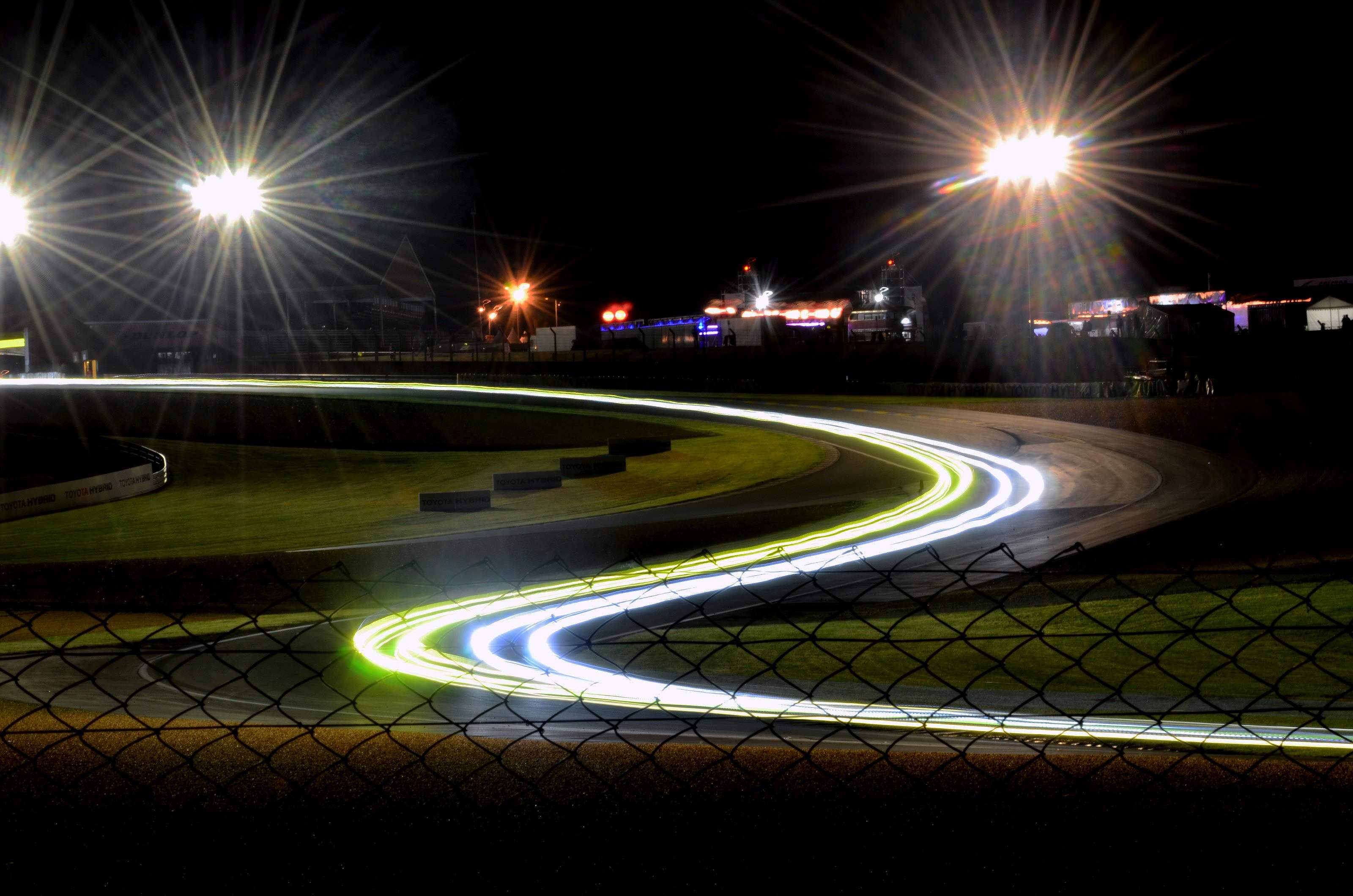
The race is held in mid-June, close to the longest day of the year, so the full darkness lasts only a few hours. The cars race at full speed with their headlights on, and the circuit stays busy all night.
You do not have to stay awake for all 24 hours. You can split your viewing between the start, the evening, the sunrise and the last few hours on Sunday. The finish can be close: in 2026 the winning margin was under 11 seconds after 24 hours.
How the weekend runs
Race week runs from Wednesday 9 to Sunday 13 June 2027, with practice and qualifying during the week. Our stay covers the four nights from Thursday 10 to Monday 14 June.
Thursday 10 June
You arrive and check in to the circuit’s new hotel.
Friday 11 June
The day is yours to spend in Le Mans.
Saturday 12 June
Starter24 opens to you, and the race starts at 4pm.
Sunday 13 June
Starter24 is open to you again, and the finish comes at around 4pm.
Monday 14 June
You check out and travel home.
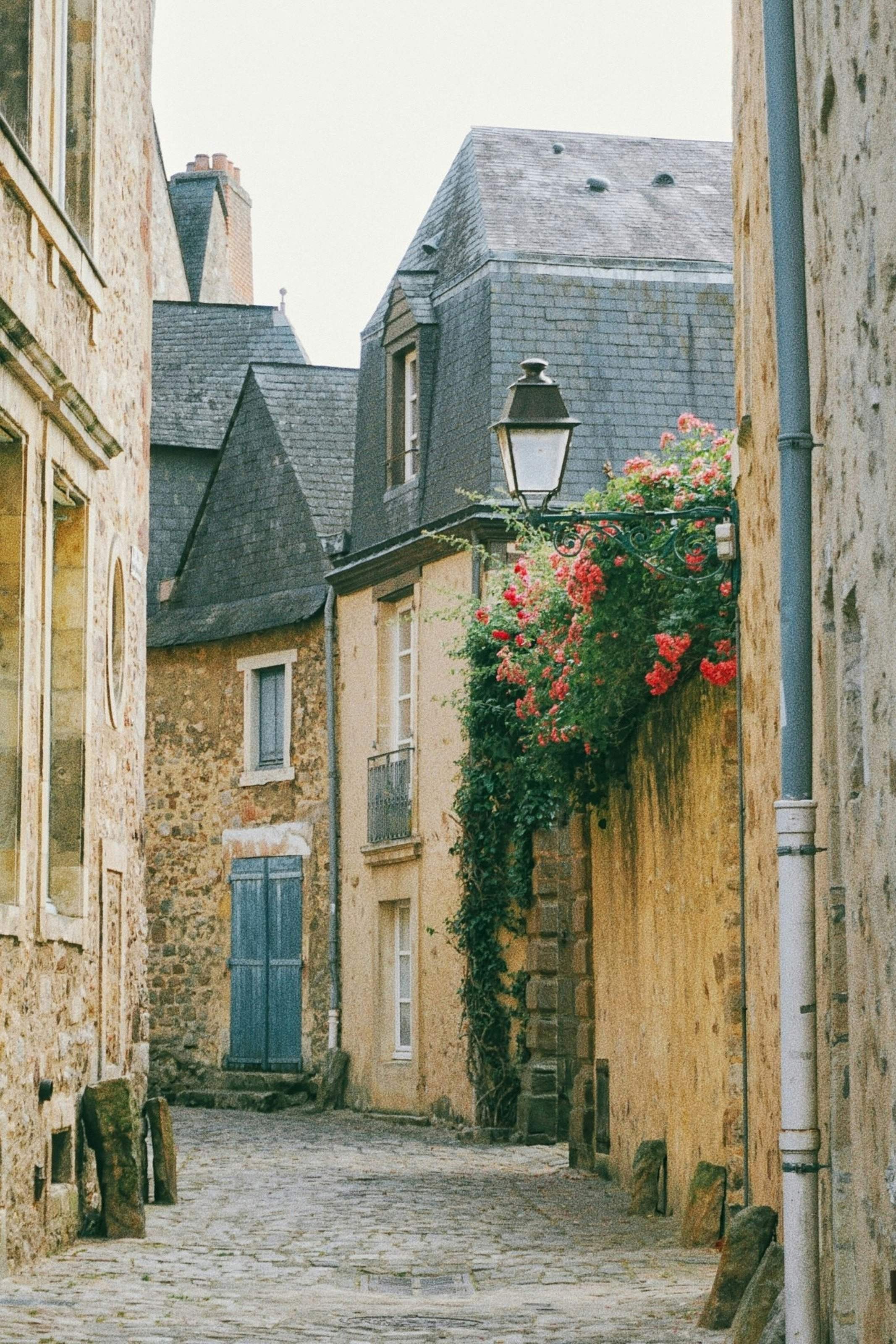
On the free Friday, the old town of Le Mans is worth an afternoon, especially for anyone in the group who is less interested in the cars. Its medieval quarter, the Cité Plantagenêt, sits on a hill above the river Sarthe. Its cobbled lanes and timber-framed houses surround the cathedral.
Getting to Le Mans
You make your own way to Le Mans, and the train is the simplest route from London. The journey takes about four and a half hours. You take the Eurostar to Paris, then the TGV from Paris Montparnasse. The TGV, France’s high-speed train, reaches Le Mans in under an hour on the fastest services. Tram line T1 runs from Le Mans station to Antarès, its last stop, in about 20 minutes. The stop is next to the circuit’s East Gate. Eurostar arrives at Paris Gare du Nord, and the TGV leaves from Montparnasse, so the journey includes a cross-Paris connection.
Roads south of the town change for race week, because so much of the lap is public road, and race-day traffic can lengthen journeys to the circuit. The train suits a group that would rather not drive at all.
Le Mans with us
You stay four nights at the circuit’s new 4-star hotel, which opens in spring 2027, in a twin or double room with two guests sharing. One parking pass comes with every three guests, for standard-size vehicles.
On the Saturday and the Sunday you have Starter24, shared hospitality in the circuit’s Karting Zone, close to the last corners of the lap. It has an indoor space and a large terrace that looks over the Corvette Curves, the bends that close the Porsche Curves section near the end of the lap. Seating is unreserved and the atmosphere is relaxed and informal. Selected food is served inside. Selected drinks are served from The Terrace, and anything beyond that is available to buy.
It suits a group of motor racing fans who want shared hospitality at the circuit for the race weekend, with a hotel at the circuit to come back to. If you tell us the size of your group, we will come back with the details for June.


Chloe Burchell
Event Manager
Event Manager at Imperial Corporate Events. She’s hosted clients at everything from the Six Nations to the Eastern & Oriental Express, and she’s good company on the day.