
Summary
An each-way bet is two equal bets on one horse, jump to Each way. One is for it to win and one is for it to finish in the first few places, so five pounds each way costs ten pounds. Fractional odds, jump to Odds show your winnings for every pound staked. You can bet with the bookmakers in the ring, who fix a price with you. You can also bet with the Tote, which pools the money and pays a dividend after the race. At Cheltenham and Royal Ascot our days come with a racecard and a newspaper, and a resident tipster, jump to With us on hand through the racing.
A day at the races comes with its own vocabulary. The odds, the racecard and the betting ring, where the bookmakers stand, look like a private language the first time. None of it takes more than a few minutes to learn.
None of it is advice on which horse to back. On our Cheltenham and Royal Ascot days a resident tipster, who studies the form, is on hand through the racing. Form is a horse’s record of recent runs, and a newspaper comes with the racecard. Bet only what you are happy to lose, and treat anything that comes back as a bonus.
How the odds work
British racecourses show odds as fractions. The first number is what you win and the second is what you stake to win it. At 5/1, a pound returns five pounds of winnings plus your pound back, six pounds in all. At 6/4 you win six for every four staked, so a pound returns one pound fifty plus the stake. At 10/1 the horse is not much fancied. At 4/6 it is odds-on, which means the second number is bigger than the first and you win less than you stake. Evens, written EVS, pays one pound for every pound.
The favourite is the horse at the shortest odds, the one the market thinks most likely to win. The odds move in the half hour before a race as the money comes in. A horse whose price gets shorter is being backed, and one whose price drifts out is being left alone. When you take a price with a bookmaker, the price on your slip is the one you get, whatever it does afterwards. The one exception is a deduction when another horse is withdrawn, which is covered under Rule 4 below.
A win bet, or a bet on the nose, pays only if your horse wins. A place bet pays if it finishes in the first few. With a bookmaker the place part pays at a fraction of the win odds, and with the Tote it pays its own dividend. Each way combines the two.
What each way means
An each-way bet is two bets of the same stake on the same horse. Half is a bet to win and half is a bet to place. To place means to finish in the first two, three or four, depending on the race. Five pounds each way costs ten pounds. If the horse wins, both halves pay. If it places without winning, you lose the win half and are paid on the place half, at a fraction of the win odds.
The number of places and the fraction depend on how many horses run and on whether it is a handicap, a race in which the horses carry different weights to even them up. These are the standard terms. In the ring they are printed on each bookmaker’s board, and the one band where the course and the online bookmakers differ is marked.
Fewer than five runners
Usually win only, with no place part.
Five to seven runners
Two places, at a quarter of the win odds.
Eight or more runners, not a handicap
Three places, at a fifth of the win odds.
Handicaps with 12 to 15 runners
Three places, at a quarter of the win odds.
Handicaps with 16 to 21 runners
Four places. On the racecourse the standard is a fifth of the win odds, and online bookmakers usually pay a quarter.
Handicaps with 22 or more runners
Four places, at a quarter of the win odds.
Suppose you back a horse at 10/1 in a 24-runner handicap at the Festival, five pounds each way, so the bookmaker pays four places at a quarter of the odds. A quarter of 10/1 is 5/2. If it wins, the win half returns fifty pounds plus your five. The place half returns twelve pounds fifty plus your five, so you collect seventy-two pounds fifty in all. If it finishes third, you lose the win half and collect seventeen pounds fifty from the place half, so you are seven pounds fifty up on your ten.
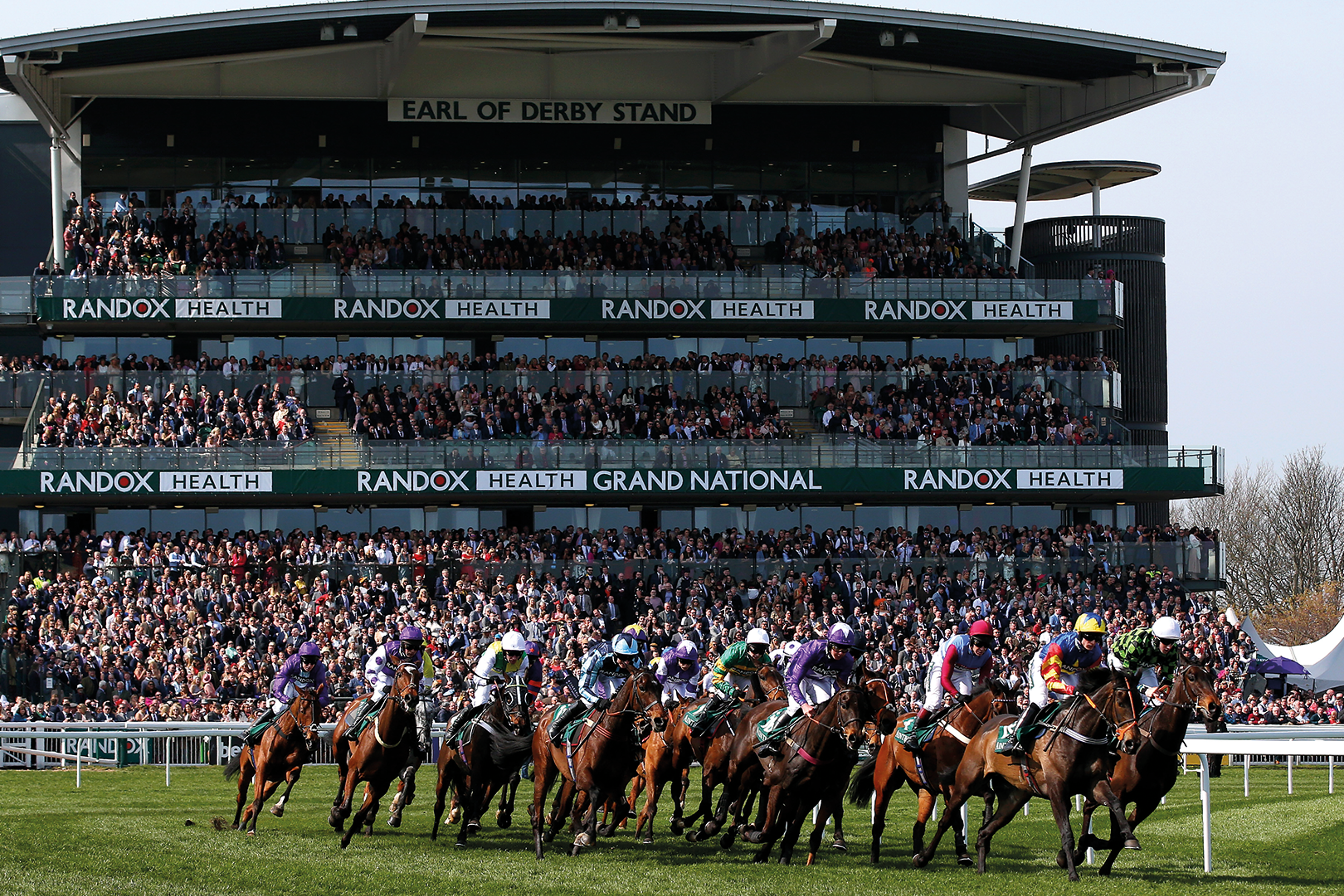
The Grand National has a field of up to 34, and online bookmakers often pay extra places for it. In the ring the standard terms apply unless the board says otherwise.
Bookmakers, the Tote and the ring
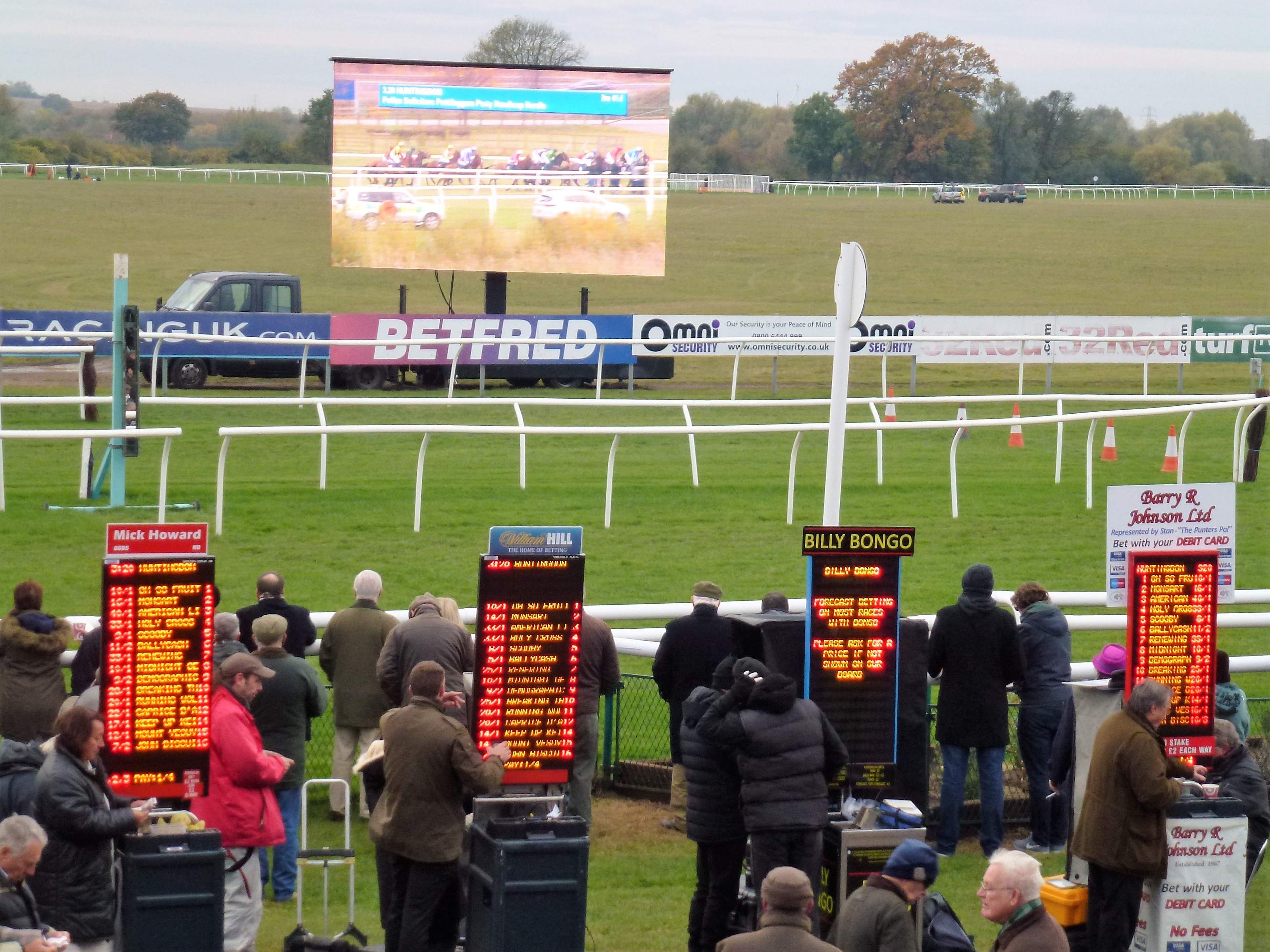
There are two ways to bet on a British racecourse. The bookmakers stand in the betting ring, the open area in front of the stands. Each one trades from a pitch, the spot it is licensed to stand on, with a board showing its prices. The Jockey Club’s guide to the Cheltenham Festival puts the number of bookmakers there at around 200. You tell the bookmaker the horse, the stake and whether it is win or each way. They repeat it back, you pay, and you get a printed slip. You go back to the same pitch after the race to collect. Prices vary a little from board to board.
The Tote is the other way, and it works differently. It is a pool. Every win bet on a race goes into one pot, the Tote takes its share, and the rest is divided among the people who backed the winner. Place bets go into a separate pool of their own. There are no odds to take in advance. The dividend is declared after the race, and it is quoted for a one-pound stake, so a dividend of six pounds fifty means a pound returned six pounds fifty. Tote counters and self-service terminals are in the stands, and on our Royal Ascot days there are Tote facilities on site through the day.
The Placepot is the Tote’s bet across the first six races. You pick one horse to be placed in each of the first six races, and if all six manage it, you share the pool. One stake covers all six races, and it is settled after the sixth.
The bookmakers give you a fixed price and a slip. The Tote gives you whatever the pool pays. On a big-race day the Tote dividend on a well-backed winner can be a little less than the bookmakers’ price, and on an outsider it can be more.

How to read the racecard
The racecard is the programme. Each race has its own page. The time, the race name, the distance, the class and the prize money are at the top. The class grades the race, with class 1 the best. The runners are listed below by the number on their saddle cloth, the numbered cloth under the saddle. Next to each horse are the owner’s colours, which the jockey wears, so you can pick your horse out on the track.
Each horse’s recent form is a string of figures, read from left to right, with the most recent run on the right. A 1 means it won and a 2 means it came second. A 0 means it finished outside the first nine. Letters are what happened when it did not finish. F means it fell and U means it unseated its rider. P means it was pulled up, which is when the jockey stops it during the race, R means it refused a fence and B means it was brought down by another horse. A dash separates one season from the next, and a slash marks a longer gap.
After the name come the horse’s age, the weight it carries in stones and pounds, and its official rating. The rating is the number the handicapper gives it, and it sets the weight the horse carries in a handicap. The trainer and the jockey come next. Letters after the name show headgear, the blinkers and hoods some horses wear to keep them concentrating. The commonest are b for blinkers, p for cheekpieces, h for a hood and t for a tongue tie. A horse wearing something for the first time has a 1 after the letter.
Four more abbreviations appear on most cards. C means the horse has won at this course before, and D means it has won over this distance. CD means it has won over this course and distance together. BF means it was the beaten favourite last time, a horse the market liked that did not deliver.
The going, the draw and the handicap
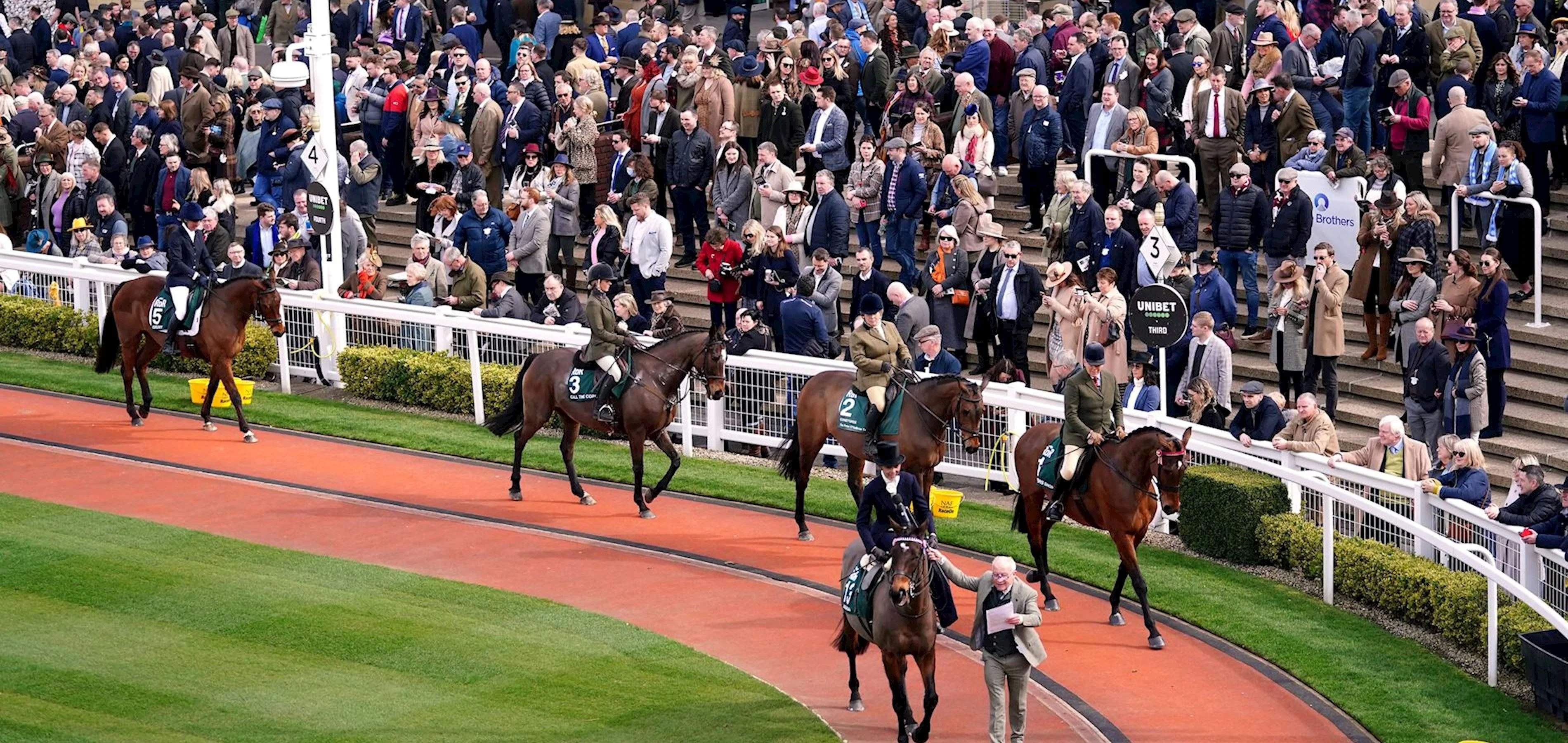
The going is the state of the ground, and it is at the top of every racecard page and on the boards around the course. The scale for turf runs from heavy, the wettest ground raced on, through soft, good to soft and good, to good to firm and firm. Hard sits at the far end and is almost never raced on. Good is the target for jump racing, and good to firm is the target on the flat. Cheltenham in March can be soft after a wet winter. Some horses handle soft ground and some hate it, which is why the papers talk about it so much.
The draw matters only on the flat, which is racing without jumps, where the horses start from stalls. The bracketed number next to the saddle cloth number is the stall. On a straight course the effect depends on the track and the ground, and a sprint at Ascot can still favour one side. On a tight bend, such as the five-furlong course at Chester, a low draw on the inside is a real advantage. A furlong is an eighth of a mile.
A handicap is a race in which the horses carry different weights, set from their official ratings, so that in theory they all cross the line together. The Grand National is a handicap. The Cheltenham Gold Cup is not. In the Gold Cup the weights are set by age and sex rather than ability, so the best horse is supposed to win. Mares, the female horses, get an allowance.
SP, Rule 4 and the other jargon
SP
The starting price, the official odds at the moment the race starts. If you bet without taking a price, you are paid at SP.
Taking a price
Betting at the odds on the board now. That price is yours whatever happens to it afterwards, apart from a Rule 4 deduction if another horse is withdrawn.
Rule 4
A deduction from your winnings if a horse is withdrawn after the final declarations, the final list of runners published a day or two before the race. It is set in pence in the pound according to the price of the horse that came out, and your stake is never touched. It is rarely applied to SP bets, because the starting prices are formed after the horse comes out.
Non-runner
A horse withdrawn before the race. A bet placed on it at the day’s prices is refunded.
Odds-on
A price where you win less than you stake, such as 4/6. A horse at odds-on is heavily fancied.
The jolly
The favourite.
Forecast and tricast
Picking the first two, or the first three, in the right order. Both are hard to land.
Accumulator
One bet on several horses in different races, and all of them have to win. Some course bookmakers take single bets only.
Placepot
The Tote bet on a placed horse in each of the first six races.
Some prices are said rather than read. A horse at 100/30 is a shade over 3/1, and you will hear it called a hundred to thirty.
Betting on a day with us
Our racing days are built around a restaurant, a box or a reserved stand. At the Cheltenham Festival the restaurants are Chez Roux Restaurant and The Final Fence Restaurant, and the Platinum Suite and the Long Run Box are the other two options. The Cheltenham days come with a racecard and a newspaper, four courses served between the races, and a resident tipster on hand through the racing.
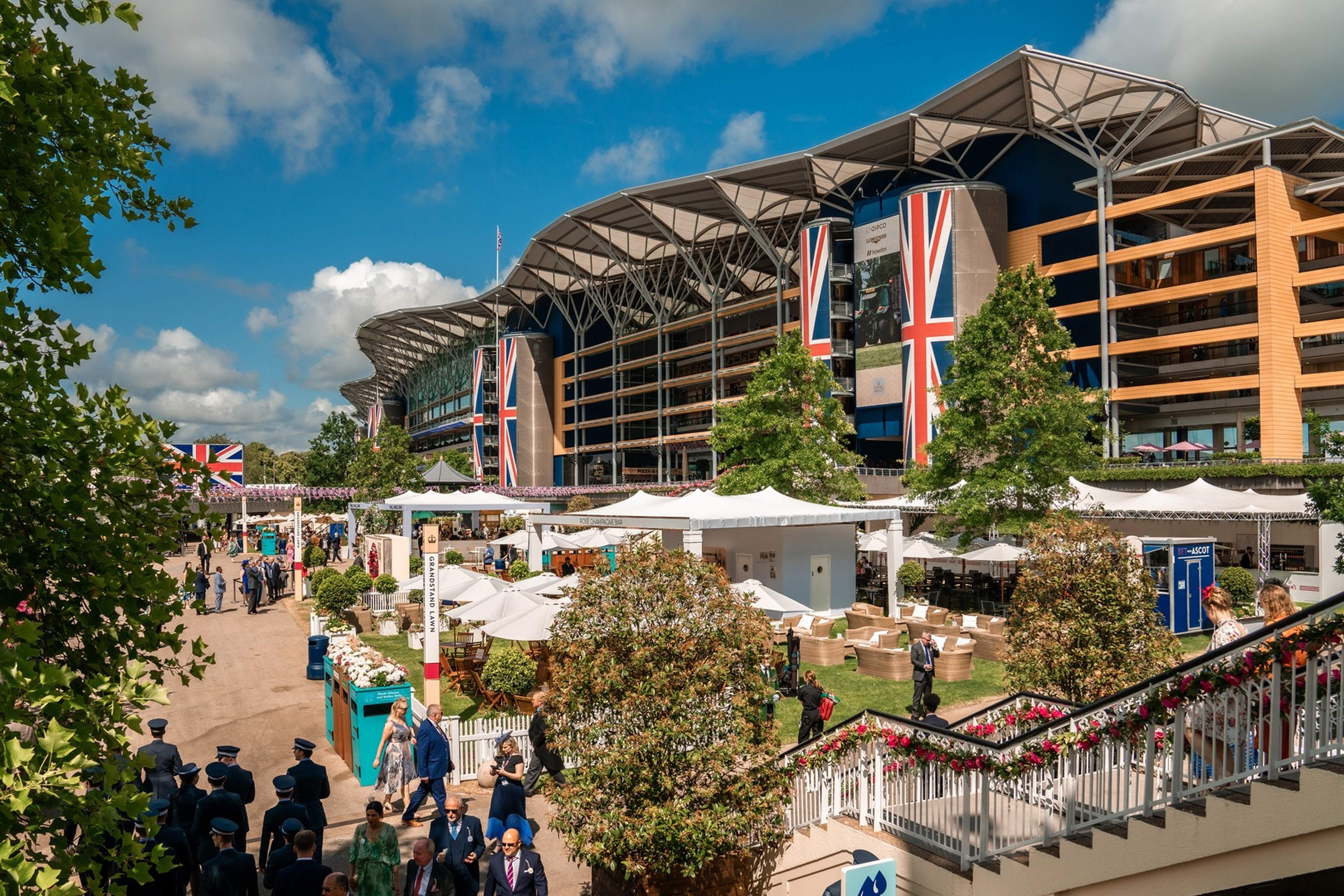
At Royal Ascot there are Tote facilities on site through the day, and the racecards and racing papers are available all day. The tipster is there too. After the last race everyone is invited to the bandstand for the traditional singing.
At the Grand National the day is in the Papillon or Silver Birch restaurants, the Tiger Roll Suite, or the Princess Royal Stand. There is also the option of the Belmond British Pullman for the journey up, or return rail from London to Liverpool. The National is a handicap with up to 34 runners, so the four-place terms for big handicaps apply.
You have to be 18 to bet on course. If betting ever stops being fun, GambleAware offers free and confidential help at begambleaware.org.

Chloe Burchell
Event Manager
Event Manager at Imperial Corporate Events. She’s hosted clients at everything from the Six Nations to the Eastern & Oriental Express, and she’s good company on the day.